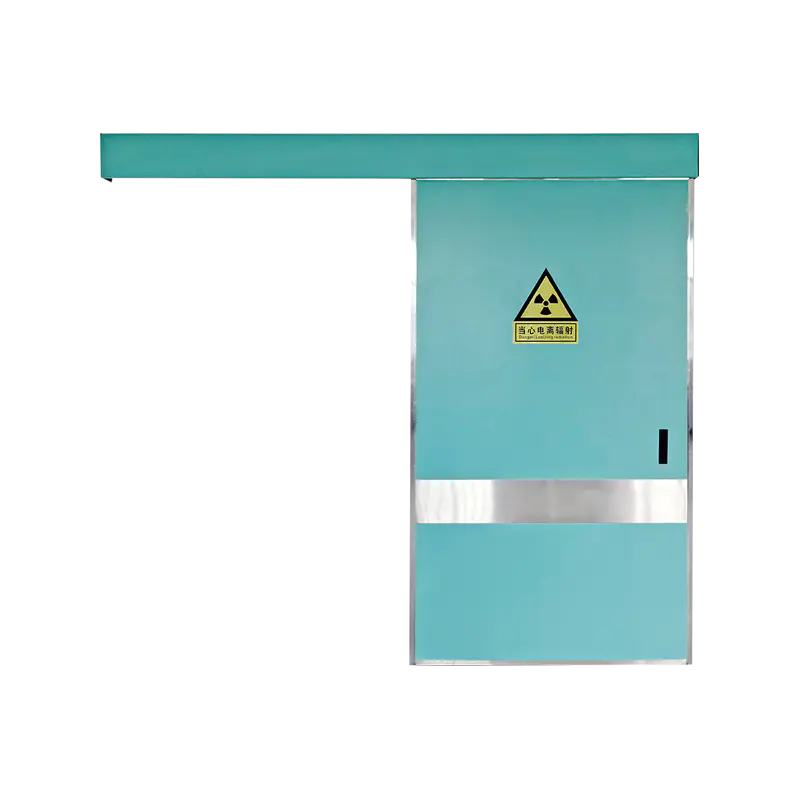
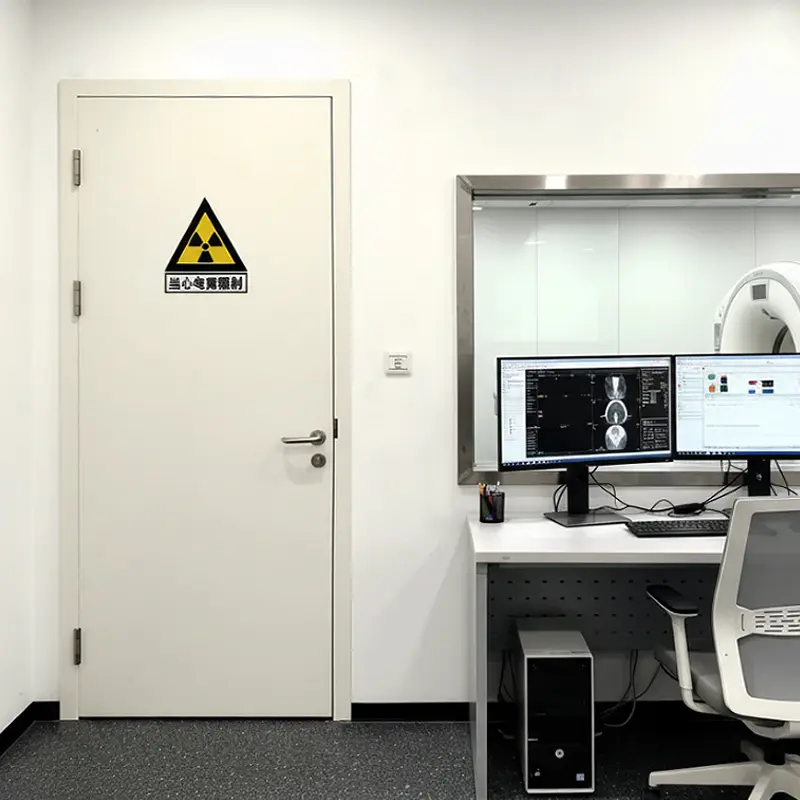
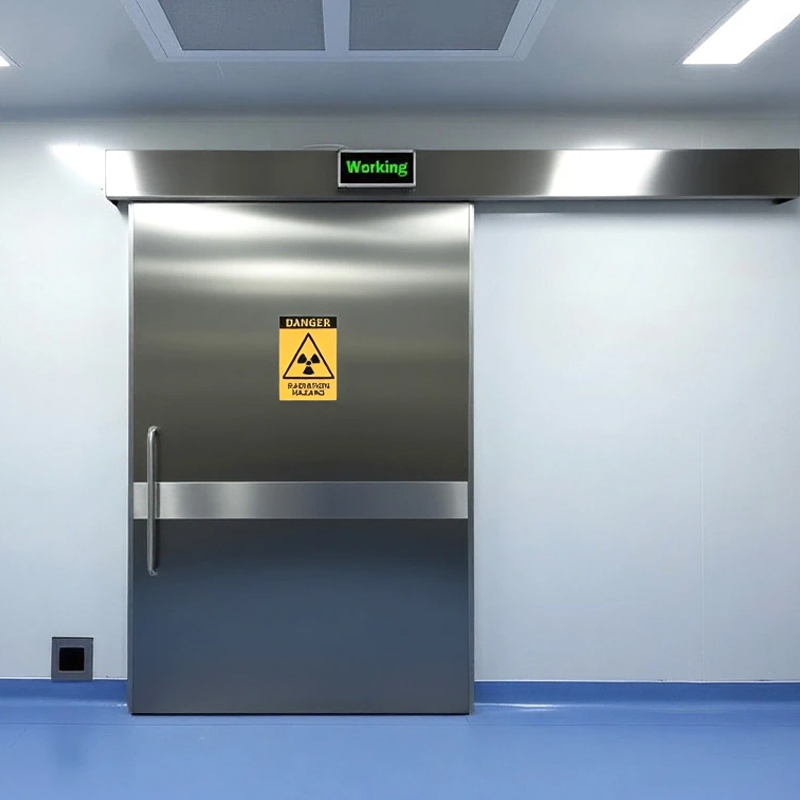
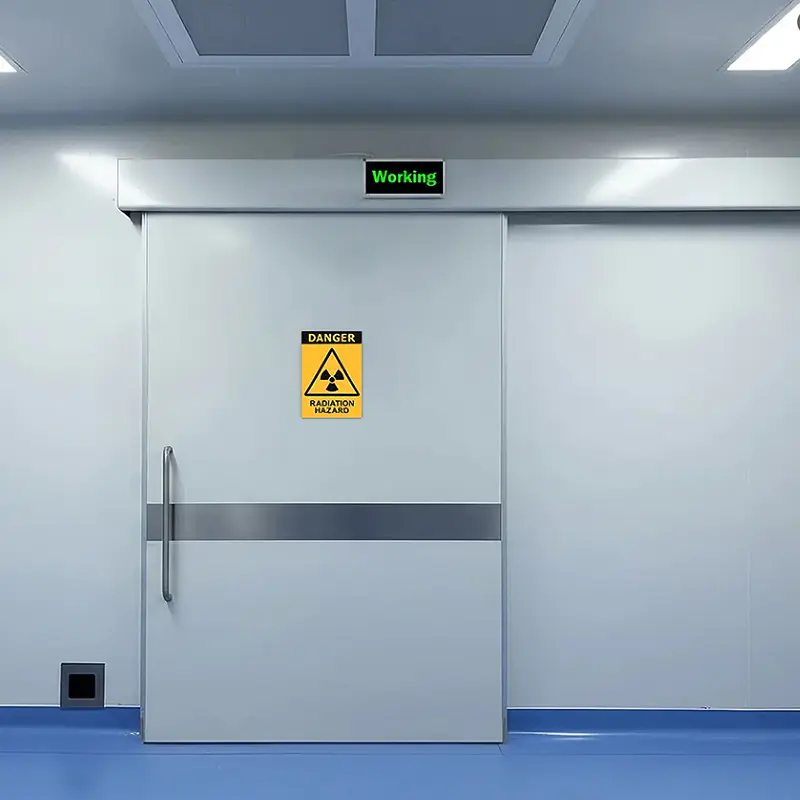
X-ray room doors are functional doors used in medical imaging departments to meet this need. These doors are typically installed at the entrance of the radiology examination room, connecting the corridor to the examination space. Compared to ordinary doors, their structural design, material configuration, and installation method are planned in conjunction with the imaging examination environment.
Basic Functions of X-ray Room Doors
Imaging examination rooms are specific areas within hospitals, and their doors need to serve multiple functions. X-ray room doors primarily play the following roles in daily use:
The door separates the imaging examination room from public areas, maintaining the relative independence of the examination space. This separation helps reduce external interference and provides a stable environment for the operation of medical equipment.
Imaging examinations usually need to be conducted according to appointment order. As the entrance to the space, the door helps administrators control personnel entry and exit, maintaining the orderly progress of the examination process.
- 3. Visual and Privacy Protection
During medical examinations, patients often require a relatively private environment. Doors can reduce external visibility, providing patients with a more reassuring examination space.
- 4. Auxiliary Environment Management
Imaging examination rooms typically house large equipment, requiring door structures to be coordinated with the equipment layout for smooth access for personnel and equipment.
Structural Characteristics of X-Ray Room Doors
To meet the needs of imaging examination spaces, these doors often exhibit some design features different from ordinary doors.
Imaging equipment is large, and examination tables and auxiliary equipment may need to be moved during use; therefore, door width is usually designed according to equipment dimensions.
Due to high usage frequency, the door needs a stable structure to ensure long-term reliability.
The door surface typically features a simple design, making daily cleaning and maintenance easier.
- Observation Window Design
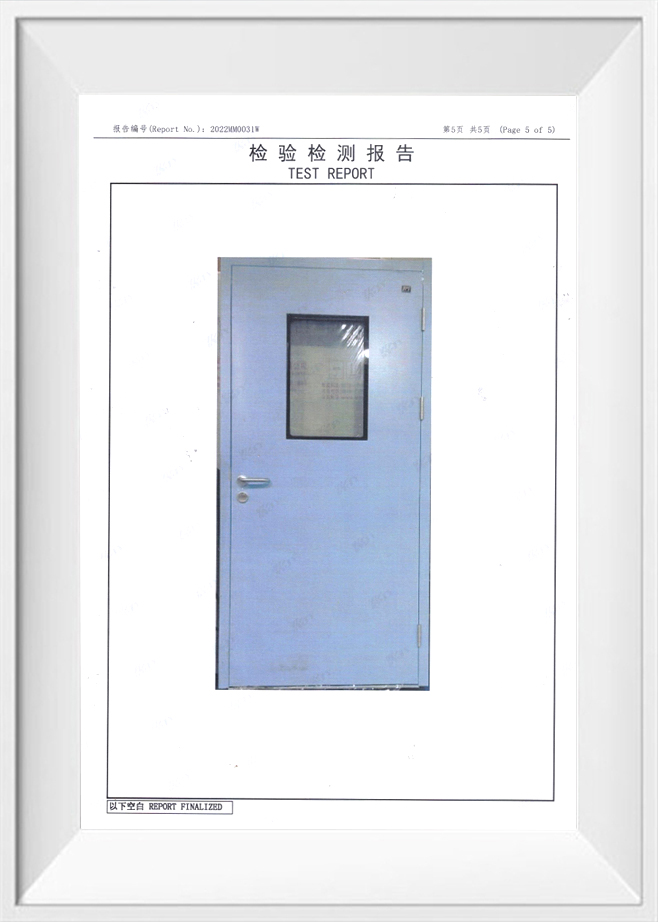
Some doors include small observation windows, allowing staff to easily view the room while avoiding frequent door opening.
Common X-Ray Room Door Types
In different hospital projects, imaging room doors may employ different structural forms to adapt to spatial layout and usage requirements. Common types are as follows:
| Door Type |
Structural Characteristics |
Applicable Situations |
| Single Door |
Simple structure, easy installation |
Small examination rooms |
| Double Door |
Larger passage space |
Frequent equipment access |
| Sliding Door |
Saves corridor space |
Narrow corridor areas |
| Automatic Door |
Convenient opening method |
Areas with high personnel flow |
| Door with Observation Window |
Allows viewing of the room |
Medical staff monitoring needs |
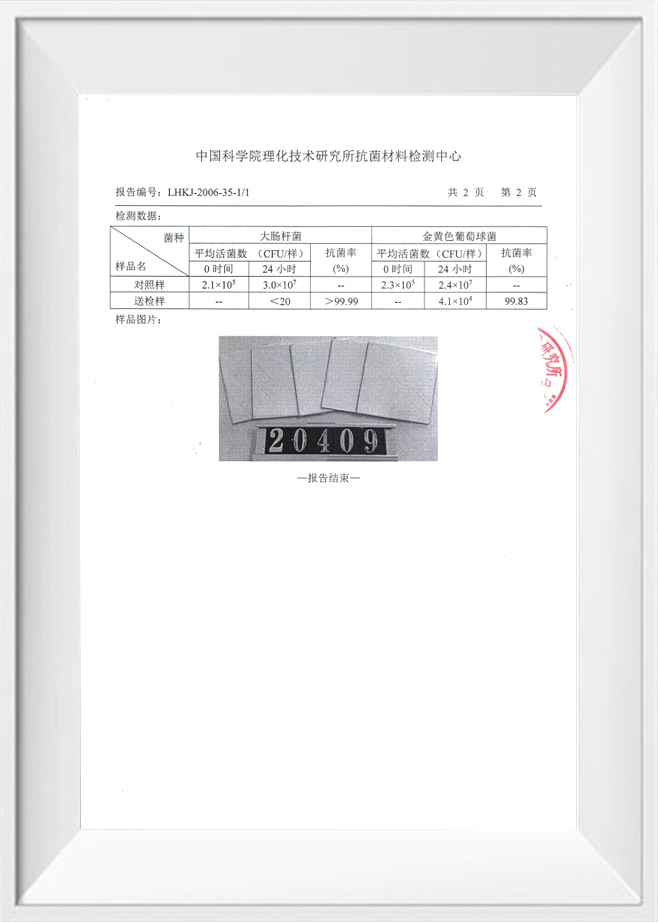
In medical environments, radiology departments may use multiple door types simultaneously. Some areas may also be equipped with Radiation-Proof Doors or Antibacterial Doors to meet the design requirements of different functional spaces.
X-Ray Room Door Material Selection
Door materials affect lifespan, appearance, and daily maintenance. In medical imaging spaces, material selection typically considers the following factors:
Metal Structure Doors
Metal structure doors are common in medical buildings, characterized by:
- Structural stability
- Adaptability to frequent opening
- Relatively easy maintenance
- Composite Material Door Panels
Composite material doors offer greater flexibility in visual design, allowing them to coordinate with the overall style of the medical space.
Observation Window Glass
Observation windows typically use transparent or semi-transparent materials, enabling staff to observe the interior without opening the door.
Surface Protective Layer
Some door surfaces are reinforced with protective structures to reduce the impact of trolleys or equipment collisions.
Factors to Consider in X-Ray Room Door Design
In the design phase of medical buildings, doors are not only independent facilities but also need to be coordinated with the entire radiology department space. The following are common considerations during the design process.
Spatial Layout
- The door's location needs to maintain a reasonable distance from equipment placement.
- The door's opening direction should not obstruct corridor passage.
- The door's size needs to accommodate equipment transport requirements.
Usage Frequency
- A certain number of patients enter and exit the imaging room daily.
- The door structure needs to maintain stable operation.
- The hardware structure should possess good durability.
Cleaning and Maintenance
Medical environments have high requirements for cleanliness management; therefore, door design typically considers:
- Surface smoothness
- Material durability
- Ease of daily cleaning
- Installation Method
Door installation needs to match the wall structure to ensure long-term stability.
Impact of X-Ray Room Doors on Medical Processes
Although the door is only one component of the building, it has a certain impact on workflow in medical imaging departments.
- Improving Examination Efficiency
A well-designed door allows for smoother patient entry and exit, reducing waiting time.
A clearly defined entrance structure helps medical staff better manage patient entry into the examination room.
- Enhancing Patient Experience
A quiet and clean examination environment helps patients remain relaxed during the examination.
Medical Imaging Space Door Systems
In radiology departments, doors typically do not exist in isolation but rather form a complete door system. The functions of doors in different areas may differ; for example:
- Examination room entrances use X-ray room doors.
- Some areas may have radiation-proof doors installed.
- Other auxiliary spaces may be equipped with antibacterial doors.
This combination allows for greater clarity in the functionality and management of the medical space.
While X-ray room doors are only one part of the spatial infrastructure, they play a crucial role in examination processes, space management, and patient experience. Through rational structural design, material selection, and installation methods, these doors can adapt to the actual needs of the imaging examination environment.

 English
 Español