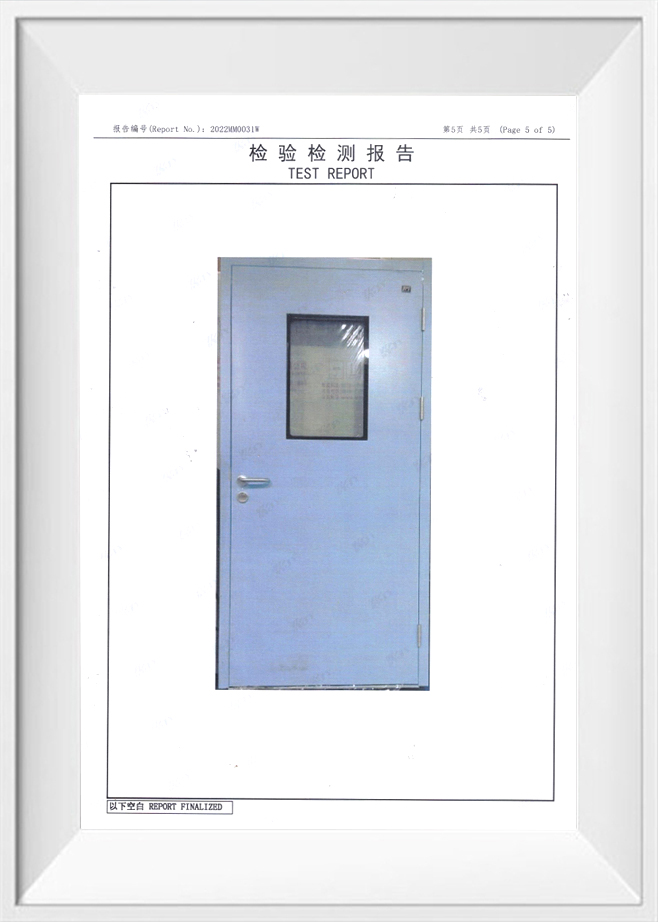
Properly configured fire-rated doors help slow the spread of fire during an outbreak, buying time for evacuation and emergency response. As building functions become increasingly diverse, fire door types are becoming more specialized, including different structural forms suitable for public spaces, commercial areas, and medical environments.
Basic Concepts of Fire-Rated Doors
A fire-rated door is a door structure that maintains a certain level of fire resistance and insulation performance within a specified time. Its primary goal is to prevent the spread of flames and high-temperature smoke in a fire environment, thereby protecting personnel safety and the stability of the building structure.
Generally, fire-rated doors need to meet the following basic requirements:
- Maintain structural integrity for a certain period of time
- Reduce heat conduction
- Prevent rapid smoke spread
- Compatible with building fire compartments
- Use in conjunction with automatic door closing systems
Different building uses have different fire resistance requirements; therefore, selection must be based on specific circumstances during the design phase.
Main Structural Components of Fire-Rated Doors
A qualified fire-rated door is typically constructed of multiple layers of materials to enhance its fire resistance. Common structural components include the door leaf, door frame, sealing system, and hardware.
Main Components:
- Door Leaf Main Structure
- Fire-resistant Filling Material
- Fire-resistant Sealing Strip
- High-Temperature Resistant Hinges
- Automatic Door Closing Device
The sealing strip expands at high temperatures, filling gaps and reducing smoke penetration. The overall stability of the door structure directly affects its fire resistance performance.
Characteristics of Fire Rated Aluminum Doors
Fire Rated Aluminum Doors are a type of fire door, typically designed with an aluminum alloy structure and fire-resistant filling material. Aluminum alloys offer good structural stability and are relatively lightweight, making them suitable for various building environments.
Common characteristics of this type of door include:
- Simple appearance
- Suitable for modern architectural styles
- Can be combined with glass observation windows
- Relatively stable structural strength
- Suitable for indoor/outdoor transition areas
In commercial buildings, Fire Rated Aluminum Doors are often used at office building entrances or public passageways, balancing functionality and visual harmony.
Application Characteristics of Fire-Rated Hospital Doors
In medical environments, the installation of fire-rated hospital doors is of particular significance. Medical buildings experience frequent personnel flow and clearly defined functional areas; therefore, fire doors must balance fire resistance with ease of daily passage.
Fire-rated hospital doors typically possess the following characteristics:
- Easy to clean and maintain
- Durable surface materials
- Compatible with automatic opening systems
- Adaptable to high-frequency use environments
- Supports barrier-free design
In hospital buildings, fire doors are often installed in ward areas, equipment rooms, and corridor zones to provide effective isolation in emergencies.
Comparison Table of Different Types of Fire Rated Doors
The following is a basic comparison of common types of Fire Rated Doors:
| Type |
Main Material |
Applicable Environment |
Features |
| Steel Structure |
Steel Plate and Fire-Resistant Filling |
Industrial and Public Buildings |
High strength, wide applicability |
| Fire Rated Aluminum Door |
Aluminum Alloy Structure |
Commercial and Modern Buildings |
Harmonious appearance, moderate weight |
| Wooden Fire-Resistant Structure |
Fire-Treated Wood |
Interior Spaces |
Natural style, suitable for interior design |
| Fire Rated Hospital Door |
Multi-Layer Composite Structure |
Medical Buildings |
Emphasis on hygiene and passage efficiency |
As the comparison shows, different structural forms are suitable for different building scenarios, and the choice should be based on functional requirements.
Installation and Design Considerations
When installing Fire Rated Doors, it is necessary to plan in conjunction with the overall fire compartmentation of the building. A reasonable design helps improve the overall fire protection effect.
Design and Installation Recommendations:
- Define the location of fire compartments
- Determine the opening direction
- Allow sufficient installation space
- Configure an automatic door closing device
- Ensure a secure connection between the door frame and the wall
For Fire-Rated Aluminum Doors, pay attention to the sealing of material joints. For Fire-Rated Hospital Doors, consider barrier-free access and pedestrian flow paths.
Maintenance and Inspection
To ensure the long-term performance of Fire-Rated Doors, regular inspection and maintenance are necessary.
Daily Maintenance:
- Check for door deformation
- Test the door closing device for proper function
- Clean dust from the sealing strips
- Check the hardware for secure fastening
- Confirm the door is closed
In high-traffic areas, such as locations with Fire-Rated Hospital Doors, increase the frequency of inspections.
Common Application Scenarios
Fire-rated doors play a role in various building applications, including:
- Office building corridor partitions
- Internal passageways in commercial complexes
- School teaching building areas
- Functional areas in medical institutions
- Stairwells in public buildings
In these scenarios, Fire-rated Aluminum Doors are often used in spaces with high aesthetic requirements, while Fire-rated Hospital Doors are more commonly used in medical environments.
Factors to Consider When Choosing a Fire-rated Door
When selecting the appropriate type of Fire-rated Door, consider the following factors:
- Building purpose
- Fire rating requirements
- Frequency of use
- Spatial dimensions
- Characteristics of the people using the door
In addition, it is necessary to consider the overall building design to ensure that the door structure is consistent with the wall system.
Fire-rated doors play a crucial role in building safety systems. By appropriately selecting different types of fire doors, such as Fire-rated Aluminum Doors or Fire-rated Hospital Doors, appropriate fire compartmentation functions can be achieved according to specific scenarios. Combined with scientific design, standardized installation, and regular maintenance, this helps improve the overall safety management level of the building.

 English
 Español