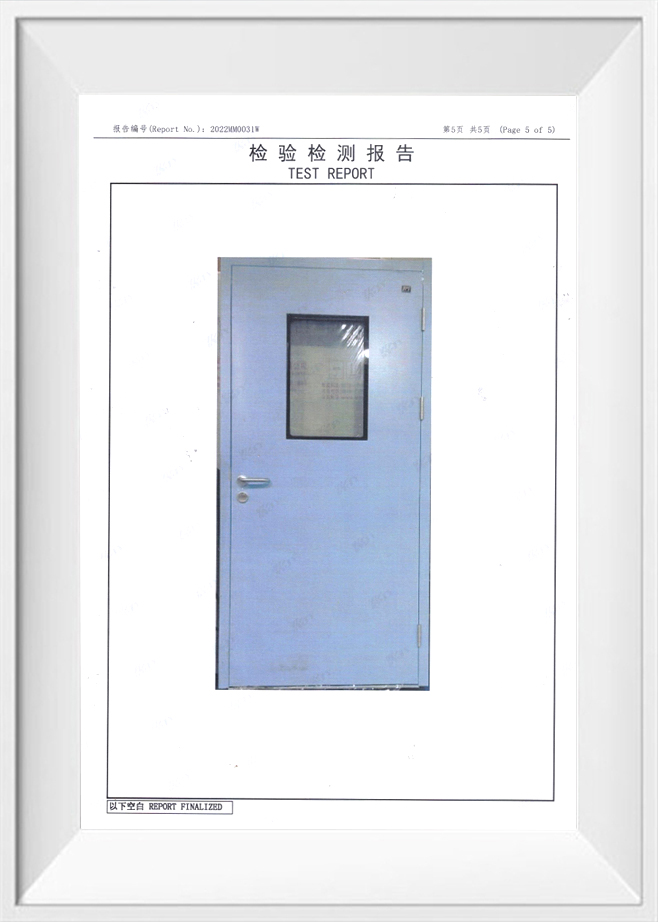
Acoustic Steel Doors are soundproof doors made with a steel frame, filled with sound-absorbing materials, and featuring an optimized sealing structure. Their core objective is to reduce sound transmission through gaps and structure, thereby small indoor and outdoor noise interference.
This type of door typically features the following characteristics:
- Steel frame and door panel structure
- Internal sound-absorbing filling layer
- Multi-point sealing system
- Reinforced hinge structure
- Configurable observation window design
In some applications, Acoustic Metal Doors are also used for similar purposes, emphasizing the combination of metal structure and sound insulation performance.
Structural Composition and Material Analysis
The performance of an Acoustic Steel Door is closely related to its material structure. The door typically employs a multi-layered composite structure design to enhance sound insulation.
Common structural components include:
- Outer steel plate
- Sound-absorbing filling material
- Sealing strip
- Automatic sealing device at the bottom of the door
- Reinforced door frame
Noise Reduction Steel Doors are structurally similar to the above designs, focusing on improving overall sealing performance and reducing sound propagation paths.
Application Characteristics of Acoustical Metal Doors
Acoustical metal doors are typically used in locations with specific sound control requirements, such as meeting spaces, recording areas, or equipment rooms. Their design focuses on:
- Improving the overall airtightness of the door
- Optimizing seam treatment
- Adding an internal sound-absorbing layer
- Using in conjunction with wall sound insulation structures
In practical engineering, the sound insulation effect of the door depends not only on the materials used but also closely on the precision of its installation.
Comparison Table of Different Types of Acoustic Steel Doors
The following is a basic comparison of common types of Acoustic Steel Doors:
| Type |
Structural Characteristics |
Applicable Scenarios |
Design Focus |
| Standard Acoustic Steel Door |
Single-layer steel plate + filling layer |
Office space |
Basic noise control |
| Acoustical Metal Door |
Metal structure + reinforced sealing |
Meeting and functional areas |
Combination of structural stability and sound insulation |
| Noise Reduction Steel Door |
Multi-layer structural design |
Requires a lower noise environment |
Improved sealing and sound absorption performance |
| Structure with Observation Window |
Steel frame + soundproof glass |
Corridors and public areas |
Balancing sightline and acoustic control |
The comparison shows that different structural forms are suitable for different spatial needs and should be selected according to environmental conditions.
Design Considerations
When designing Acoustic Steel Doors, the overall acoustic layout of the building needs to be considered. The door body is usually a weak point in sound transmission, therefore, attention to detail is required.
Design recommendations include:
- Ensuring a tight connection between the door frame and the wall
- Using a multi-layered sealing structure
- Controlling door gaps
- Selecting steel plates of appropriate thickness
- Configuring a bottom sealing device
Noise Reduction Steel Doors typically emphasize overall sealing continuity in their design to reduce sound leakage paths.
Application Scenarios
Acoustic Steel Doors can be used in various architectural environments, including:
- Office meeting areas
- Classrooms in educational institutions
- Functional spaces in medical institutions
- Industrial equipment rooms
- Recording and testing spaces
In these scenarios, Acoustic Metal Doors are often used as functional partition doors, forming a complete acoustic system in conjunction with the wall structure.
Installation and Construction Considerations
Proper installation has a significant impact on the performance of Acoustic Steel Doors. Even with a reasonable door structure, improper installation can affect sound insulation.
Installation Precautions:
- Ensure the door frame is vertical and horizontal.
- Use a suitable fixing method.
- Fill the gap between the door frame and the wall.
- Install the automatic closing device.
- Perform a sealing check.
For Noise Reduction Steel Doors, pay special attention to the contact seal between the bottom of the door and the ground.
Maintenance and Care Methods
To maintain the long-term performance of the Acoustic Steel Door, regular inspections are recommended.
Daily Maintenance:
- Check the condition of the sealing strips.
- Clean the door surface.
- Test the function of the closing device.
- Check the tightness of the hardware.
- Observe the door for deformation.
In high-frequency use areas, Acoustic Metal Doors may require more frequent inspections to maintain structural stability.
Performance Influencing Factors
Factors affecting the performance of Acoustic Steel Doors include:
- Door thickness
- Density of internal filling material
- Quality of the sealing system
- Installation accuracy
- Wall sound insulation capacity
Insufficient wall sound insulation capacity can affect the overall effect even if the door itself performs well. Therefore, it should be considered holistically during the design phase.

 English
 Español