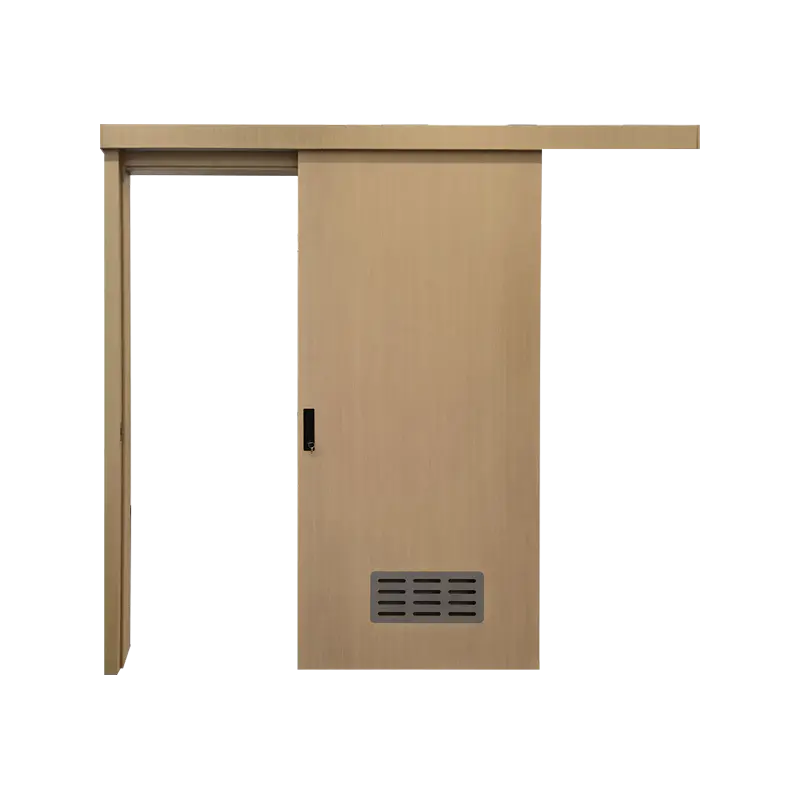
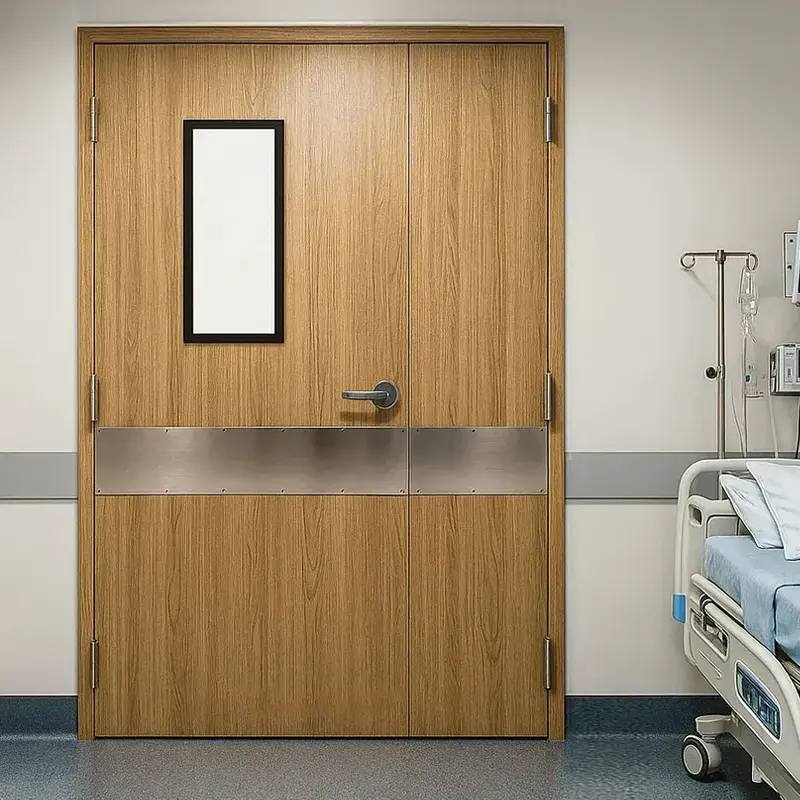
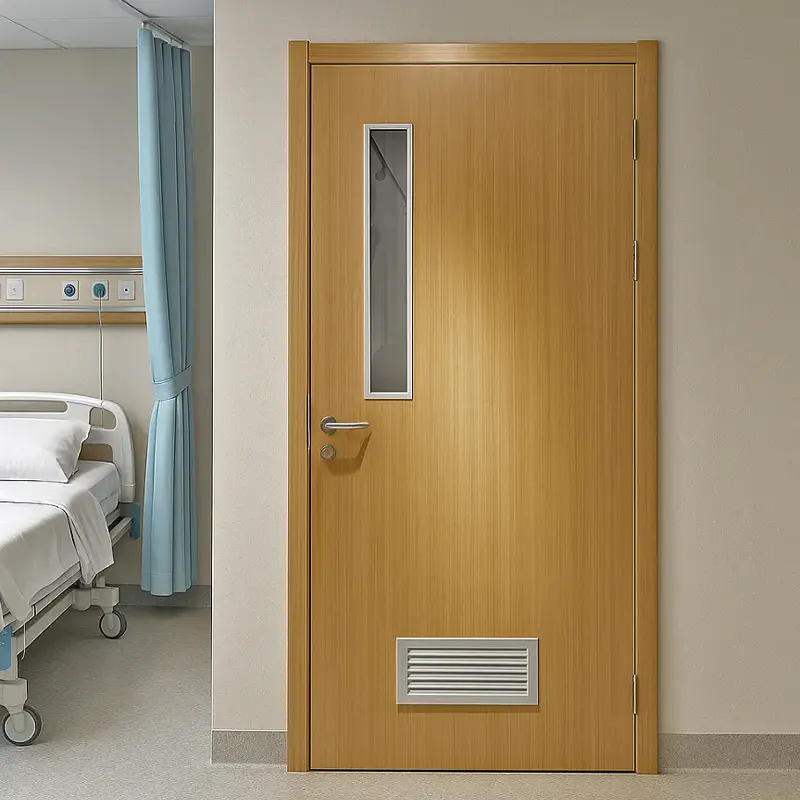
Wooden medical doors aren't standard interior doors with a coat of paint. They're purpose-engineered for healthcare environments — which means they have to meet a set of requirements that most residential or commercial doors never face.
The core of a wooden medical door is typically a solid or engineered wood composite core, dense enough to provide meaningful acoustic separation between rooms. That matters in hospitals. A patient trying to rest in one room shouldn't be listening to a conversation happening in the corridor. And in consultation rooms, privacy isn't just a comfort issue — it's a regulatory one in many jurisdictions.
Beyond the core, the exterior surfaces are treated and finished to resist bacterial growth and tolerate repeated cleaning with hospital-grade disinfectants. That last point is more technically demanding than it sounds. The chemicals used in clinical cleaning cycles are aggressive. A finish that degrades under them isn't just a cosmetic problem — it creates surface irregularities where pathogens can accumulate.
Any door going into a healthcare setting needs to meet fire rating standards — typically 30-minute or 60-minute ratings depending on the location within the facility. Wooden medical doors can be manufactured to comply with these ratings, which surprises people who assume wood and fire safety are fundamentally at odds.
The fire resistance in these doors comes from intumescent seals built into the door edges, along with the density and composition of the core material. When exposed to heat, the intumescent strips expand and seal the gap around the door frame, slowing the spread of smoke and flame. It's a well-established technology, and wooden doors using it are routinely certified to the same standards as steel alternatives.
Compliance documentation matters here. Facilities managers and procurement teams should confirm that any wooden medical door being specified carries the relevant certifications for their country or region — and that those certifications are current, not several years out of date.
This is where wooden medical doors tend to pull ahead in comparisons with lighter alternatives. Wood is a naturally dense material, and when it's used in a solid-core door construction, the sound transmission reduction can be substantial. For psychiatric wards, oncology units, or any space where patient distress is a real possibility, acoustic performance isn't a secondary concern — it shapes how care is delivered.
Thin hollow-core doors — still found in some older facilities — offer almost no meaningful acoustic barrier. Replacing them with properly specified wooden medical doors is one of the more straightforward upgrades a facility can make, and the impact on patient experience tends to be immediately noticeable.
There's a growing body of thinking in healthcare design that environment affects recovery. Not dramatically, not in ways that override clinical care — but the look and feel of a space does influence patient stress levels and staff wellbeing. A corridor of warm-toned wooden doors reads differently than a row of grey steel panels.
Wooden medical doors can be finished in a wide range of veneers or laminates, allowing them to integrate with the broader interior design of a facility without looking out of place. Some manufacturers offer antimicrobial laminate surfaces that mimic the appearance of natural wood grain while providing the hygiene performance clinical spaces require. It's a practical middle ground — one that doesn't force a choice between function and environment.
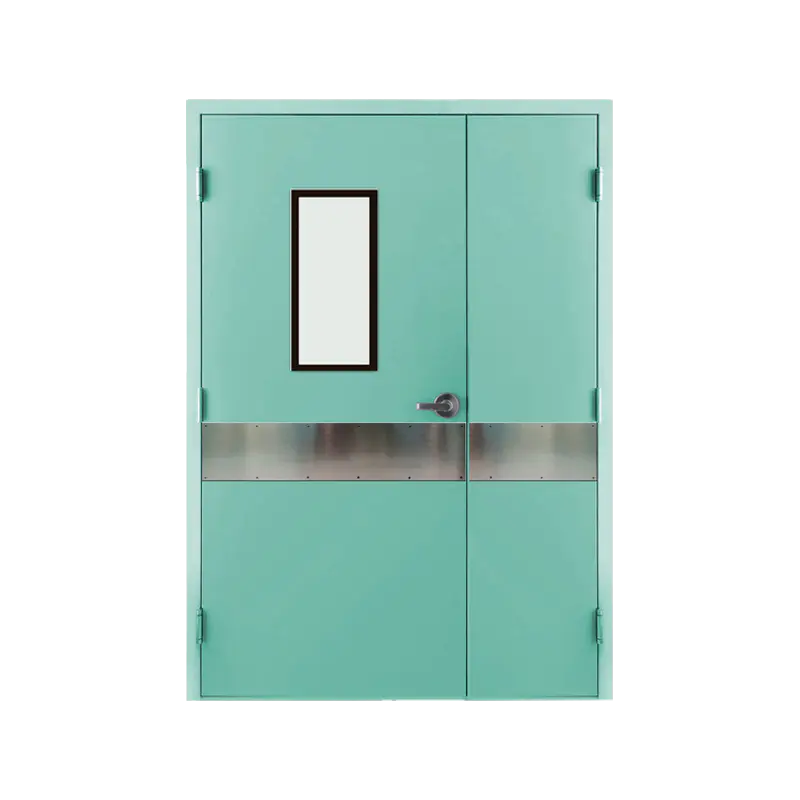
A door in a medical setting does more than open and close. It needs to accommodate beds, wheelchairs, and medical equipment moving through it — sometimes quickly. Standard clearance widths for wooden medical doors in clinical corridors typically start around 900mm to 1000mm, with wider openings in areas where large equipment is regularly transported.
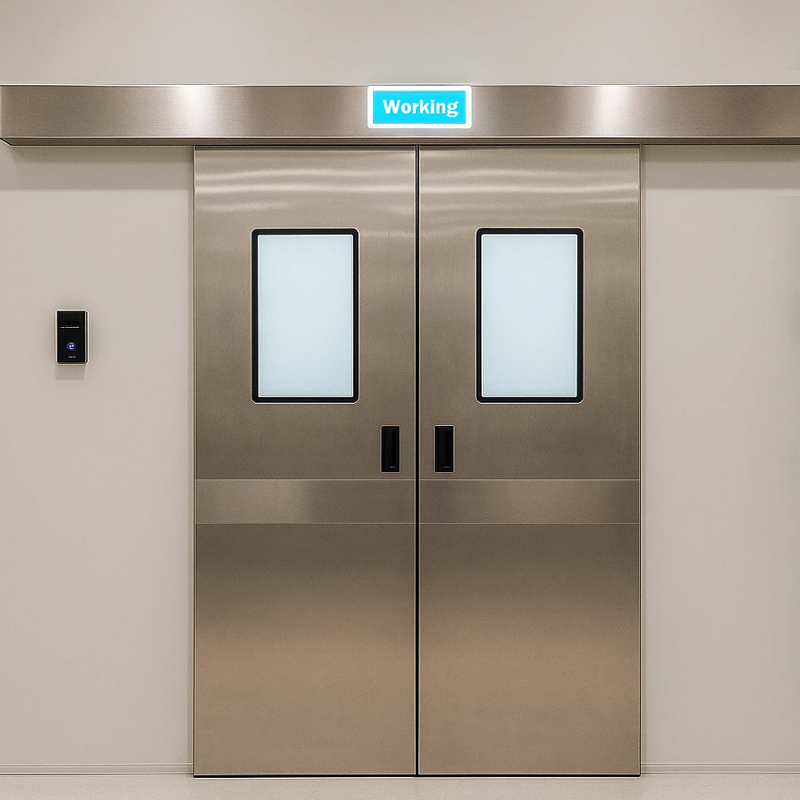
Hardware selection matters too. Lever handles rather than knobs, surfaces that can be operated with a forearm or elbow, automatic door openers in high-traffic areas — these details are often specified alongside the door itself, and wooden medical doors are manufactured with the fixings and reinforcement to support them.
Your email address will not be published. Required field are marked*

Product Recommendations
Explore Our Medical Door Solutions
Contact Information
No. 87, Xingwang Road, Zaotang Industrial Zone, Xicheng Street, Yongkang, Zhejiang, China
+86-13758983507
+86-579-87321128
Mobile


 English
 Español