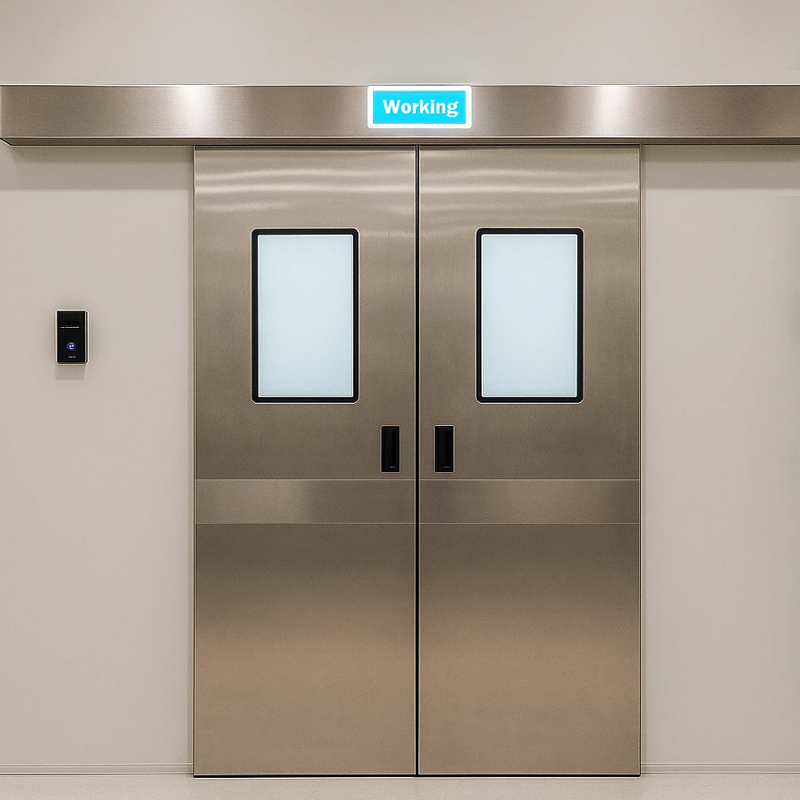
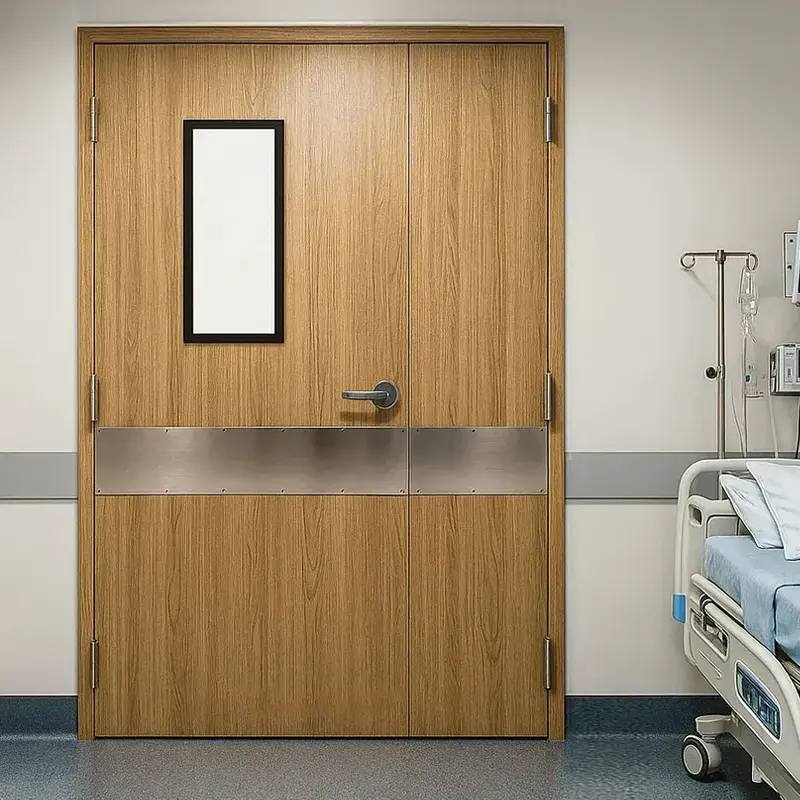
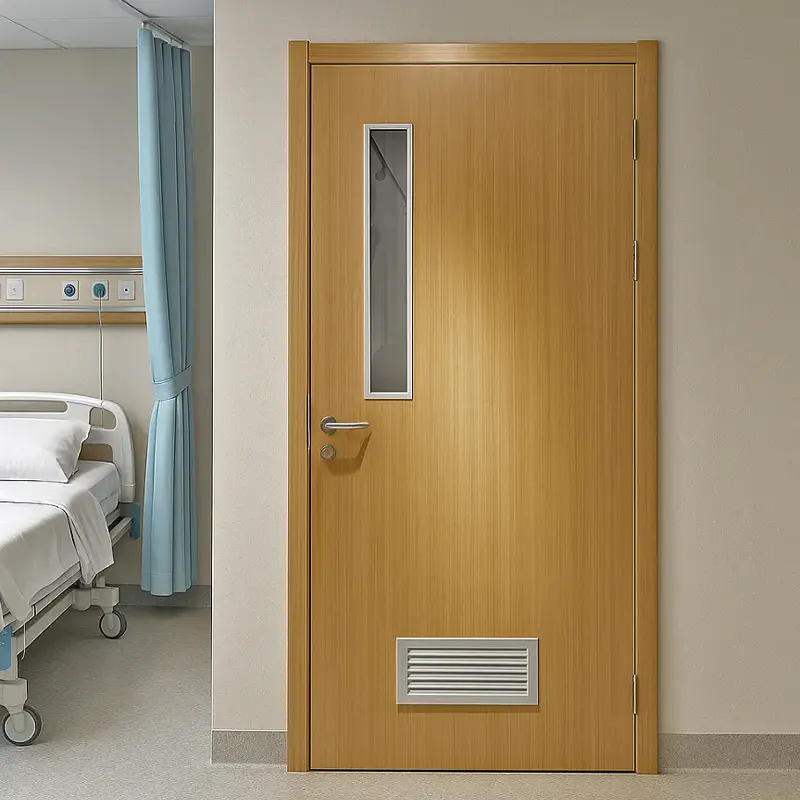
A door in a conventional building needs to open, close, and keep the weather out. That's roughly where the requirements end. A cleanroom door carries a considerably longer list of obligations.
It needs to maintain an airtight seal when closed to support the differential pressure that keeps contaminants from migrating between zones. It needs surfaces that don't shed particles — no exposed particle board edges, no porous coatings, nothing that degrades under repeated chemical wipe-downs. And it needs to operate without generating the kind of air turbulence that disrupts the laminar flow patterns that cleanroom HVAC systems work hard to maintain.
Standard commercial doors fail most of these requirements quietly and immediately. That's why cleanroom doors are specified and manufactured as a distinct product category.
Stainless steel and aluminum are popular choices for cleanroom doors, especially in places like pharmaceutical plants and semiconductor facilities where cleanliness standards are extremely strict. The reason is pretty practical — both materials have smooth, sealed surfaces that are easy to clean and can handle strong disinfectants without wearing down quickly.
Powder-coated steel is another option that shows up frequently — less expensive than stainless, and workable for ISO Class 7 or 8 environments where contamination thresholds are less stringent. The coating itself needs to be applied properly; poorly finished edges or thin spots will chip under repeated contact and create exactly the kind of particle-shedding problem the door is supposed to prevent.
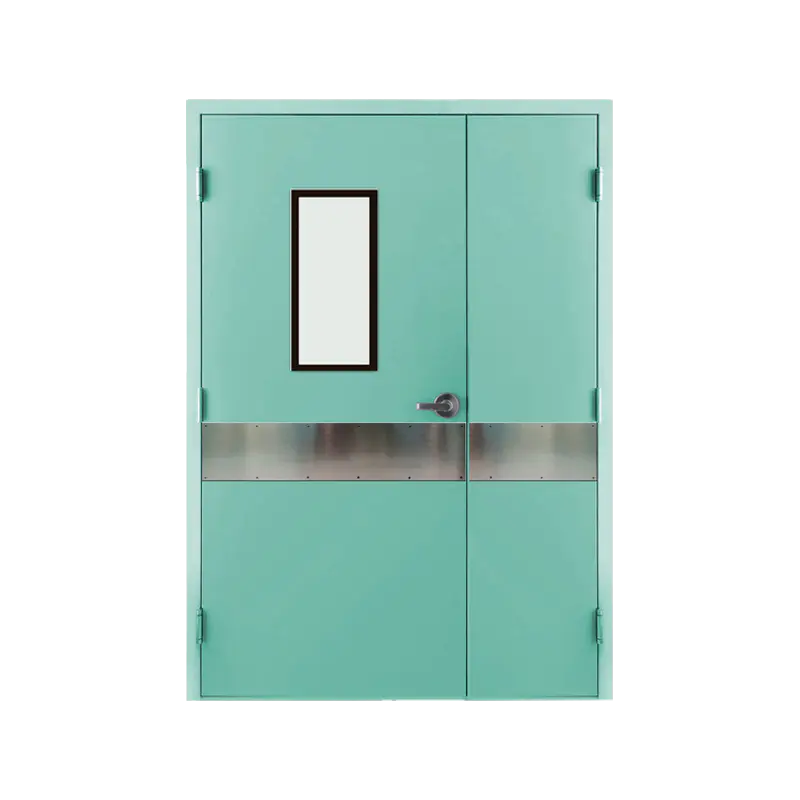
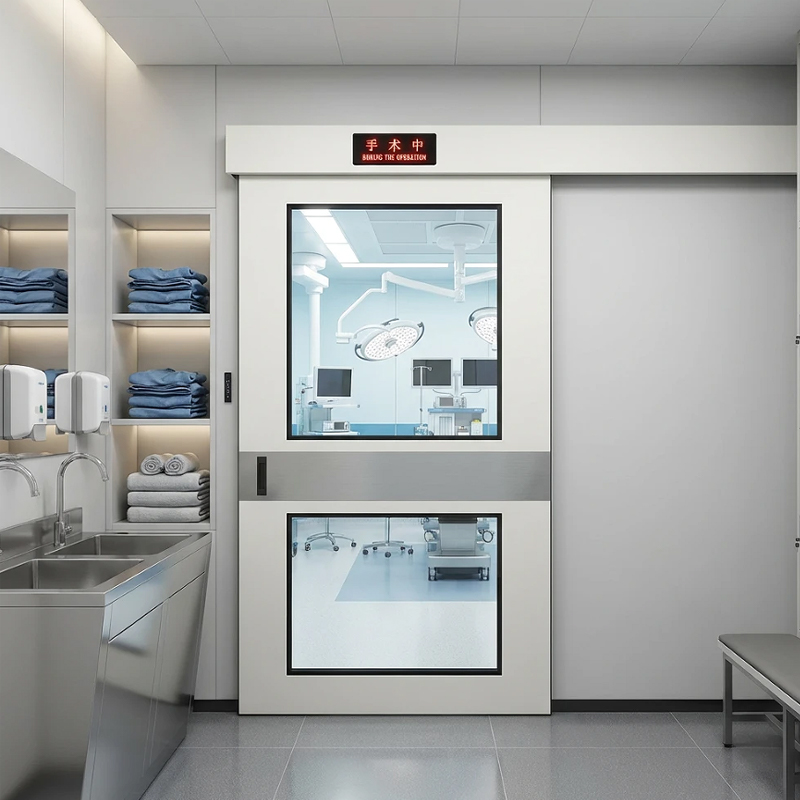
Some cleanroom doors incorporate vision panels — tempered glass or polycarbonate windows — that allow staff to check what's happening on the other side before opening. This sounds like a small detail. In practice, it meaningfully reduces the number of unnecessary door cycles, which matters because every time a cleanroom door opens, it's a contamination event that the HVAC system has to recover from.
The way a cleanroom door opens matters more than people outside the industry tend to appreciate. Swing doors are common and straightforward, but every time one opens into a cleanroom, it creates a pressure wave that disturbs airflow. In lower-classification environments, that's manageable. In tighter spaces or higher-classification rooms, it's a real consideration.
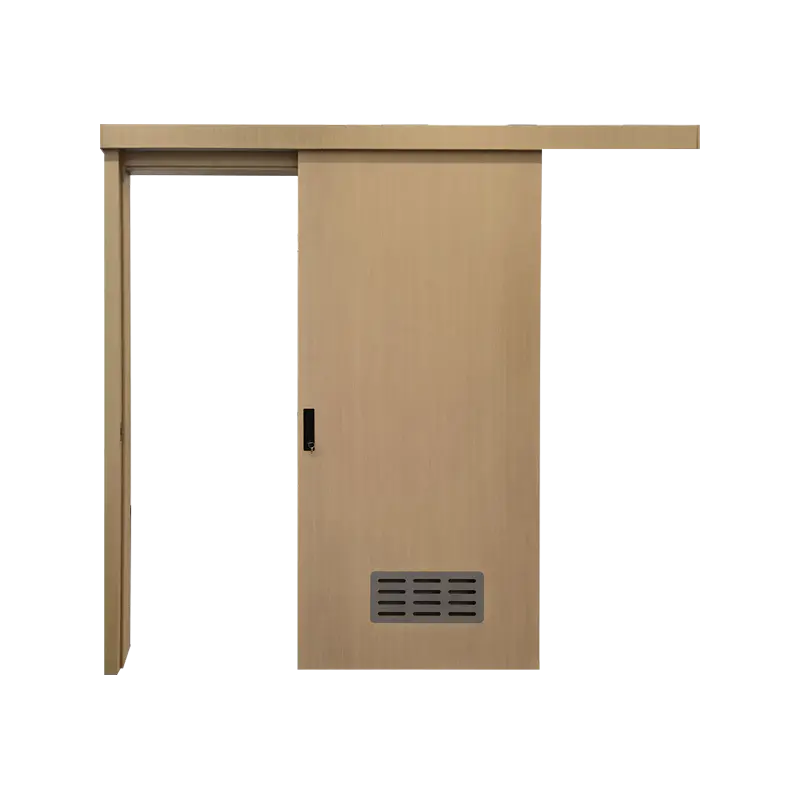
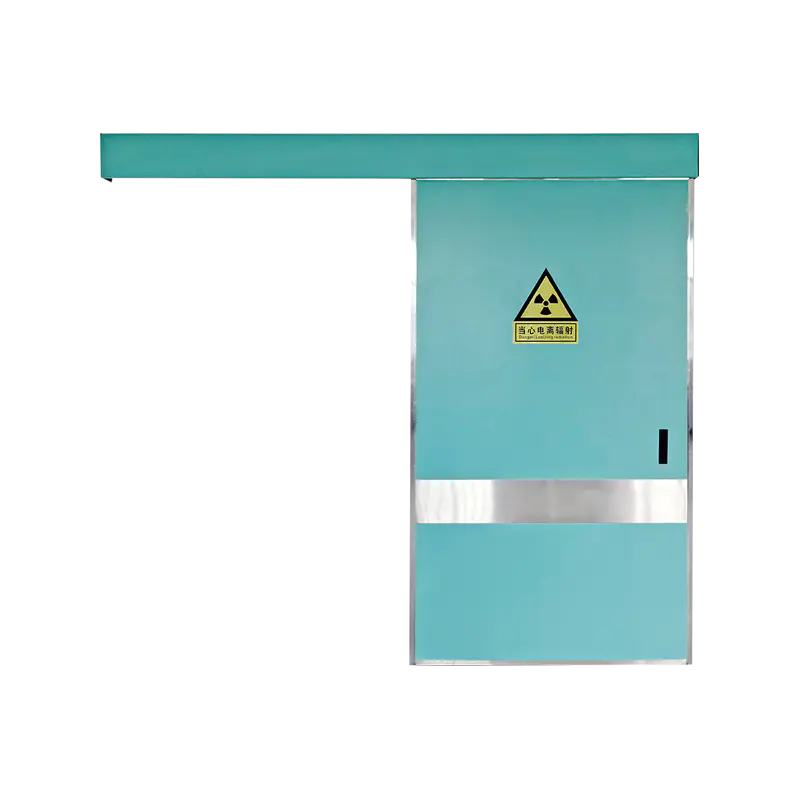
Sliding cleanroom doors sidestep that issue. They move parallel to the wall rather than sweeping through the air, which produces far less turbulence. The trade-off is complexity — sliding mechanisms require more maintenance attention than hinged doors, and they need wall space to accommodate the panel when open.
Pass-through chambers — not doors in the conventional sense, but airlocked transfer hatches — handle the movement of materials between cleanroom zones without requiring personnel to pass through at all. For facilities where contamination risk around material transfer is a primary concern, pass-throughs are often specified alongside standard doors rather than instead of them.
A well-manufactured cleanroom door installed carelessly will underperform. The frame needs to be plumb and level; even small misalignments prevent seals from engaging correctly. Gaps around the frame perimeter need to be filled and finished to the same standard as the door surface itself — a cleanroom door set into a poorly finished wall opening is a contamination pathway regardless of how well the door itself is made.
Commissioning — verifying that the installed door meets its specified performance before the room goes into use — is a step that occasionally gets skipped under schedule pressure. It's a decision that tends to surface at inconvenient moments afterward. Leak testing, pressure differential verification, and seal inspection at installation are considerably less disruptive than diagnosing a contamination issue six months into production.
Your email address will not be published. Required field are marked*
Product Recommendations
Explore Our Medical Door Solutions
Contact Information
No. 87, Xingwang Road, Zaotang Industrial Zone, Xicheng Street, Yongkang, Zhejiang, China
+86-13758983507
+86-579-87321128
Mobile


 English
 Español