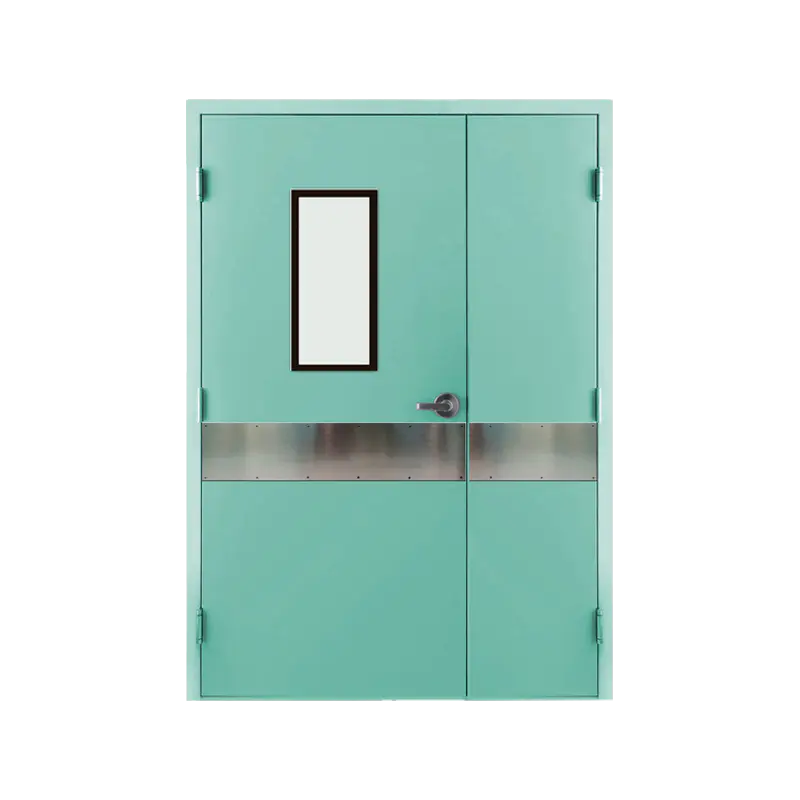
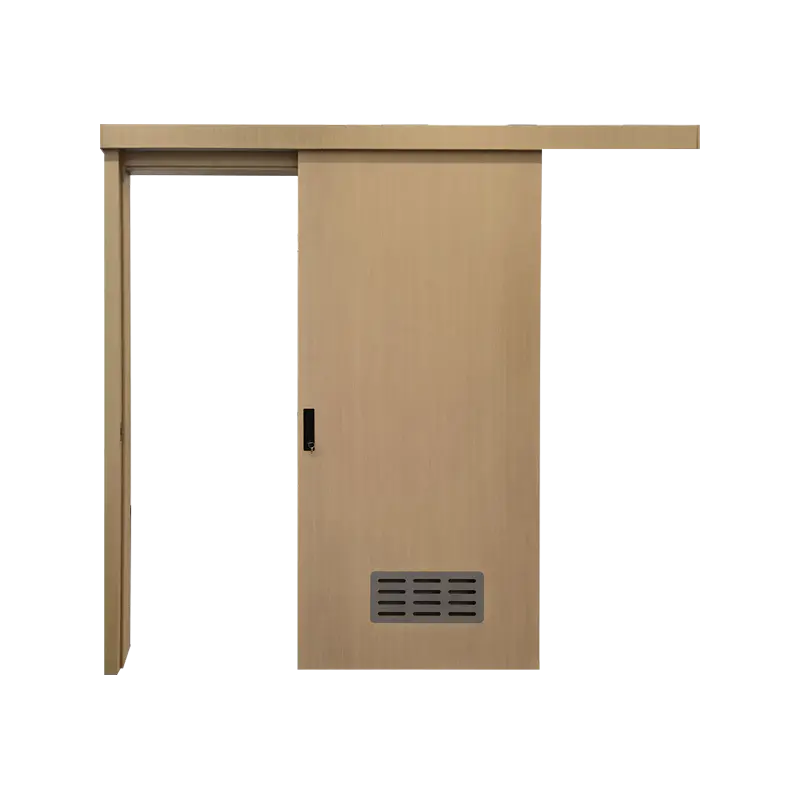
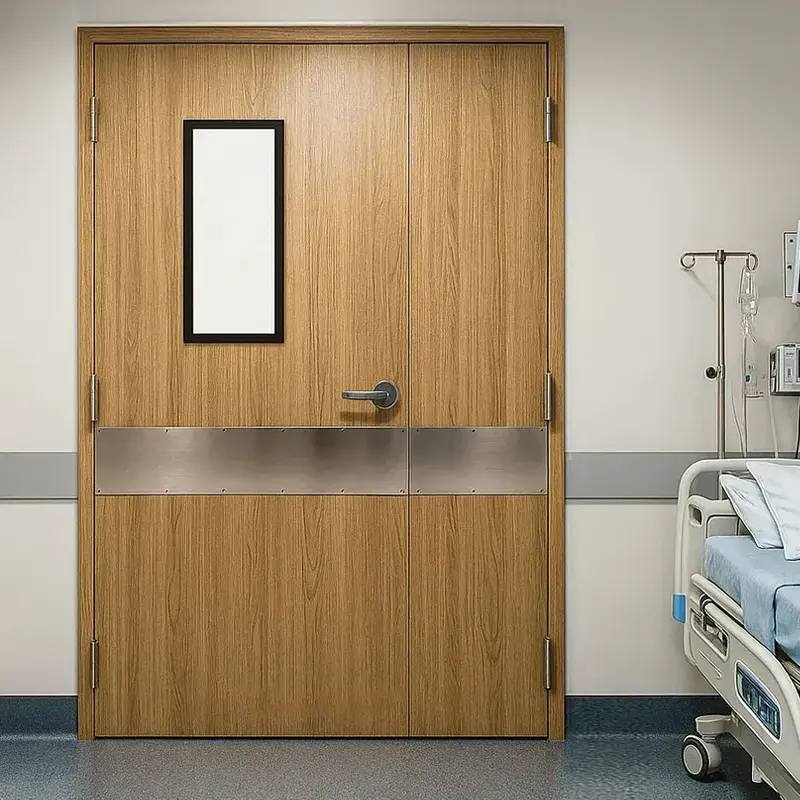
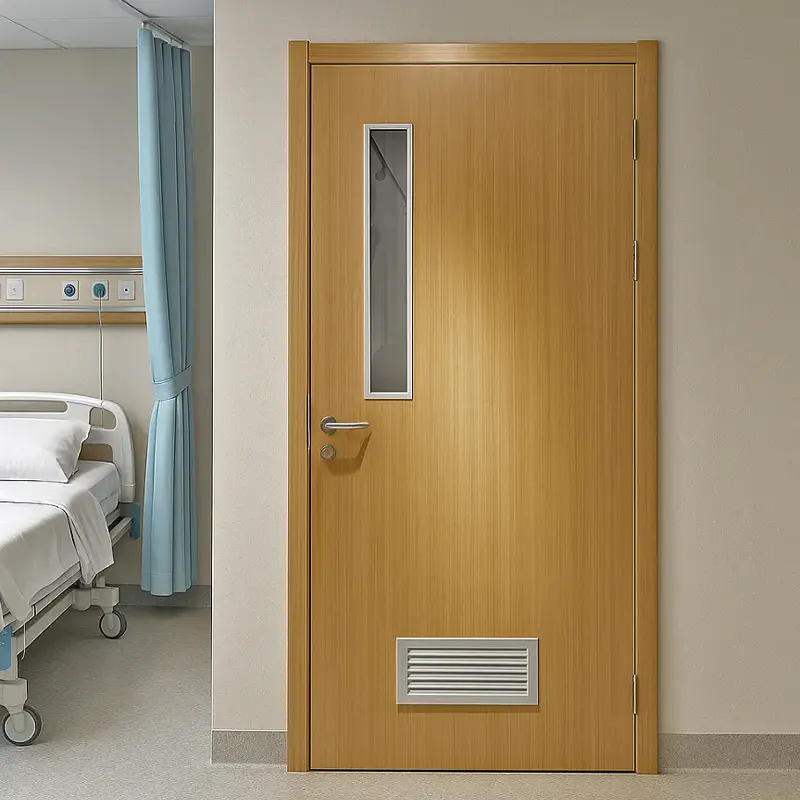
Doors are not merely simple entrances and exits; they are crucial components affecting medical efficiency, spatial security, and patient experience. Among them, patient room doors play a key role in the overall design of a hospital. A well-designed door system helps medical staff work more efficiently while providing patients with a quieter, more comfortable, and more private environment.
The Role of Patient Room Doors in the Medical Environment
Patient room doors connect public corridors to patient rest areas, and their design needs to consider multiple requirements simultaneously. A suitable door system not only improves spatial order but also facilitates smoother medical procedures to a certain extent.
- 1. Providing Necessary Privacy Protection
Patients in hospitals often require a relatively quiet and private environment to rest and recover. Patient room doors can provide a certain degree of visual and auditory isolation, reducing external disturbances for patients while receiving treatment or resting.
- 2. Facilitating Daily Operations for Medical Staff
Medical staff need to frequently enter and exit patient rooms during rounds, nursing care, or emergency procedures. A well-designed door size and opening mechanism can reduce passage obstruction, facilitating the smooth entry and exit of medical equipment and trolleys.
- 3. Enhanced Spatial Security
Medical spaces need to consider factors such as high population density, numerous equipment, and emergency situations. The structural design of ward doors can help achieve smoother evacuation routes and also contribute to maintaining order in the area.
- 4. Support for Environmental Management
Within a hospital, different areas may require different environmental conditions. The door structure and airtightness contribute to maintaining environmental stability in the ward space.
Common Design Types of Patient Room Doors
When selecting ward doors, medical institutions typically determine the door type based on spatial layout, usage needs, and medical procedures. Different structural forms have their own characteristics in terms of user experience and space occupation.
| Door Types |
Features |
Applicable Scenarios |
| Single Door |
Simple structure, easy installation |
General wards |
| Double Door |
Wider passageway |
Wards with many devices |
| Sliding Door |
Saves corridor space |
Compact areas |
| Door with Observation Window |
Facilitates observation of the interior |
Wards with high nursing needs |
| Automatic Door |
Convenient opening mechanism |
Areas with high traffic |
In overall hospital design, these door types may be used in conjunction with Ward Doors or Clinic Doors to meet the functional needs of different areas.
The Importance of Material Selection for Ward Doors
Door materials not only affect the overall appearance but also durability and ease of maintenance. Medical institutions typically consider factors such as cleaning needs, usage frequency, and spatial style when selecting materials.
Common materials include:
- Metal Doors: Structurally stable, durable, suitable for areas with high usage frequency.
- Composite Panel Doors: Offer a good appearance and can coordinate with interior design styles.
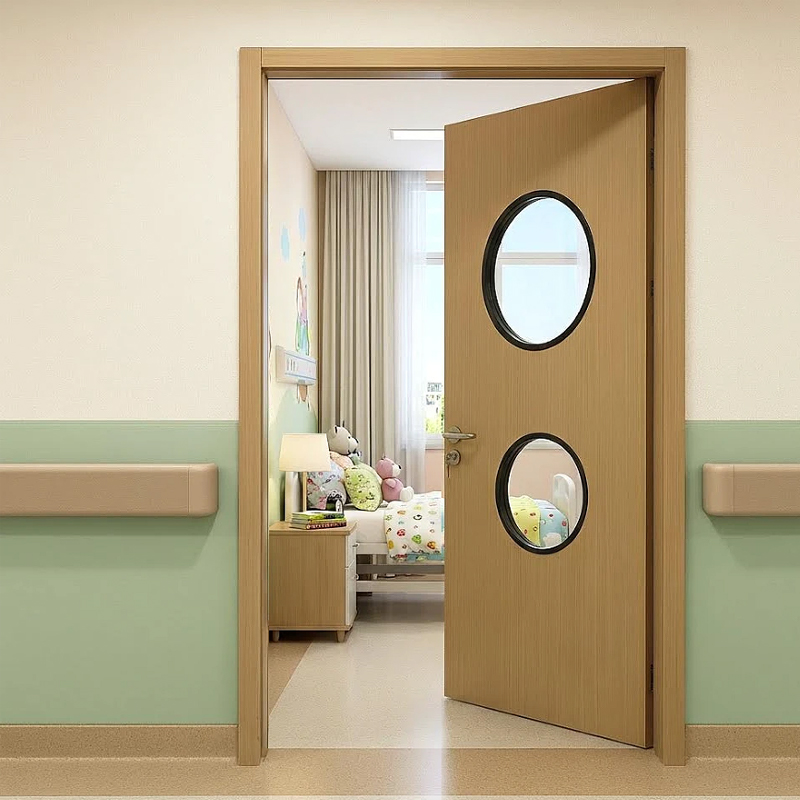
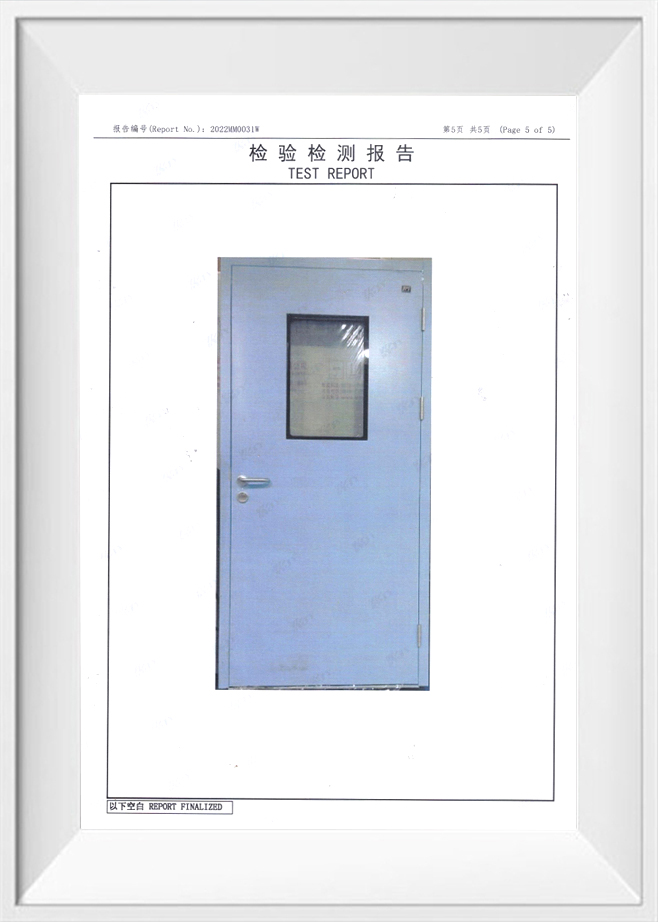
- Glass Observation Window Design: Incorporating a small observation window into the door allows medical staff to observe the interior.
- Impact-Resistant Structural Design: Adding protective structures to the door surface helps reduce damage from equipment cart collisions.
Through a reasonable combination of materials, the Patient Room Door maintains both practicality and consistency with the overall hospital space design.
Key Factors to Consider in Ward Door Design
In medical building design, doors are not isolated elements but need to be coordinated with corridors, ward layouts, and equipment usage methods.
Here are some common design considerations:
Space Dimensions
- Door width needs to accommodate the passage of beds or nursing carts.
- Door opening size should be in reasonable proportion to the corridor width.
- Avoid obstructing normal corridor passage.
Opening Method
- Sliding doors are suitable for areas with compact corridor spaces.
- Hinged doors have a simple structure and are easier to maintain.
- Automatic doors are suitable for environments requiring small contact.
Observation and Communication
- Installation windows allow medical staff to easily monitor the room.
- Door structure should not obstruct necessary visual communication.
Daily Maintenance
- Surface materials need to be easy to clean.
- Hardware should be durable.
- Door installation should facilitate future maintenance.
The Impact of Patient Room Doors on Patient Experience
Medical spaces not only need to meet functional requirements but are also increasingly focusing on the patient's psychological well-being. While door design is a detail, it significantly impacts the overall atmosphere.
A well-designed door structure can reduce corridor noise to some extent, creating a quieter resting environment for patients.
- 2. Spatial Visual Experience
The color and material of the door, when properly matched with the walls and floors of the ward, can create a more welcoming medical space atmosphere.
Details such as door handle height, opening method, and door weight all affect the user experience for patients and nursing staff.
Collaborative Design of the Hospital's Overall Door System
In medical buildings, door design is typically a systematic project. Different areas require different types of doors, and these doors need to maintain a certain degree of coordination in function and style.
For example:
- Patient Room Doors are primarily used in ward areas
- Ward Doors may be installed in inpatient corridors
- Clinic Doors are common in outpatient areas
These doors often maintain a certain uniformity in size, material, and design style to ensure visual continuity and ease of use throughout the hospital space.
Although the Patient Room Door is only one component of the space, it is closely related to patient experience, medical efficiency, and space management. From door structure and material selection to usage methods, every detail can affect daily usability.

 English
 Español