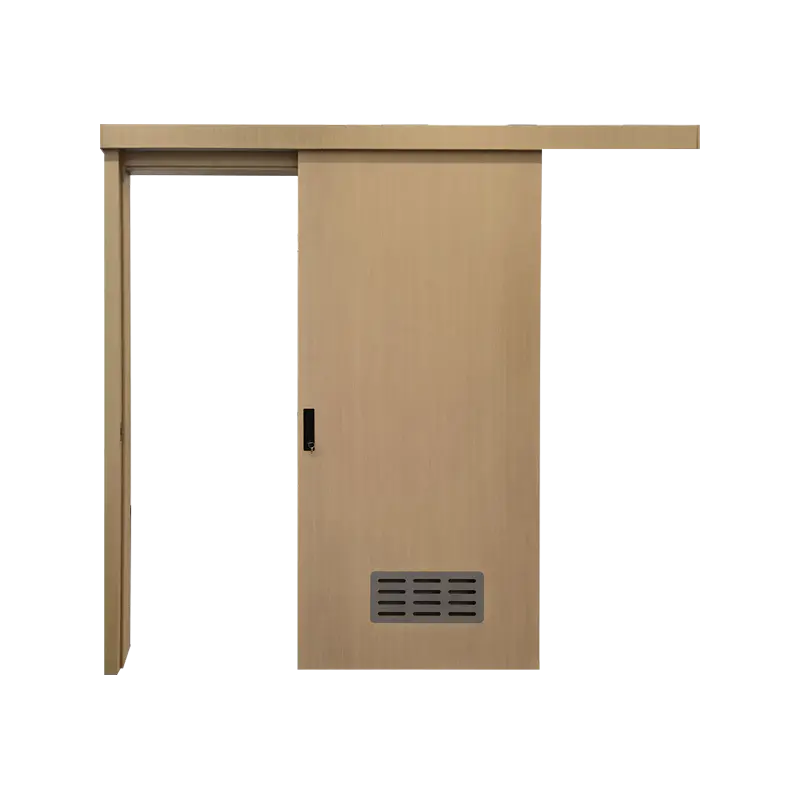
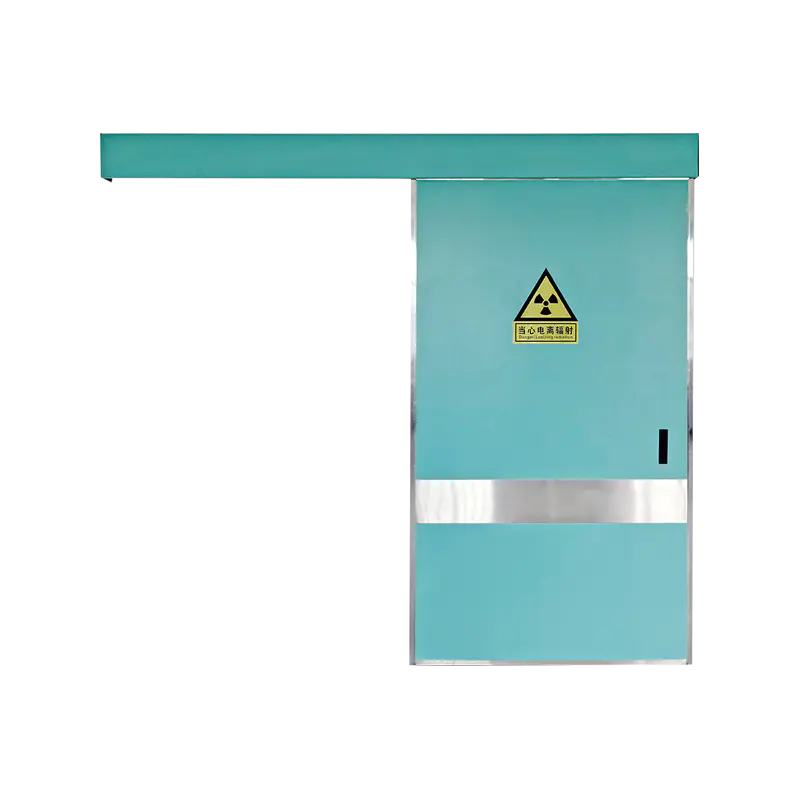
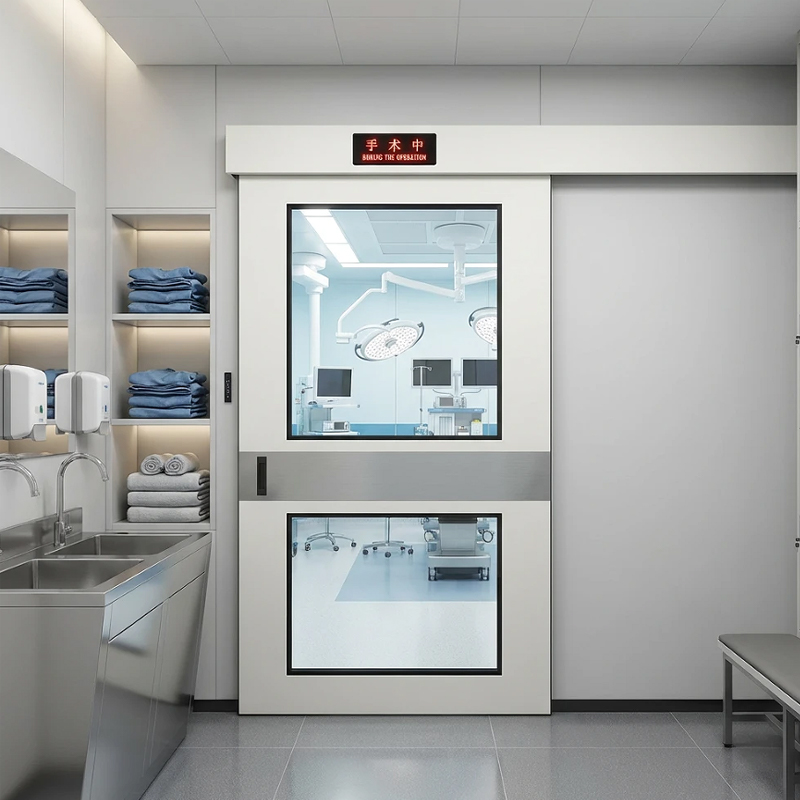
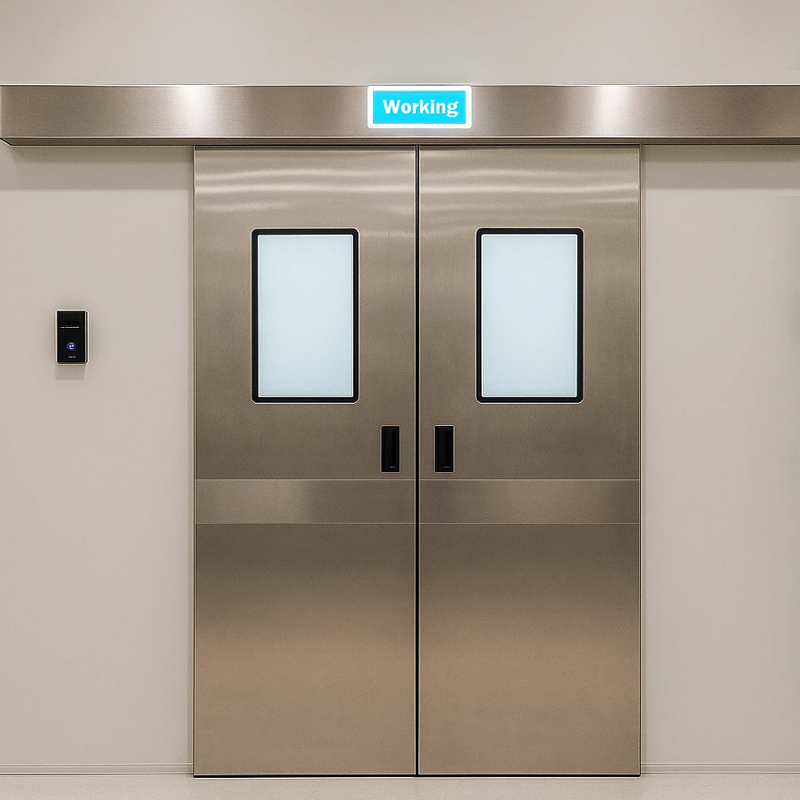
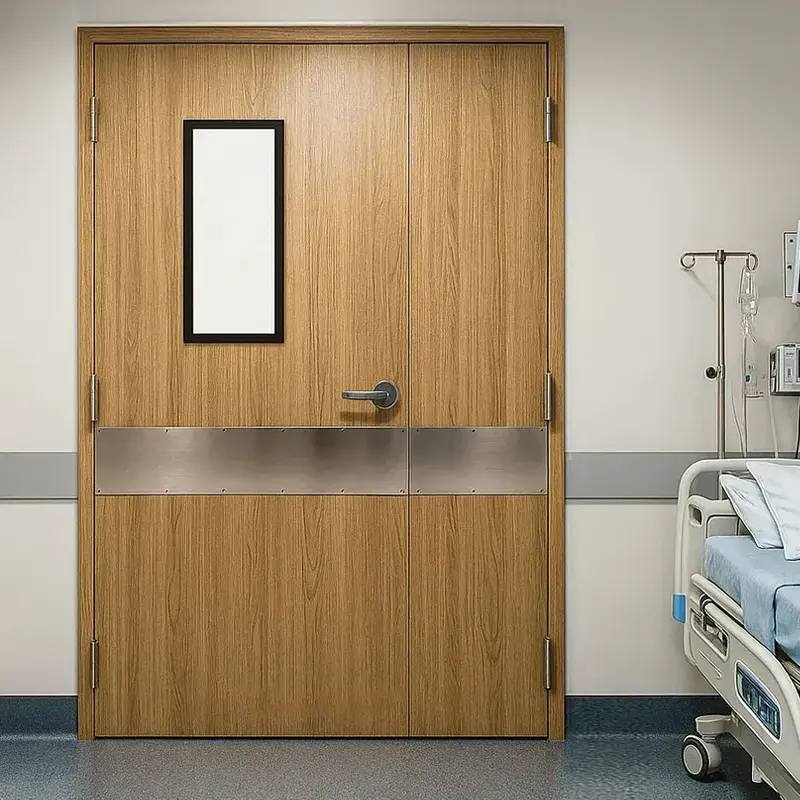
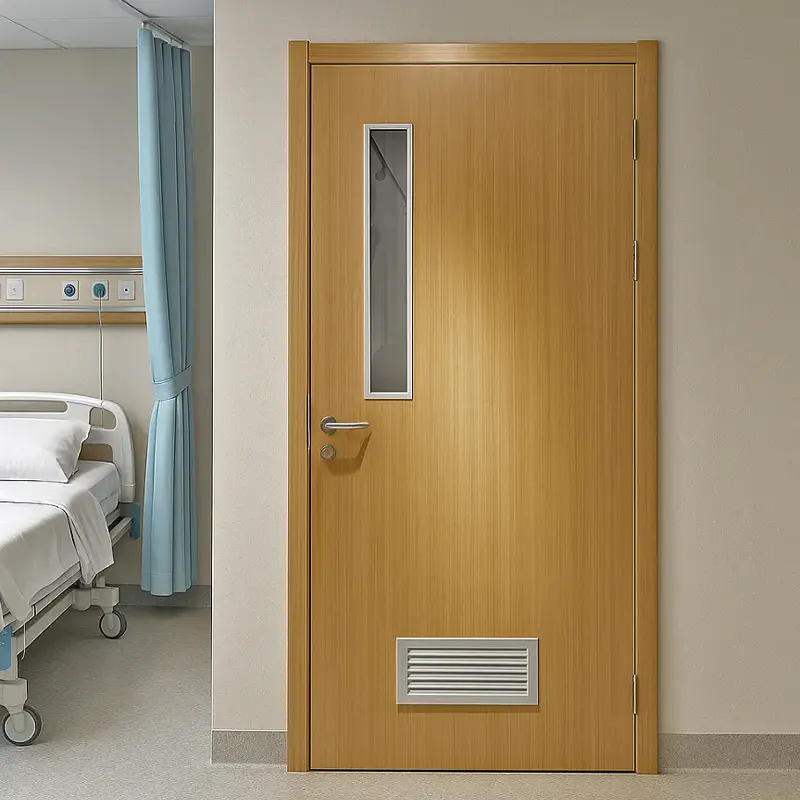
Doors in clinical environments take a beating that most people never think about. Beds ramming into them, cleaning crews scrubbing them down with hospital-grade disinfectants multiple times a day, gurneys clipping the edges in narrow corridors — it adds up fast. Resin medical doors have been gaining traction in healthcare procurement partly because they handle that kind of punishment better than several alternatives, and partly because the hygiene story around them is genuinely straightforward.
Infection prevention drives a significant number of procurement decisions in healthcare, and resin medical doors hold up well under scrutiny here. The non-porous surface doesn't absorb moisture or cleaning fluids, which removes one of the main pathways through which pathogens can persist on a surface between cleaning cycles.
Many resin door systems are manufactured with flush surfaces and minimal joints or seams — recessed handles, no exposed screw heads, no gaps between panel and frame where residue can accumulate. This isn't just an aesthetic choice. Every joint or recess in a clinical door is a potential contamination point that cleaning staff have to address. Fewer of them means fewer opportunities for oversight during a busy shift.
Some resin formulations also incorporate antimicrobial additives at the manufacturing stage. These are built into the material rather than applied as a surface coating — which means they don't wear off with repeated cleaning in the way that topical antimicrobial treatments eventually do.
Ask any facilities manager at a busy hospital about door damage and you'll hear the same story. Beds, trolleys, wheelchairs, laundry carts — they all hit doors. Repeatedly. Over years. Steel doors dent and hold the dent. Wooden doors can crack or delaminate at the impact point. Either outcome creates a surface defect that's difficult to restore hygienically without replacing the panel.
Resin medical doors absorb impact differently. The composite structure flexes under force rather than deforming permanently, which means minor collisions — the everyday kind — tend not to leave lasting marks. For corners and edges, where impact damage concentrates, resin formulations can be reinforced further during manufacturing. The result is a door that looks considerably better after three years of corridor traffic than its steel or wood counterparts typically do.
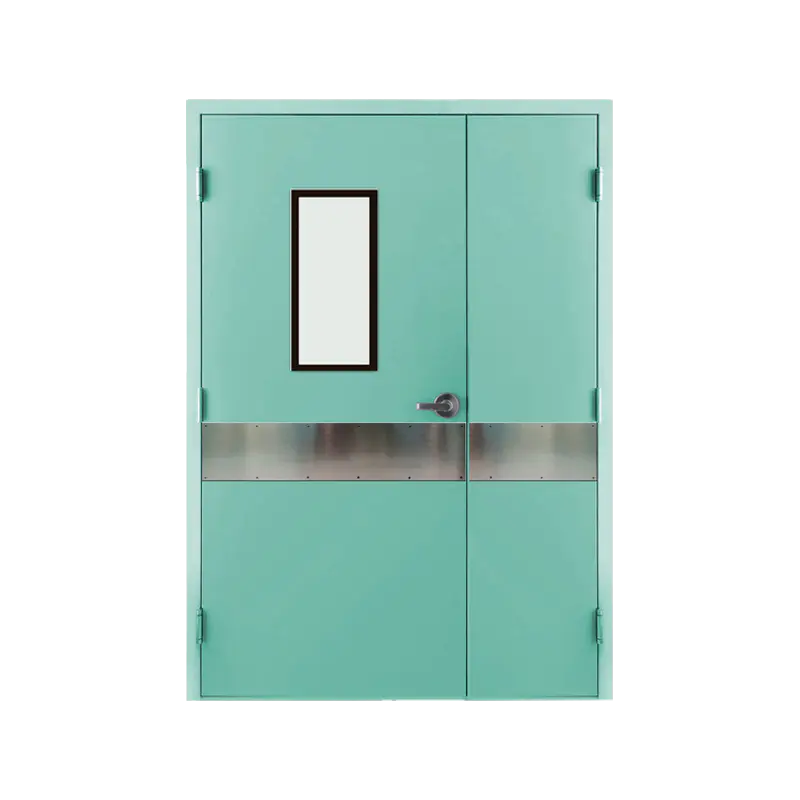
Operating theatres, wet rooms, sluice areas, decontamination zones — these are environments where doors face sustained moisture exposure alongside aggressive cleaning protocols. Wood-based doors struggle here. Even well-sealed wooden medical doors can absorb moisture at edges and joints over time, leading to warping, swelling, and eventual seal failure.
Resin doesn't absorb water. That's a fundamental material property, not a finish applied on top. In areas where steam cleaning is part of the routine, or where the door is frequently wet from adjacent activities, that characteristic removes a whole category of maintenance concern. The door simply doesn't change shape based on humidity the way wood does, which also means it continues to close and seal correctly throughout its service life rather than requiring periodic adjustment.
Patient privacy and noise reduction are increasingly factored into healthcare design, and resin medical doors contribute meaningfully to both when specified with appropriate core density. A solid composite core provides reasonable sound attenuation for consultation rooms, ward bays, and treatment areas where conversations shouldn't carry into adjoining spaces.
The acoustic performance of any door is also affected by how well it seals at the perimeter — gaps at the bottom or sides undermine the acoustic rating of even a heavy panel. Resin Medical Doors fitted with proper perimeter and drop-bottom seals perform noticeably better in practice than doors where sealing has been treated as an afterthought.
Your email address will not be published. Required field are marked*
Product Recommendations
Explore Our Medical Door Solutions
Contact Information
No. 87, Xingwang Road, Zaotang Industrial Zone, Xicheng Street, Yongkang, Zhejiang, China
+86-13758983507
+86-579-87321128
Mobile


 English
 Español