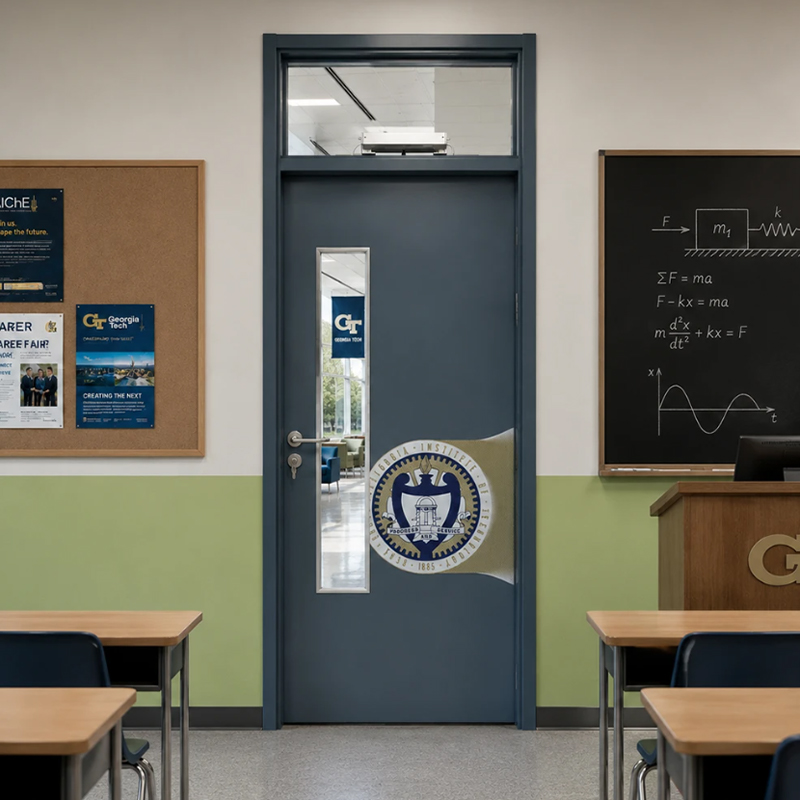
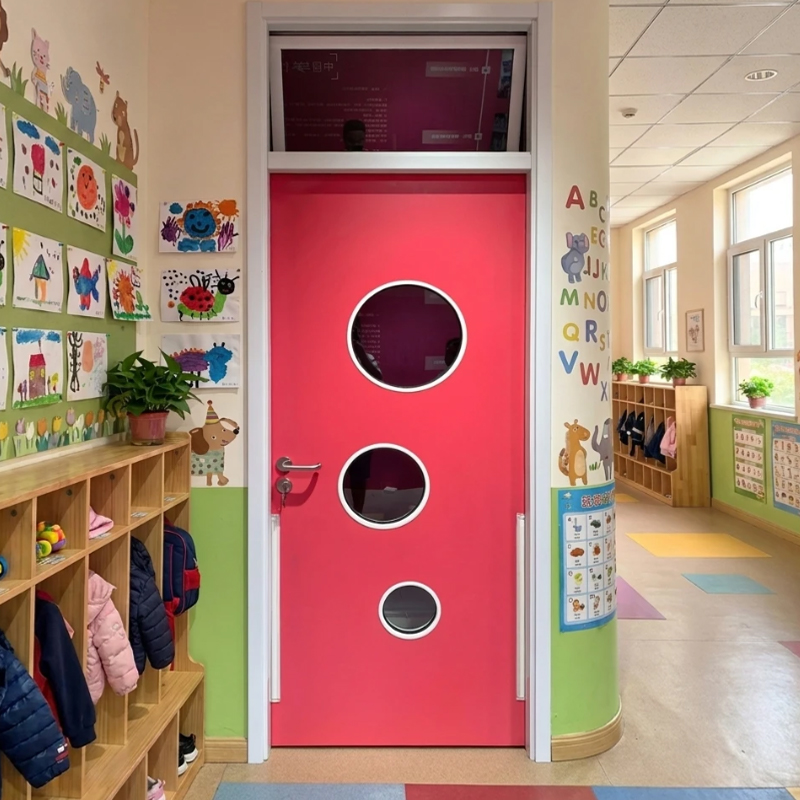
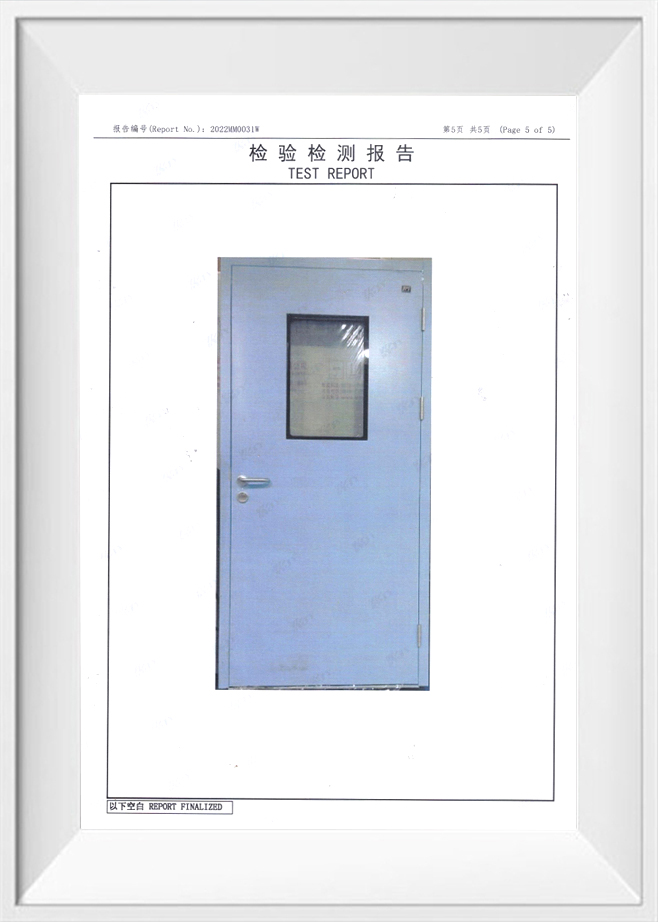
School doors, as a crucial component of campus spaces, not only affect daily convenience but also overall management efficiency and structural safety. Depending on the needs of different areas, various materials and structural forms can be used for the doors, with steel school doors and cold-rolled steel school doors being the more common types.
School doors are primarily used in teaching buildings, administration buildings, laboratories, dormitories, and public activity areas. Their design must meet the needs of high-frequency daily use while accommodating the passage characteristics of different age groups.
Common functions include:
- Controlling entrances and exits
- Separating teaching and public areas
- Providing basic structural protection
- Complementing the overall architectural design style
- Supporting daily access management
In some functional areas, steel school doors are used to enhance structural stability and durability.
Material Types and Structural Characteristics
The choice of materials for school doors is usually determined by the usage environment. Common materials include wood, composite materials, and steel structures. Among these, steel structures have relatively stable mechanical properties and are therefore more commonly used in some school buildings.
Steel school doors typically utilize a steel plate structure combined with internal filling materials to enhance overall stability. Their features include:
- High structural strength
- Suitable for high-frequency use areas
- Easy-to-clean surface
- Available for various surface treatments
- Coordinates with different architectural styles
Cold-Rolled Steel School Doors, on the other hand, have specific characteristics in their steel processing technology. They are usually formed into sheet metal through cold rolling, resulting in a relatively smooth surface.
Application Characteristics of Cold-Rolled Steel School Doors
Cold-Rolled Steel School Doors are commonly used in areas requiring a certain level of structural stability, such as school building entrances, corridor partitions, or equipment room entrances.
Their application characteristics include:
- Smooth sheet metal surface
- Stable structural dimensions
- Suitable for indoor environments
- Compatible with different locking systems
- Supports multiple opening methods
In school buildings, this type of door is typically used in spaces requiring high usage frequency.
Comparison Table of Different Types of School Doors
The following is a basic comparison of common school door types:
| Type |
Material Structure |
Applicable Area |
Features |
| Wooden Door |
Wood Structure |
Classroom Interior |
Natural appearance, suitable for indoor environments |
| Steel School Door |
Steel Plate Structure |
Public Areas |
Good strength, stable use |
| Cold-Rolled Steel School Door |
Cold-Rolled Steel Plate |
Entrances and Corridors |
Smooth surface, good structural consistency |
| Composite Material Door |
Multi-layer Structure |
Functional Zoning |
Balances weight and performance |
As the comparison shows, different structures are suitable for different areas, and the choice should be based on the building's function.
Design Considerations
When designing a school door, it is necessary to comprehensively consider building safety, traffic efficiency, and service life.
Design Recommendations:
- Define the opening direction
- Choose an appropriate door thickness
- Configure a robust hinge system
- Ensure a secure connection between the door frame and the wall
- Select materials based on usage frequency
Steel school doors are commonly used in high-traffic areas, therefore, structural durability should be considered in the design.
Installation and Construction Requirements
Proper installation significantly impacts the performance of the school door. During installation, pay attention to the precision of the fit between the door and the wall.
Installation Points:
- Maintain the door frame's verticality and horizontality.
- Ensure the fixing points are secure.
- Adjust door gaps.
- Test opening and closing smoothness.
- Check lock installation position.
For cold-rolled steel school doors, ensure a secure connection between the door and the wall to maintain structural stability.
VII. Maintenance and Daily Management
Regular maintenance is necessary to extend the lifespan of the school door.
Daily maintenance includes:
- Cleaning the door surface.
- Checking the hinge condition.
- Testing lock functionality.
- Observing for door deformation.
- Confirming the door is closed.
In high-frequency use areas, steel school doors may require more frequent checks to maintain stable operation.
Environmental Factors Affecting School Door Performance
Factors affecting school door performance include:
- Frequency of Use
- Material Quality
- Installation Precision
- Ambient Humidity
- Building Structural Conditions
Cold-Rolled Steel School Doors are commonly used in indoor environments; therefore, their surfaces must be kept clean and protected from prolonged moisture.
Application in Functional Zoning
In campus buildings, school doors are commonly used in the following areas:
- Classroom Entrances
- Laboratory Areas
- Library Spaces
- Administrative Office Areas
- Equipment Room Entrances
Steel school doors are more common in public passageways, while cold-rolled steel school doors can be used in areas where structural stability is required.

 English
 Español