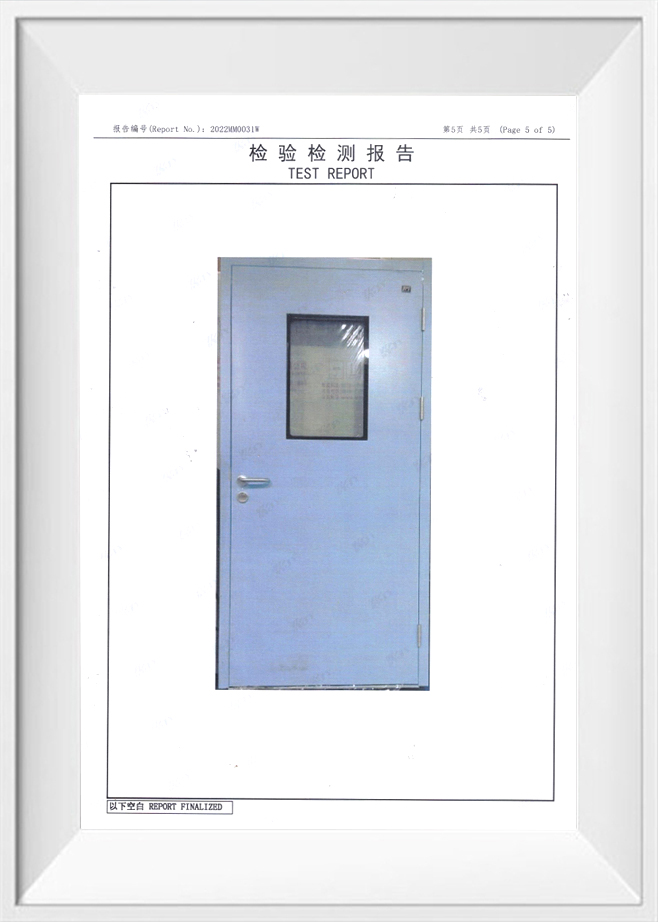
Hotel fire escape doors are a crucial component of safe evacuation systems. They are typically located at the end of corridors, stairwell connections, or specific functional areas to provide evacuation routes in emergencies. Proper design and standardized installation of these doors contribute to improving the overall safety management of a building. Hotel fire escape doors are primarily used for personnel evacuation during fires or other emergencies. Their core objective is to maintain the usability of the passageway for a specific period and to coordinate with the building's evacuation system.
Common functions include:
- Providing emergency evacuation routes
- Supporting rapid opening
- Matching building evacuation plans
- Using in conjunction with alarm systems
- Meeting public building safety requirements
In some hotel projects, hotel emergency exit doors are used to emphasize the emergency exit function.
Structural Design Features
Hotel fire escape doors typically emphasize stability and reliability in their structure. The door materials and hardware systems must be adapted to high usage frequency and emergency opening requirements.
Common Structural Components:
- Main Door Structure
- Reinforced Door Frame
- Fire-resistant Filling Material
- Automatic Door Closing Device
- Emergency Opening Hardware
Hospitality Fire Exit Doors are typically optimized for the hotel's operational environment to suit the characteristics of public spaces.
Application Scenarios of Hotel Emergency Exit Doors
Hotel Emergency Exit Doors are often located at the ends of hotel floors, stairwell entrances, or connections to emergency exits. Their layout is usually designed according to the building's evacuation plan.
Application Features include:
- Matching evacuation routes
- Clearly indicating exit directions
- Supporting one-way opening design
- Integrating with safety signage systems
- Easy to identify in emergencies
In hotel buildings, this type of door is a crucial component of the overall safety system.
Comparison Table of Different Types of Escape Doors
The following is a basic comparison of common Hotel Fire Escape Door types:
| Type |
Main Purpose |
Opening Method |
Features |
| Hotel Fire Escape Door |
Escape Route |
One-way opening |
Used for emergency evacuation |
| Hotel Emergency Exit Door |
Emergency Exit |
Quick opening |
Emphasizes evacuation function |
| Hospitality Fire Exit Door |
Hotel Public Area |
One-way or push-open |
Adaptable to operational environment |
| Standard Security Door |
Auxiliary Area |
Regular opening |
Used for zone management |
The comparison shows that different types of doors have different functional focuses and should be selected according to the building's purpose.
Material Selection and Performance Considerations
The material selection for Hotel Fire Escape Doors is usually based on stability and durability. Common materials include steel structures and composite material structures.
Material Considerations:
- Structural Strength
- Frequency of Use
- Surface Durability
- Compatibility with Wall Systems
- Ease of Maintenance
The design of Hospitality Fire Exit Doors also needs to comprehensively consider the hotel's spatial environment and evacuation requirements.
Design Principles and Planning Considerations
When planning a Hotel Fire Escape Door, the design must be integrated with the building's evacuation routes and spatial layout.
Design recommendations include:
- Define evacuation directions
- Ensure unobstructed door opening
- Use compliant hardware
- Maintain connectivity with fire escape routes
- Establish clear signage
The location of the Hotel Emergency Exit Door should be coordinated with the floor structure to avoid obstructing pedestrian flow.
Installation Requirements
Proper installation is crucial for the performance of the Hotel Fire Escape Door. During construction, ensure a secure connection between the door and the wall.
Installation considerations:
- Maintain door frame verticality and horizontality
- Confirm door opening direction conforms to the plan
- Install reliable door closing mechanism
- Test emergency opening function
- Check door seal
For Hospitality Fire Exit Doors, special attention should be paid to the door's stability under high-frequency use.
Maintenance and Inspection
To ensure the Hotel Fire Escape Door remains in normal working order over the long term, regular inspections are necessary.
Maintenance includes:
- Inspecting the door structure for integrity
- Testing opening and closing functions
- Inspecting the hardware for secure fastening
- Cleaning the door and tracks
- Ensuring signage is clearly visible
Hotel Emergency Exit Doors should be included in the regular inspection plan during daily management.
Environmental Factors Affecting Usage
Factors affecting the performance of Hotel Fire Escape Doors include:
- Building structure layout
- Usage frequency
- Material quality
- Installation accuracy
- Rationality of evacuation planning
When used in hotel public areas, Hospitality Fire Exit Doors should ensure that normal operational processes are not affected.
Role in the Hotel Safety System
Hotel Fire Escape Doors are an important component of the hotel safety system. Their proper placement helps to optimize evacuation routes and coordinate with the building management system.
Common application areas include:
- Ends of floor corridors
- Stairwell entrances
- Public area passageways
- Service auxiliary spaces
- Evacuation exit locations
Hotel Emergency Exit Doors and Hospitality Fire Exit Doors perform corresponding functions in different scenarios, together forming the hotel's evacuation structure.

 English
 Español