Doors not only fulfill basic passage functions but also play a crucial role in airtightness, structural stability, and spatial isolation. Hermetic doors are a type of door widely used to meet these needs.
These doors are typically used in spaces requiring controlled airflow, reduced external interference, or maintenance of specific environmental conditions. Examples include medical areas, laboratory spaces, and certain industrial environments. Compared to ordinary doors, hermetic doors have more specialized structural designs and sealing methods, resulting in greater functionality in practical applications.
Basic Concepts of Hermetic Doors
A hermetic door generally refers to a door structure that achieves a high degree of airtightness when closed. Through a special door frame structure and sealing method, the door fits tightly against the frame when closed, thereby reducing air exchange or the influence of the external environment.
The design focus of this type of door typically concentrates on the following aspects:
- The fit between the door and the door frame
- The configuration of the sealing strip
- The movement trajectory of the door when opening and closing
- The stability of the door frame installation
Through these design features, hermetic doors can create a relatively stable spatial isolation effect when closed.
Structural Features of Hermetic Doors
To achieve a better seal, these doors typically employ a structural design different from ordinary doors. Common features include the door's sliding mechanism, sealing structure, and door frame design.
- 1. Sliding and Pressing Structure
Many hermetic doors do not simply slide when closed but also undergo a slight pressing action in the final stage, ensuring a tighter fit between the door and frame.
- 2. Multi-layered Sealing Design
Sealing strips are often installed around the door to enhance the seal when closed. The sealing strip material usually has a certain degree of elasticity, capable of adapting to minor changes that may occur over time.
The door frame structure is typically robust to ensure stable operation during opening and closing.
- 4. Simple Surface Structure
For ease of daily cleaning and maintenance, the door surface is usually designed with a relatively smooth structure.
Common Types of Hermetic Doors
Hermetic doors can employ different opening mechanisms depending on the specific space requirements. Different door types have distinct characteristics in terms of space utilization, usage frequency, and installation conditions.
| Door Types |
Main Characteristics |
Common Application Environments |
| Manual Sliding Door |
Simple structure, intuitive operation |
Small professional spaces |
| Automatic Sliding Door |
Convenient to use |
Areas with high personnel flow |
| Single-leaf Airtight Door |
Small footprint |
Independent rooms |
| Double-leaf Airtight Door |
Larger passage width |
Equipment access areas |
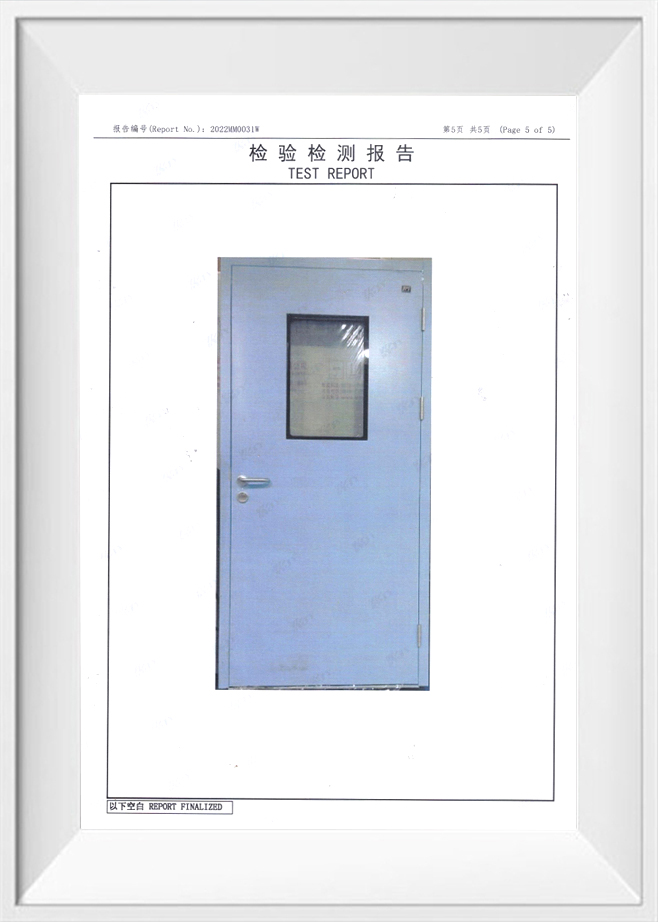
| Observation Window Door |
Door with observation window |
Spaces requiring visual inspection |
In practical engineering, these door structures are sometimes used in conjunction with Airtight Doors or Sealed Doors to meet the environmental requirements of different areas.
Main Application Scenarios of Hermetic Doors
Due to their airtight structure, these doors are used in a variety of professional environments. The requirements for doors vary depending on the scenario.
In medical environments, certain areas require relatively stable spatial conditions. Hermetic Doors can help create effective spatial separation in these areas while also facilitating daily use by medical staff.
In laboratory spaces, door structures often need to small the impact of airflow. Airtight doors can help maintain a stable indoor environment.
Airtight doors are also used in some industrial production areas to reduce external environmental interference or maintain specific production conditions.
- Specialized Equipment Spaces
Some equipment operating areas are sensitive to environmental conditions, and airtight door structures can provide a certain degree of isolation.
Factors to Consider in Hermetic Door Design
In architectural design or equipment space planning, selecting a suitable airtight door requires comprehensive consideration of multiple factors. Here are some common design considerations:
Spatial Structure
- Is there sufficient space for the door installation location?
- Is the wall structure suitable for installing a hermetic door frame?
- Does the door opening method affect passage?
Usage Frequency
- How frequently do people enter and exit?
- Is an automatic opening mechanism required?
- Does the door operation need to remain stable?
Maintenance Needs
- Is the door structure easy to clean?
- Is it easy to replace the sealing strip?
- Is the hardware structure easy to maintain?
Installation Conditions
- Does the door frame installation require additional structural support?
- Is the door weight compatible with the wall structure?
- Is the construction environment suitable for installation?
Material Selection for Hermetic Doors
Door materials also play a crucial role in hermetic door design. Different materials not only affect the appearance but also the door's durability and maintenance methods.
Common materials include:
- Metal Door Frame: Sturdy structure, suitable for spaces with high usage frequency.
- Composite Structure Door Panel: Offers some flexibility in appearance design while maintaining stability.
- Structure with Observation Window: Observation windows are installed on the door frame for easy viewing of the interior.
Impact-resistant surface materials help reduce damage from equipment or cart collisions.
Appropriate material selection ensures the Hermetic Door maintains stable operation over long-term use.
Harmony between Hermetic Doors and Spatial Design
In modern architectural design, doors not only need to meet functional requirements but also need to harmonize with the overall spatial style. While airtight doors have strong functional attributes, visual effects are also considered in their design.
For example:
- Door color matches wall design.
- Door frame structure coordinates with wall installation method.
- Observation window size matches spatial proportions.
Through these design details, Hermetic Doors can both meet spatial functional requirements and blend into the overall architectural environment.
In architectural spaces with high environmental requirements, Hermetic Doors have become an important door solution. Through reasonable structural design, material selection, and installation methods, these doors can provide stable spatial isolation effects in various scenarios.

 English
 Español