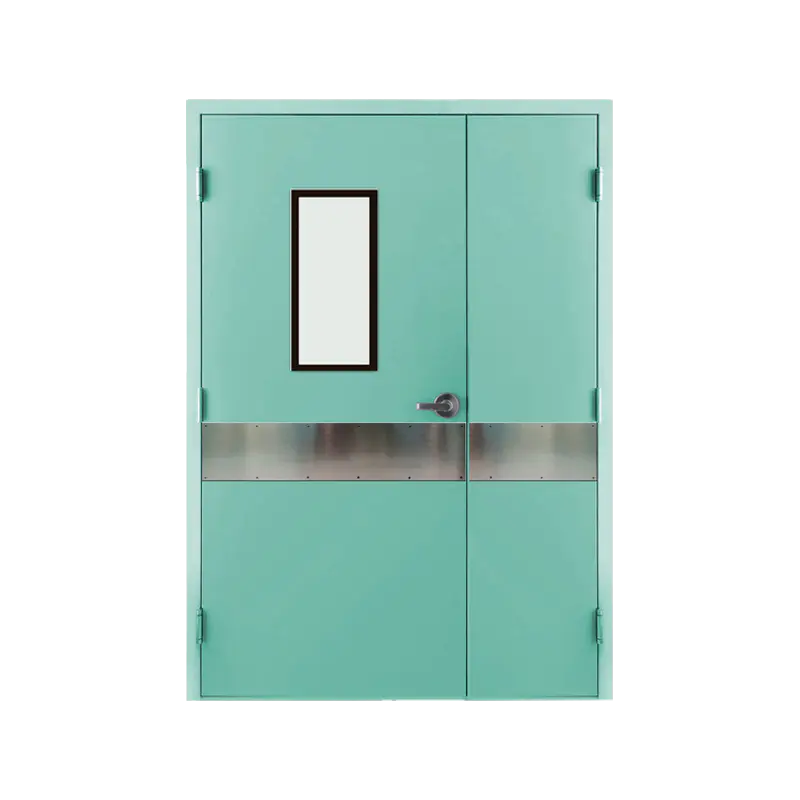
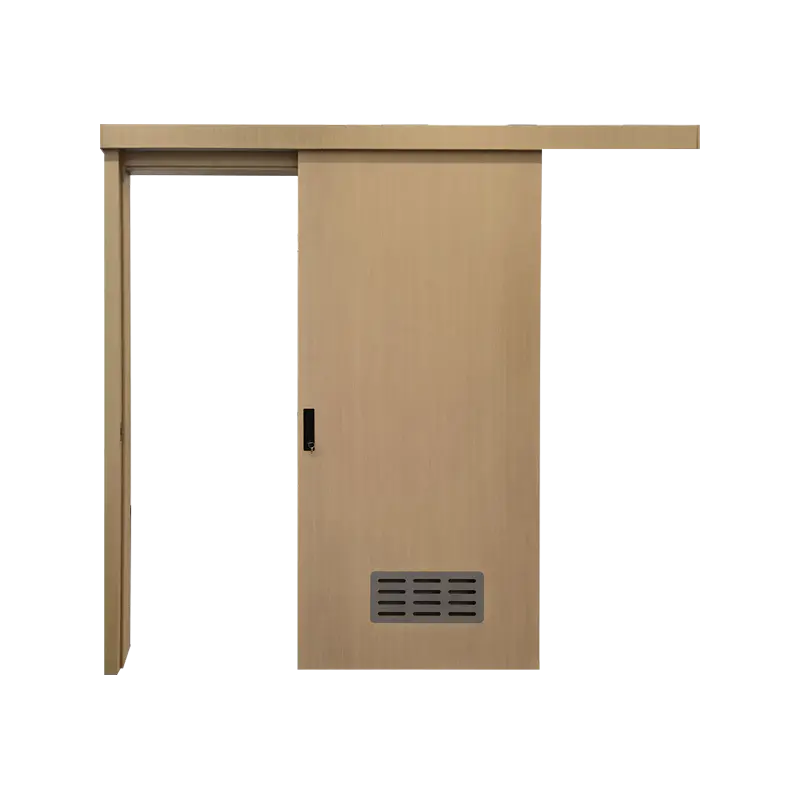
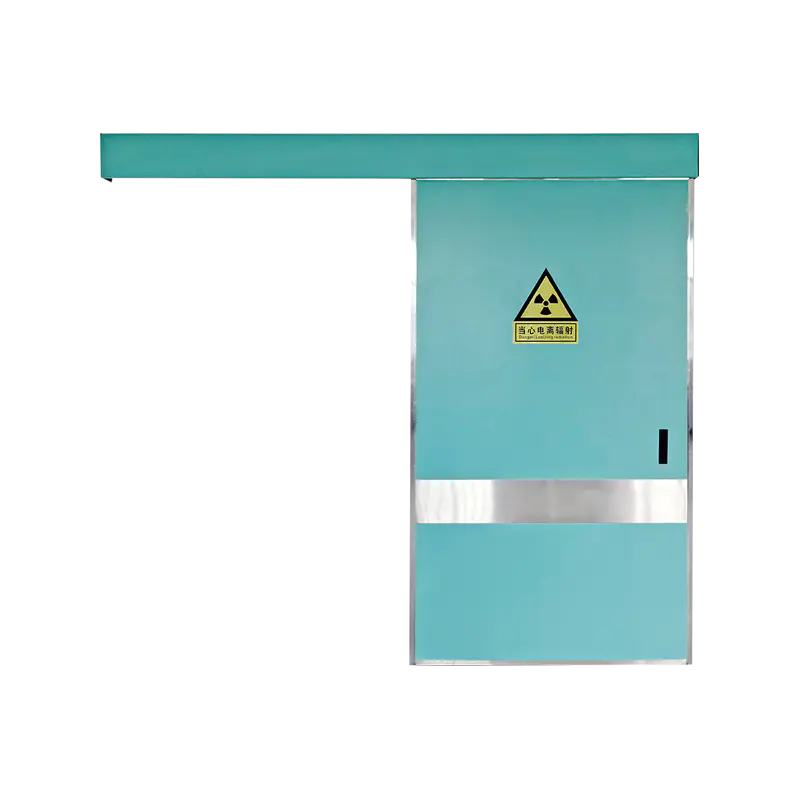
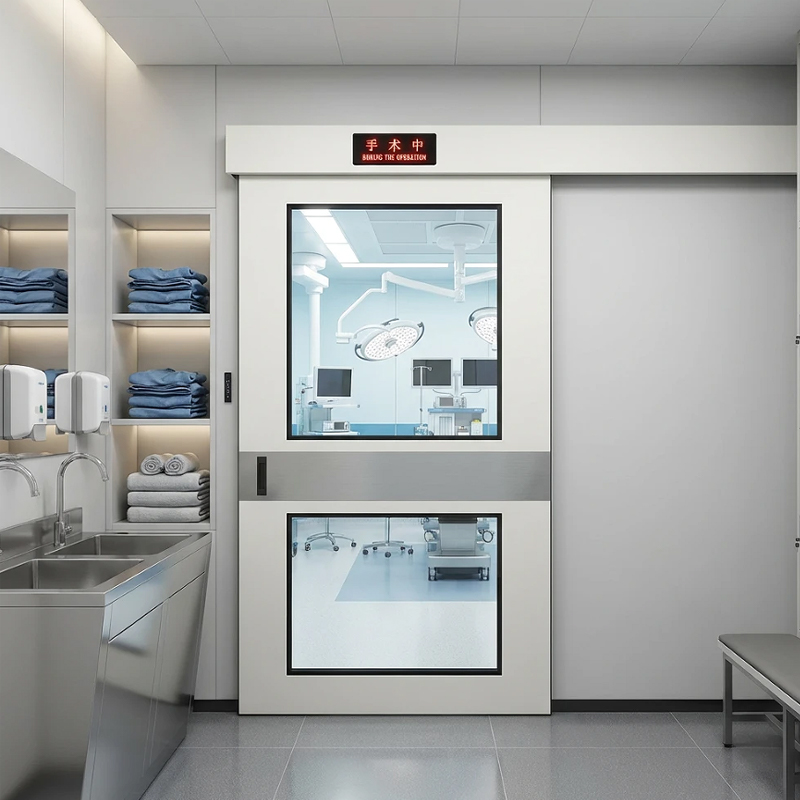
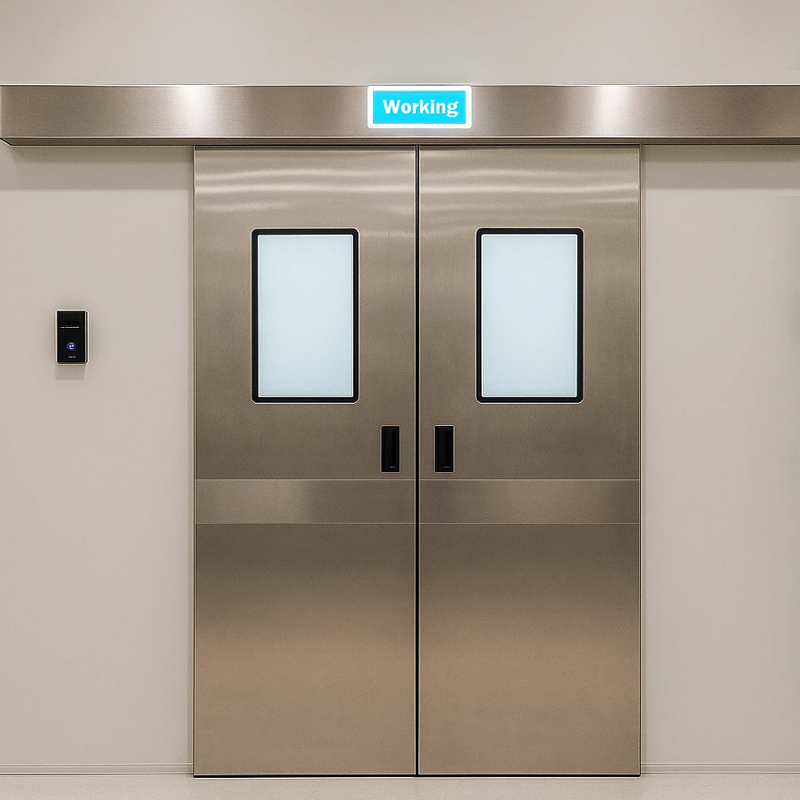
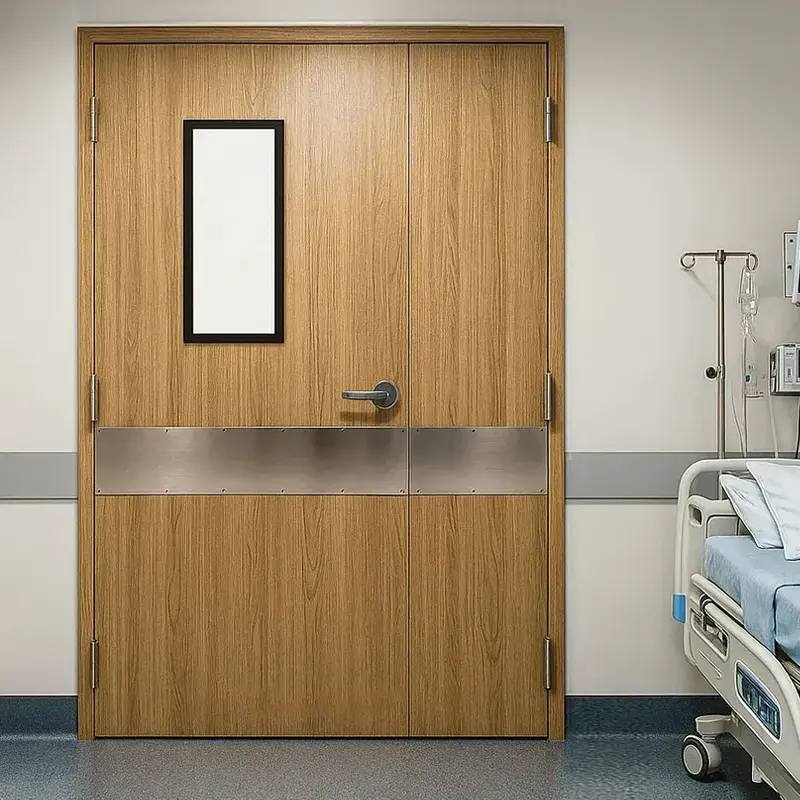
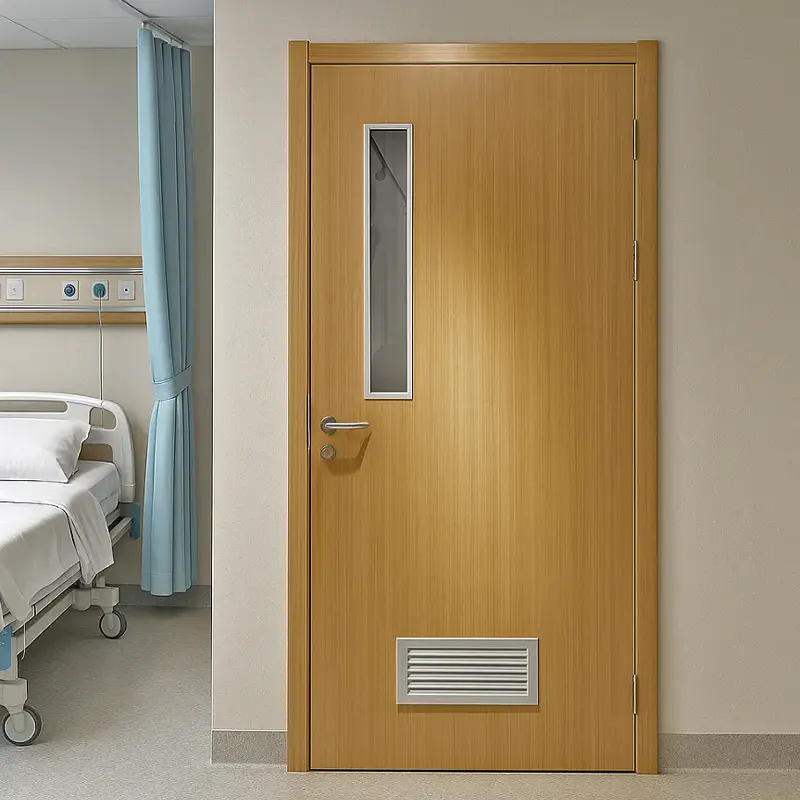
Door handles and panels see more hand contact in a single day than almost any other surface in a building, which makes them a logical starting point for anyone thinking about surface hygiene. Antibacterial doors address that contact point directly, building bacteria-resistant properties into the door material itself rather than relying only on cleaning schedules to keep surfaces in check.
Manufacturers add antibacterial function to a door in one of two general ways: through a surface coating applied after the door is built, or through an additive mixed directly into the material during production. Coated surfaces apply a thin antimicrobial layer, often containing silver ions or a similar compound, across the panel's outer finish. Additive-based doors mix that same type of compound into the core material itself, so the antibacterial property runs through the panel rather than sitting only on top.
Each approach has a different practical implication. A coated antibacterial door can lose some effectiveness if the surface gets scratched or worn down over years of contact, since the active layer is thin. An additive-based door keeps its antibacterial property consistent even if the surface picks up light scuffs, since the compound is distributed through the material rather than concentrated at the surface.
Antibacterial doors show up across several base materials, each suited to different building types:
Steel and composite materials tend to hold antibacterial coatings more evenly than porous wood surfaces, since a non-porous base gives the coating fewer gaps to wear through unevenly. That's part of why steel-faced antibacterial doors show up so often in healthcare corridors, where surface consistency matters for how the door performs over years of heavy contact.
Hospitals and clinics represent one of the largest markets for antibacterial doors, given how frequently patients, staff, and visitors move through corridors and treatment rooms. Beyond healthcare, antibacterial doors show up in a handful of other settings where hand contact runs high:
Each setting has slightly different priorities. A hospital corridor door might prioritize a smooth, non-porous surface that resists scratching from equipment carts, while a restaurant kitchen door might prioritize water resistance alongside its antibacterial coating, since it's likely to face regular contact with moisture and grease.
The door panel itself is only part of the picture. Handles, push plates, and kick plates see even more direct hand contact than the door surface, so many antibacterial door systems pair the panel with matching antibacterial hardware. A few configurations show up regularly:
Pairing hardware and panel finishes consistently matters because a door with an antibacterial surface but a standard untreated handle still leaves the highest-contact point unaddressed. Buyers specifying antibacterial doors for a full building rollout typically request matching hardware specifications alongside the door order itself, rather than treating the two as separate purchasing decisions.
Your email address will not be published. Required field are marked*
Product Recommendations
Explore Our Medical Door Solutions
Contact Information
No. 87, Xingwang Road, Zaotang Industrial Zone, Xicheng Street, Yongkang, Zhejiang, China
+86-13758983507
+86-579-87321128
Mobile


 English
 Español