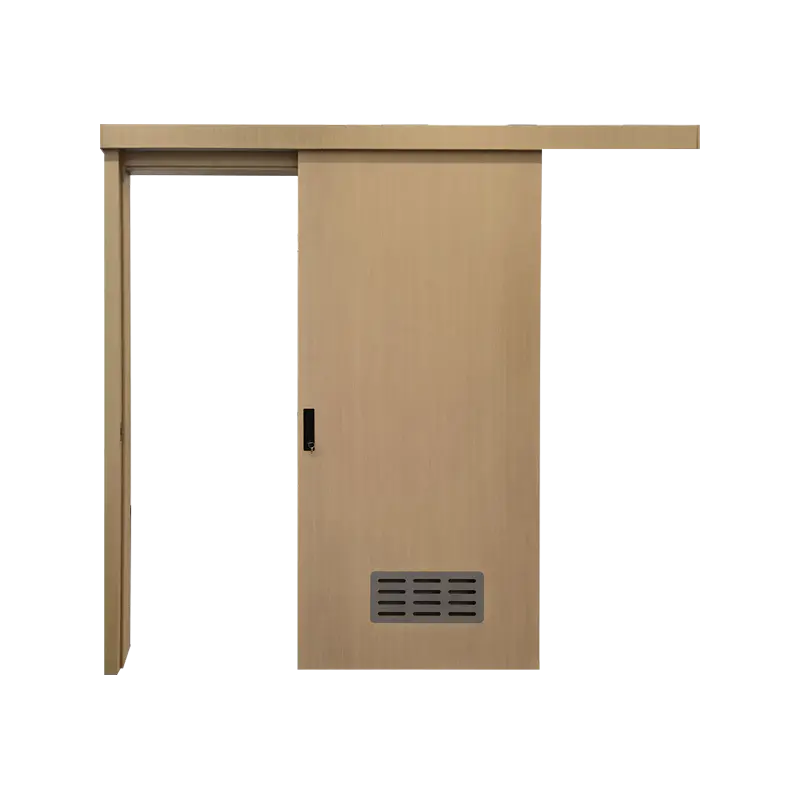
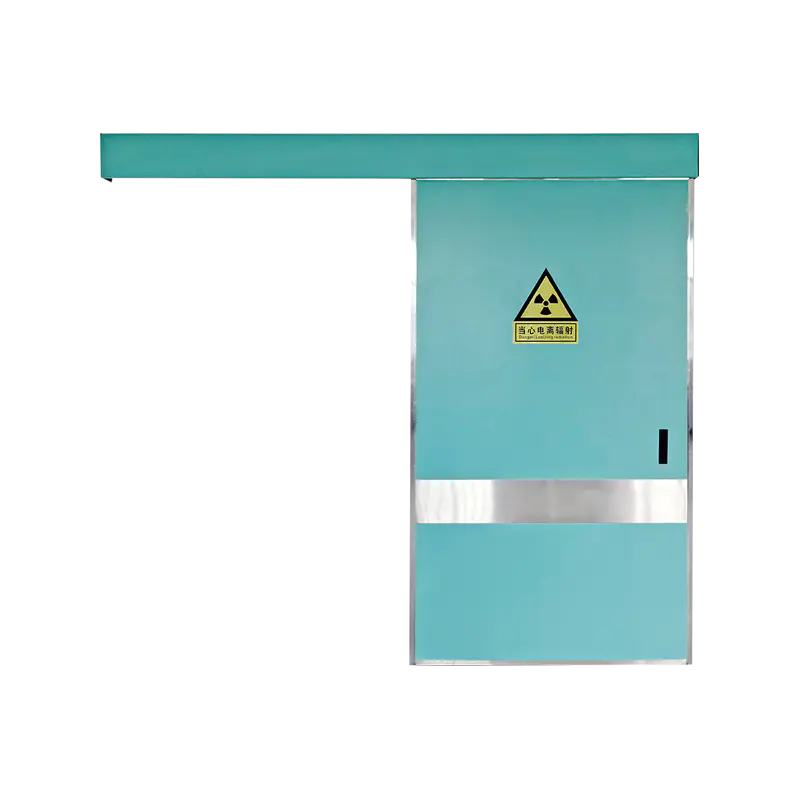
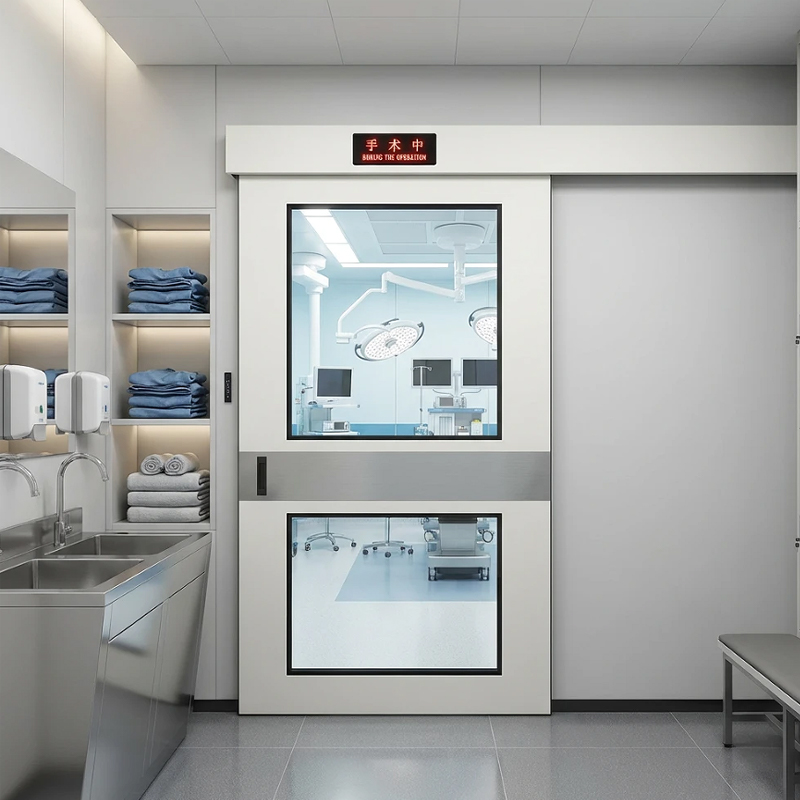
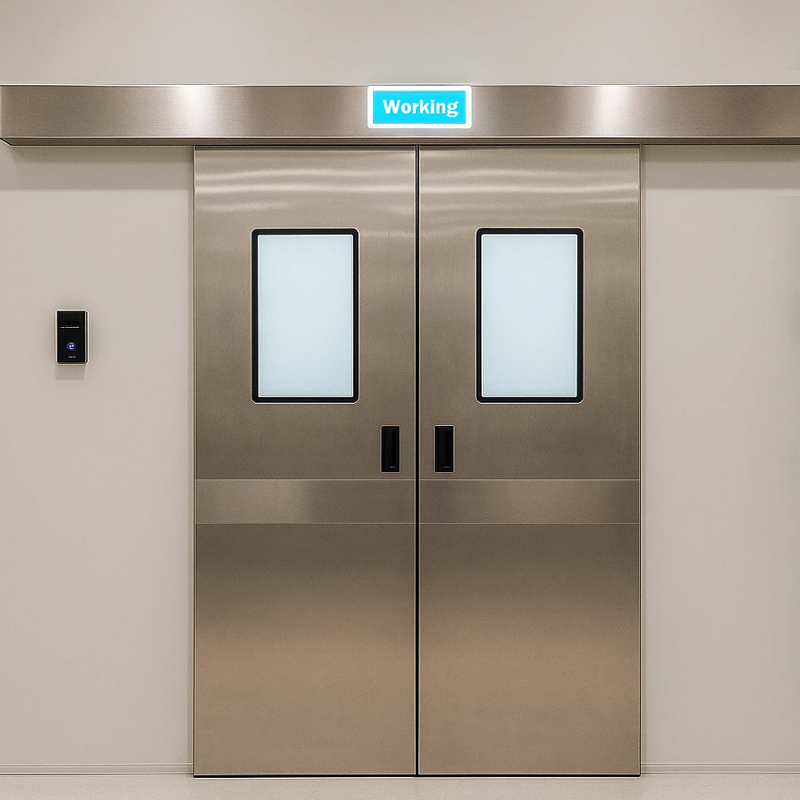
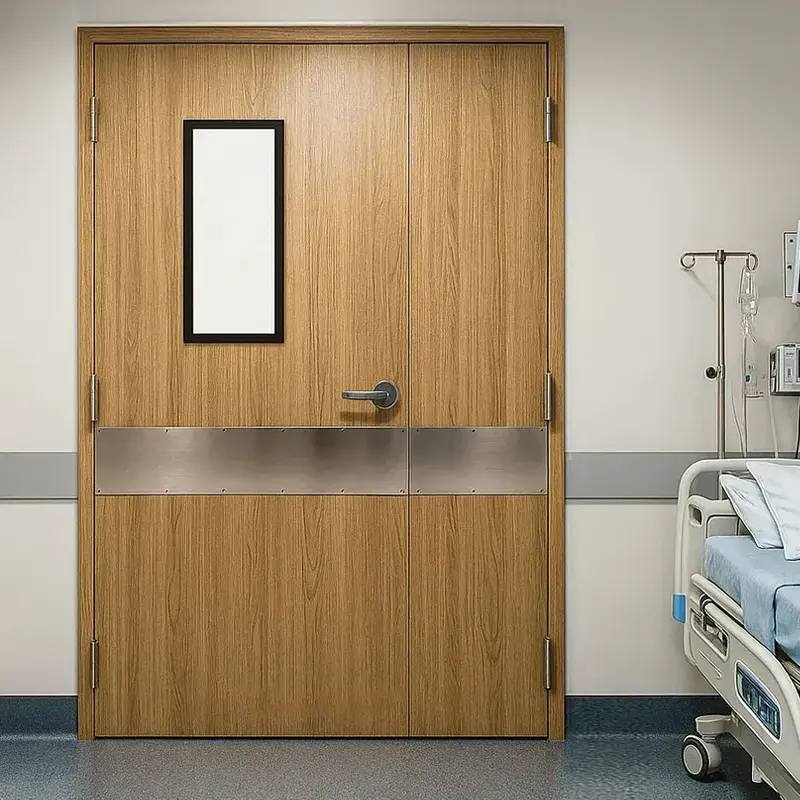
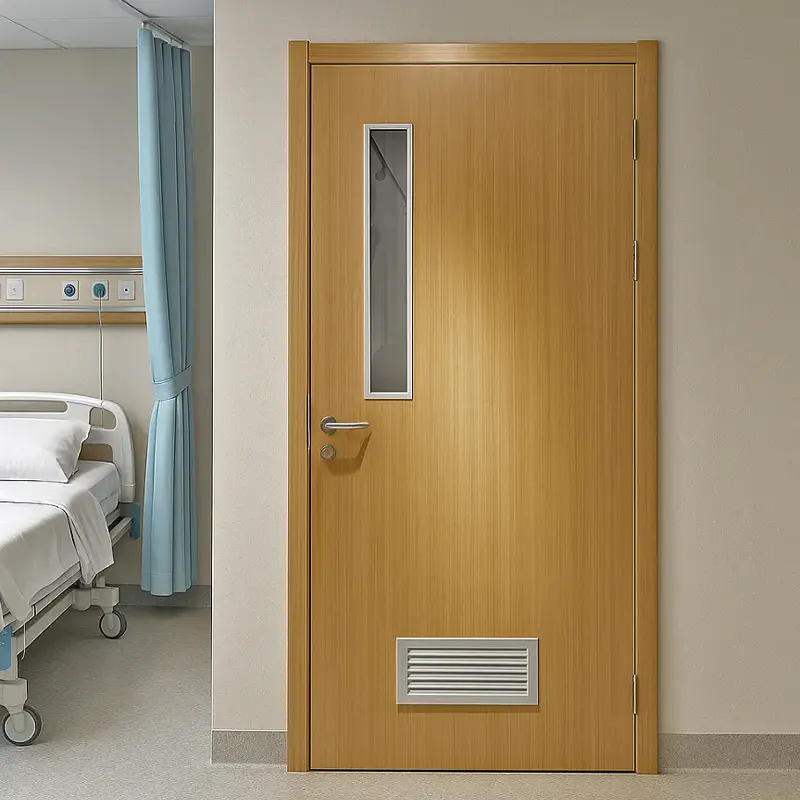
Resin Medical Doors serve as durable room dividers in clinics, hospitals, and care centers. Smooth resin surfaces create clean visual lines while standing up to frequent contact. Solid construction helps these doors function reliably across busy indoor environments.
Resin Medical Doors use composite resin layers bonded under pressure to form stable panels. Outer faces remain smooth and non-porous, which limits places where dust can collect. Color runs through the material so minor surface marks remain less noticeable.
Density provides a solid feel when the door opens or closes. Edges receive sealed finishes that maintain a uniform appearance. Resin Medical Doors often incorporate reinforced cores that add strength without excessive weight.
Frames and panels join with tight tolerances for consistent operation. Hinge reinforcements distribute weight evenly across the door height. Lock and handle preparations come ready for standard medical-grade hardware.
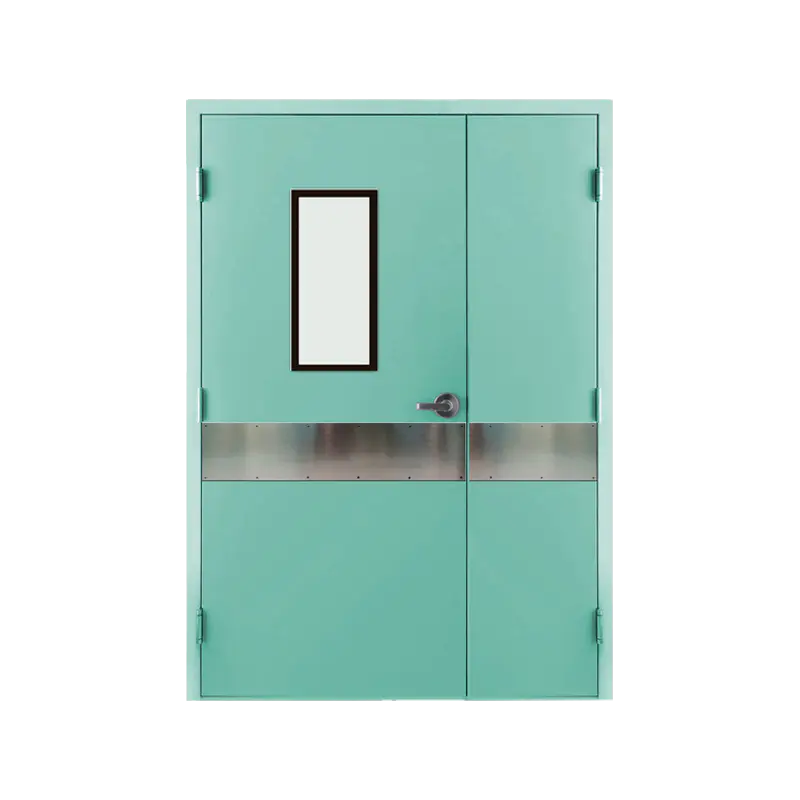
Vision panels appear in selected models to allow quick visual checks between spaces. These inserts use clear or frosted materials set flush with the door face. Overall proportions match common doorway dimensions found in healthcare buildings.
Matte and satin finishes reduce glare under bright interior lighting. Neutral tones such as white, light gray, and soft beige blend with clinical wall colors. Some ranges offer slightly warmer shades for areas where a calmer atmosphere is preferred.
Resin Medical Doors maintain color consistency across large orders so multiple rooms share the same look. Smooth faces accept applied signage or room numbers without complex preparation. Edge banding matches the face color for a finished appearance.
Patient rooms use these doors to separate sleeping areas from corridors. Examination spaces rely on them for privacy during consultations. Storage rooms and utility areas also receive the same door type for visual continuity.
Corridor entrances benefit from the solid feel and quiet closing action. Double-door configurations appear at wider openings where equipment movement occurs regularly. Resin Medical Doors adapt to both single and paired installations.
Pre-drilled locations accept common hinge types used in institutional settings. Locksets and pull handles mount securely to the reinforced zones. Closer mechanisms fit standard templates so doors return to the closed position smoothly.
Kick plates and armor plates can be added to lower sections where cart traffic is frequent. These accessories attach without compromising the resin surface integrity. Clearances around the door leaf allow free movement of beds and equipment.
Solid core construction helps limit sound transfer between adjacent rooms. Closed doors create a clearer boundary for conversations held inside. Resin Medical Doors with full-height panels offer stronger visual privacy than designs with large glass sections.
Seals around the perimeter contribute to a snug fit when the door is shut. Consistent thickness supports predictable performance across different openings in the same facility.
Staff open and close these doors many times during a shift. Balanced weight and smooth hardware action reduce effort. Surfaces wipe clean with standard facility products, supporting quick turnaround between uses.
Resin Medical Doors keep their appearance through repeated contact with hands, carts, and cleaning tools. Consistent dimensions make replacement straightforward if a single leaf needs changing later.
Resin Medical Doors combine smooth resin surfaces with solid construction to meet the practical needs of medical environments. From patient rooms to corridors, these doors provide reliable separation, privacy, and a clean visual standard. Careful material selection and hardware preparation support steady daily function across healthcare facilities.
Your email address will not be published. Required field are marked*
Product Recommendations
Explore Our Medical Door Solutions
Contact Information
No. 87, Xingwang Road, Zaotang Industrial Zone, Xicheng Street, Yongkang, Zhejiang, China
+86-13758983507
+86-579-87321128
Mobile


 English
 Español