Inside pharmaceutical labs, electronics fabrication facilities, and medical manufacturing plants, maintaining a controlled environment depends on more than filtered air and sealed walls. Cleanroom doors play a quiet but essential role in this system, acting as the boundary point where contamination control either holds steady or breaks down. Every time someone passes through, the door's design determines how well that boundary is maintained.
Unlike standard commercial doors, cleanroom doors are built specifically to minimize particle generation and prevent air leakage between adjoining spaces. Smooth, non-porous surfaces are standard, since textured or seam-heavy materials tend to trap dust and microbial particles over time. Rounded corners, flush-mounted hardware, and continuous welded seams all work together to eliminate the small crevices where contaminants could otherwise collect.
One of the defining features of a cleanroom door is its sealing mechanism. Many designs use inflatable or compression gaskets around the door frame, which expand to create an airtight seal once the door closes. This sealing function helps maintain pressure differentials between rooms, an important factor in facilities where air needs to flow in a specific, controlled direction. Buyers sourcing cleanroom doors often ask about seal type and pressure differential ratings, since these specs directly affect how well the door performs within a given cleanroom classification.
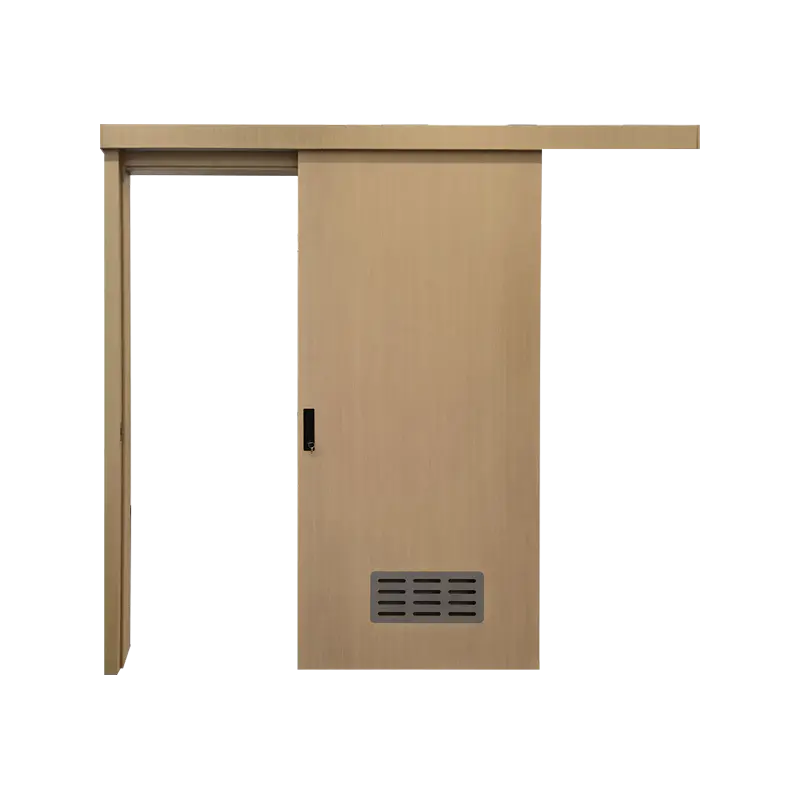
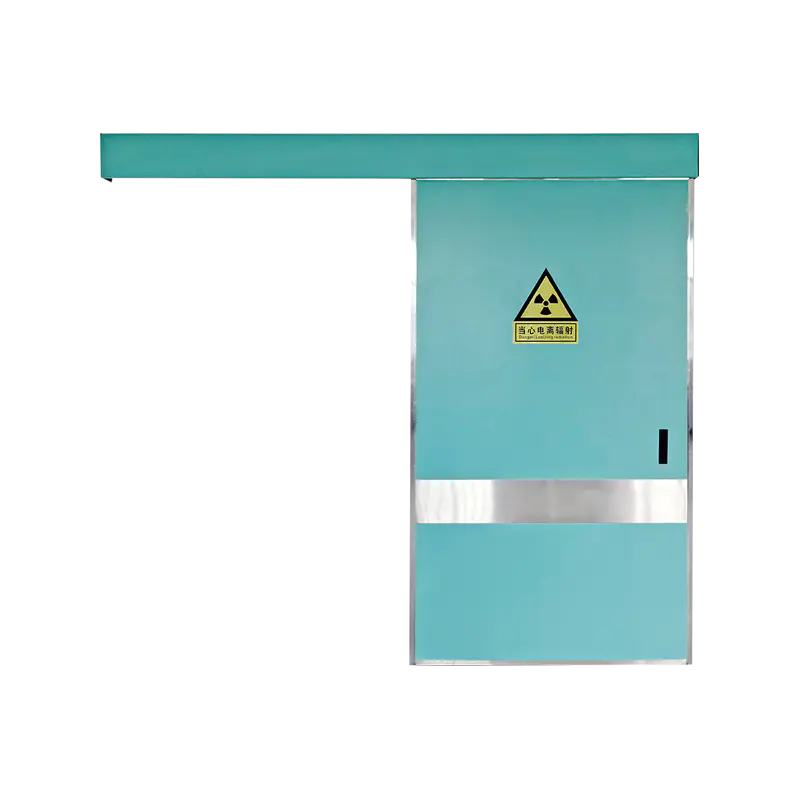
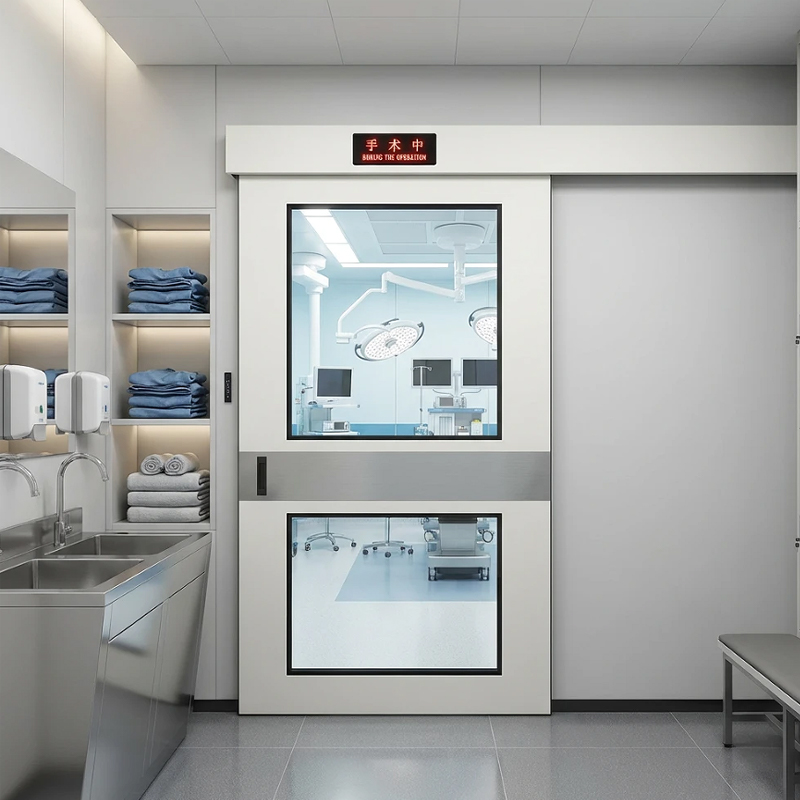
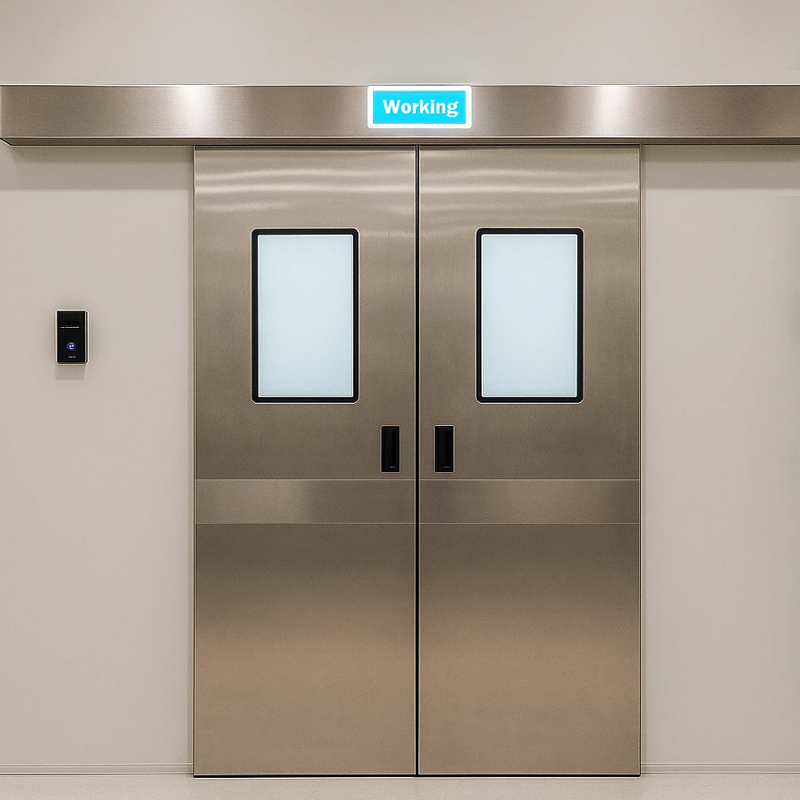
Cleanroom doors are available in both manual swing designs and automatic sliding configurations. Automatic sliding doors are common in higher-traffic areas or where hands-free operation reduces contact points, which can be useful in gowning areas or material transfer zones. Manual doors remain a practical choice for lower-traffic spaces or facilities working with tighter budgets, offering the same sealing and surface benefits without the added mechanical components.
Cleanroom doors are typically constructed from materials like powder-coated steel, stainless steel, or aluminum honeycomb panels, each offering a different balance of weight, durability, and cost. Stainless steel is frequently chosen for facilities handling harsher cleaning agents or requiring frequent wipe-downs, while aluminum honeycomb panels offer a lighter option without sacrificing structural rigidity. Viewing windows, when included, use laminated or tempered glass set flush with the door surface to avoid disrupting the smooth, sealed exterior.
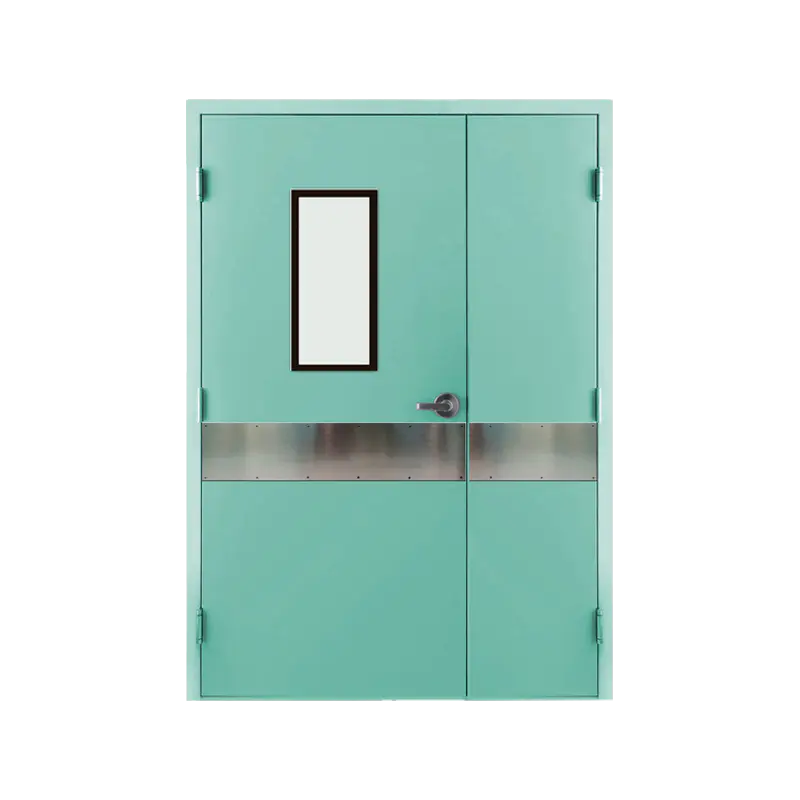
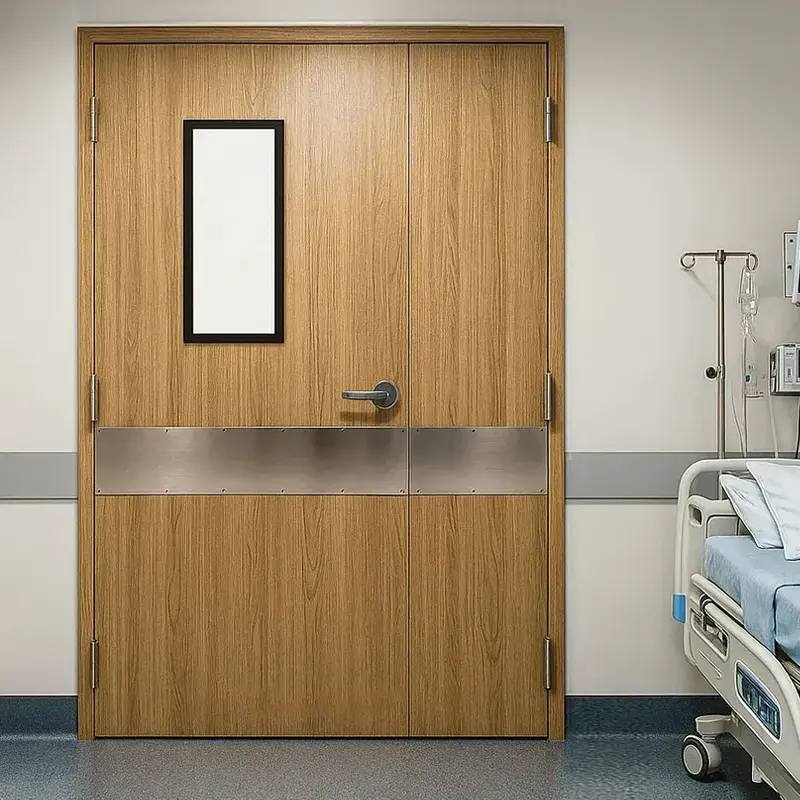
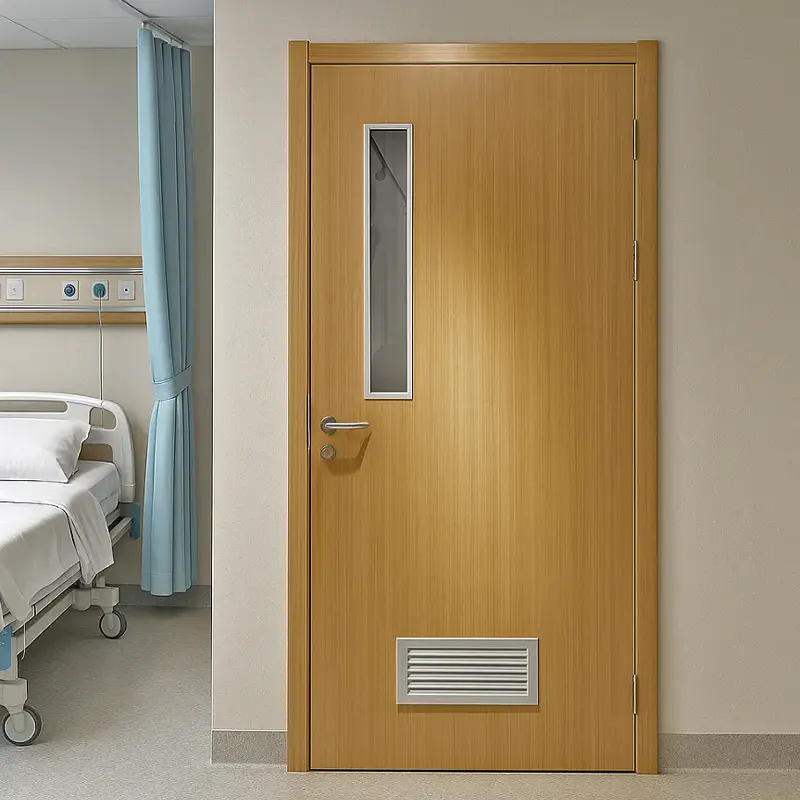
Cleanroom facilities vary widely in layout, and door manufacturers typically offer a range of sizing and configuration options to match. Single-leaf, double-leaf, and pass-through style doors are all common, with sizing adjusted to fit equipment transport needs, personnel flow, or specific room classifications. Buyers working on new facility builds or renovations often request custom dimensions to fit existing frame openings, particularly when retrofitting older spaces into cleanroom-compliant areas.
Cleanroom doors rarely function in isolation. They're typically integrated with interlocking systems that prevent two doors from opening simultaneously, helping preserve pressure control between connected rooms. Some facilities also pair doors with access control systems, allowing entry points to be tied into broader facility monitoring without compromising the sealed design of the door itself.
While cleanroom doors might seem like a small detail within a much larger controlled environment, their sealing performance, surface design, and integration with facility systems make them a structural piece of the overall contamination control strategy. For buyers evaluating cleanroom infrastructure, understanding these design details helps clarify how much a door contributes to the space's overall performance.
Your email address will not be published. Required field are marked*

Product Recommendations
Explore Our Medical Door Solutions
Contact Information
No. 87, Xingwang Road, Zaotang Industrial Zone, Xicheng Street, Yongkang, Zhejiang, China
+86-13758983507
+86-579-87321128
Mobile


 English
 Español