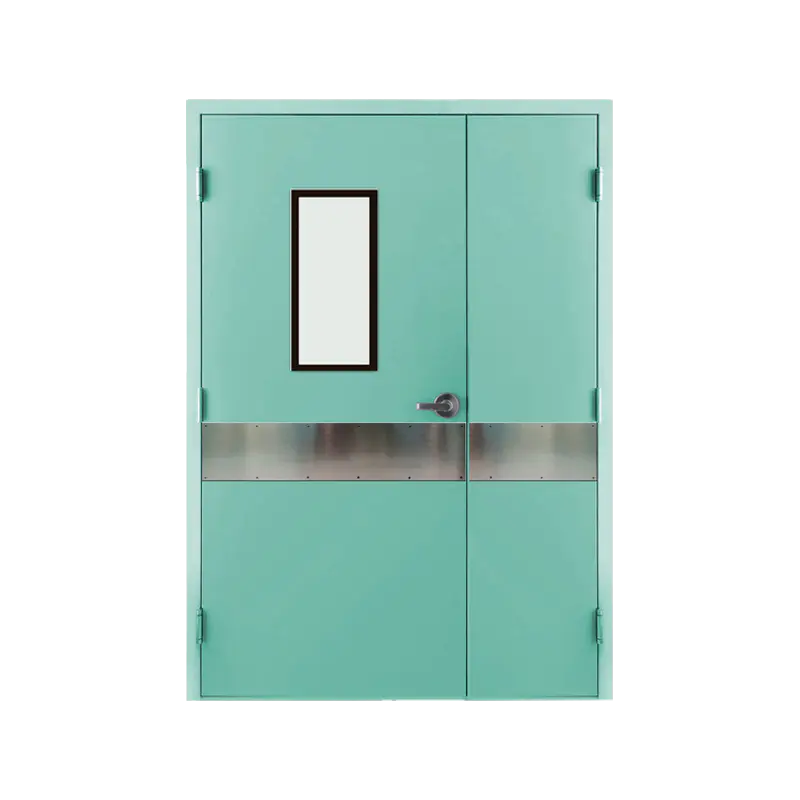
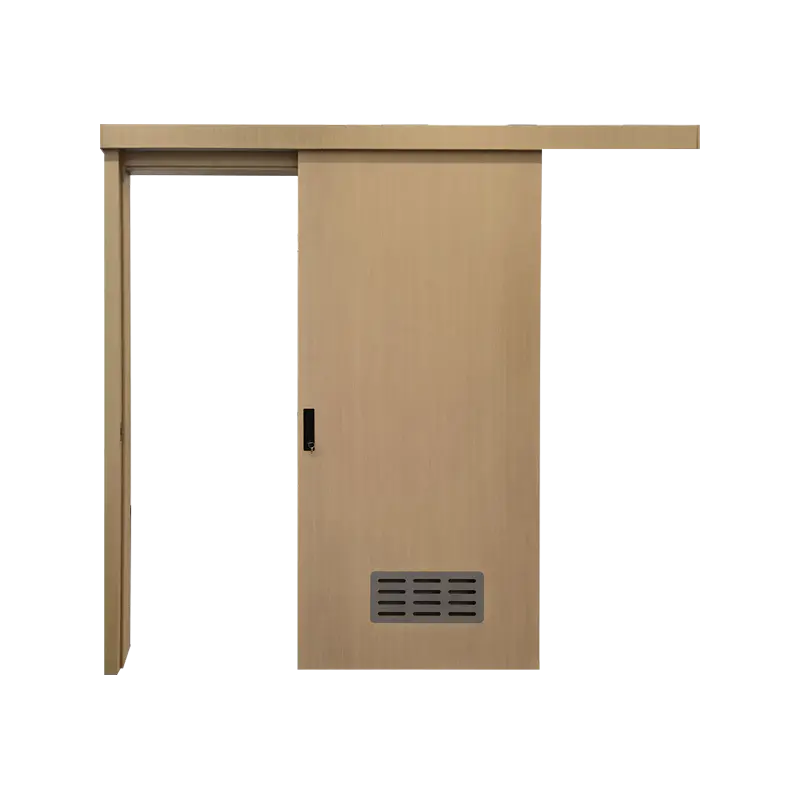
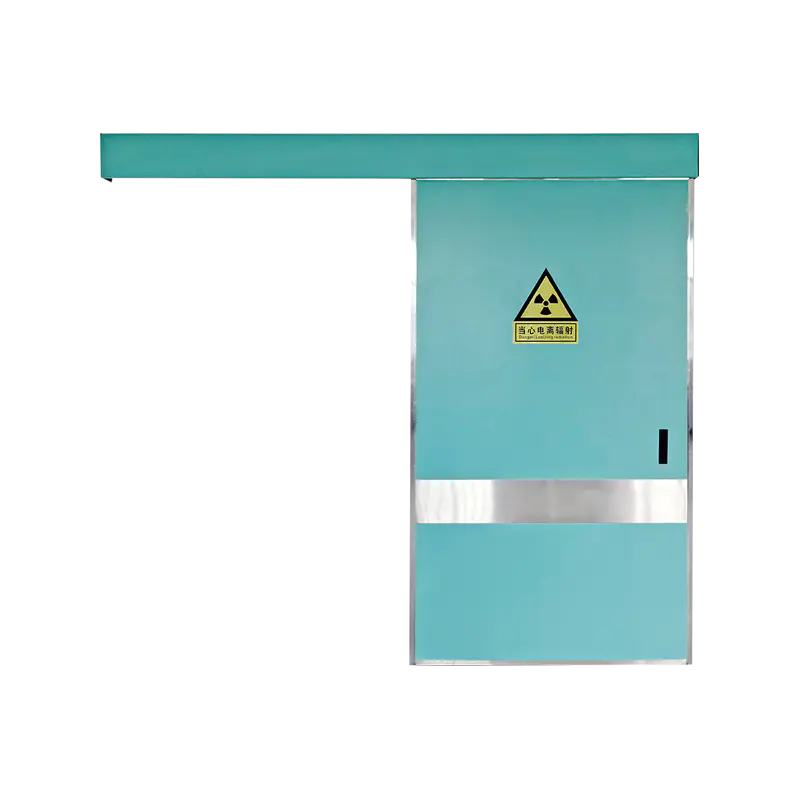
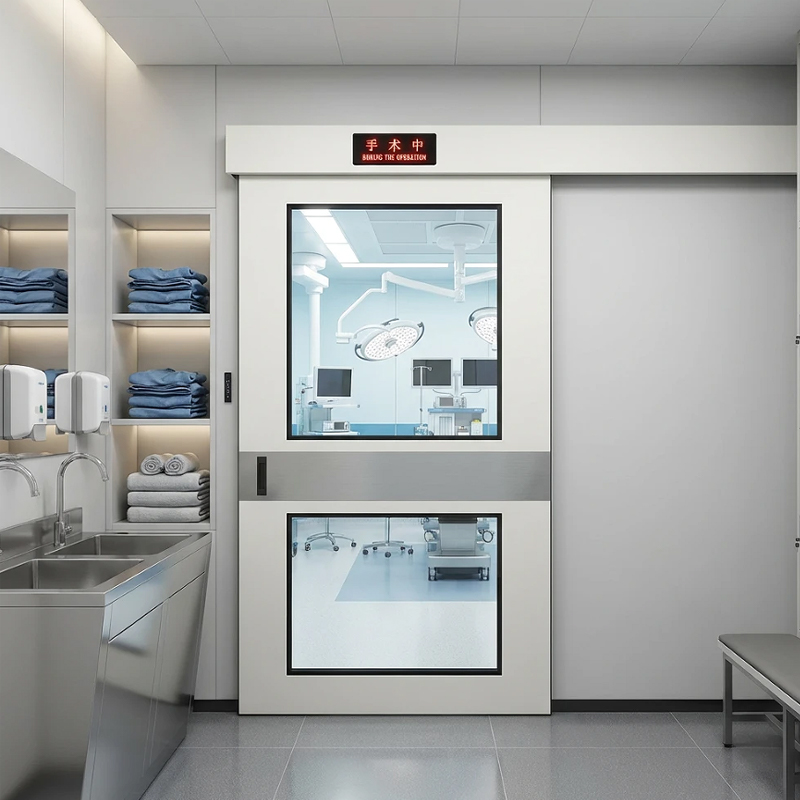
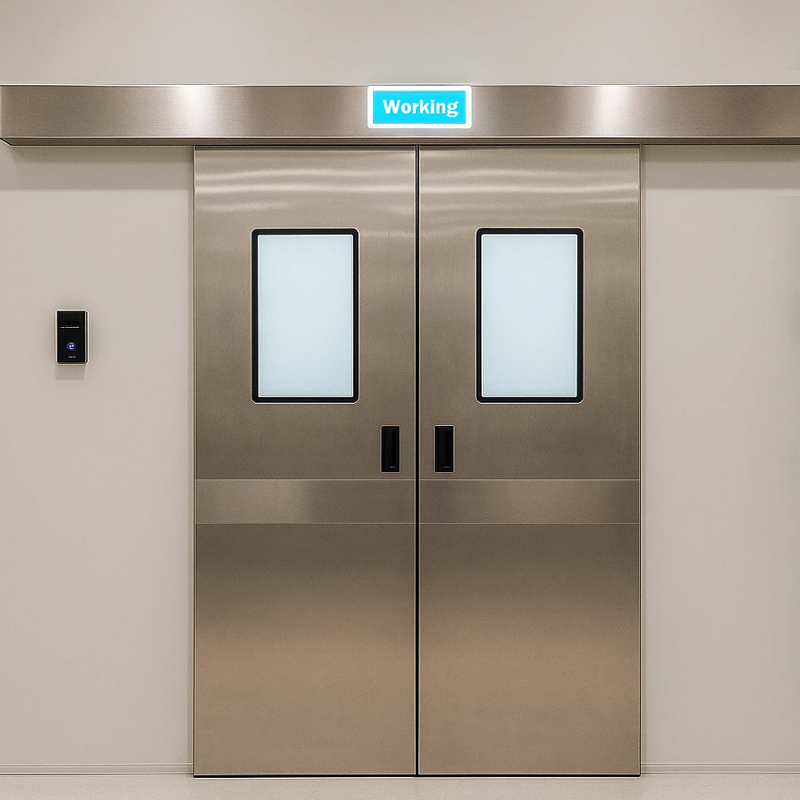
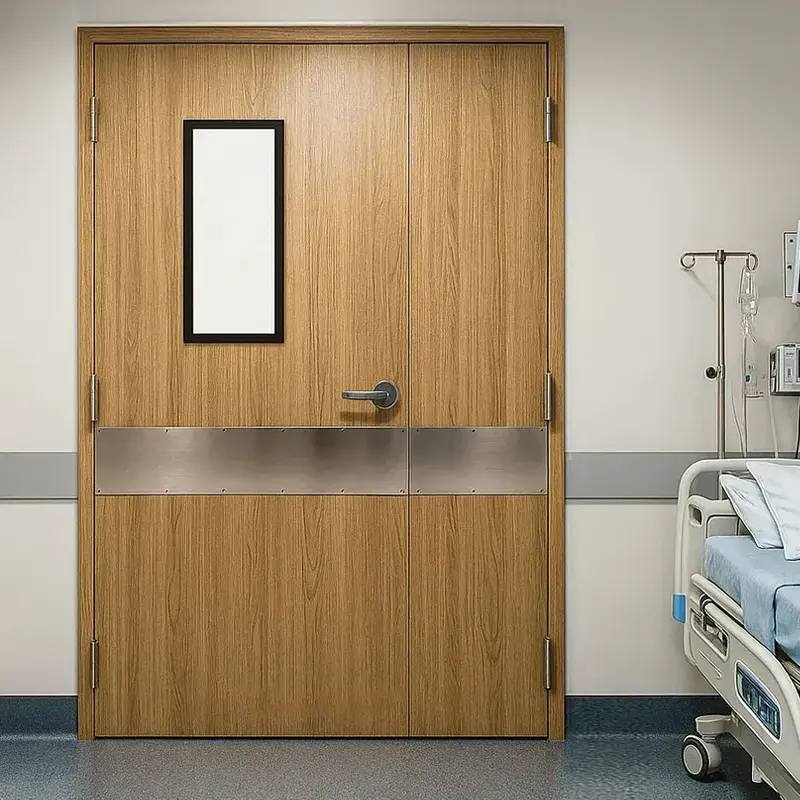
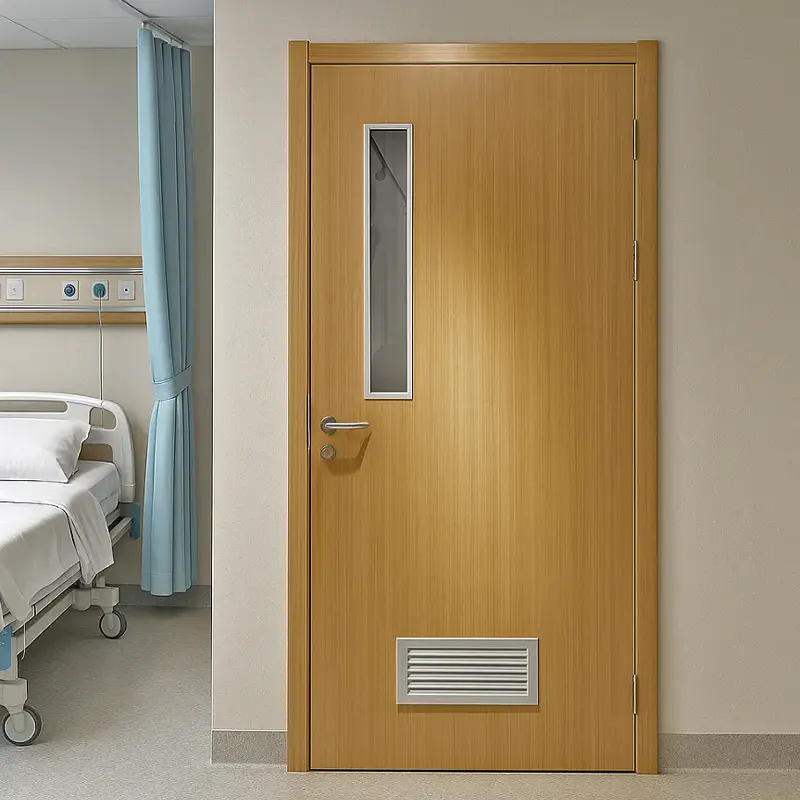
Walk through a hospital and the doors tell you a lot about what happens on the other side. Wide enough for a bed and an IV pole moving at speed. Closing on their own after every pass. Some with small glass panels at eye level, some completely sealed, some with radiation warning symbols stenciled on the surface. A hospital door is not a partition with a handle — it is a piece of working infrastructure, and the decisions behind each one reflect a specific set of demands that vary considerably from one zone to the next.
How the door operates matters as much as how wide it is. In areas where staff are routinely carrying equipment, wearing gloves, or moving with both hands occupied, a door that requires a hand on the handle is a friction point in the workflow and a contact surface in an environment where contact surfaces are being actively managed. Automatic sliding doors, swing doors with motion sensors, foot pedals, and elbow plates all address this differently, and the choice tends to reflect the specific infection control priorities of each area rather than a single building-wide standard.
Materials split along functional lines:
Surface durability gets serious attention in hospital procurement in a way it does not in most other building types. Cleaning teams in clinical areas use chlorine-based disinfectants, alcohol solutions, and quaternary ammonium compounds — not the kind of products that painted wood or standard vinyl surfaces handle well over time. Powder-coated steel and high-pressure laminate hold up under that kind of repeated exposure. Surfaces that degrade create micro-abrasions that trap contaminants, which turns a cosmetic issue into a hygiene one.
Vision panels show up throughout hospital corridors for a reason that has nothing to do with aesthetics. A glazed insert at eye level lets a staff member confirm whether someone is standing directly behind a door before pushing through at speed. In a busy clinical corridor where people and equipment are moving in multiple directions, that two-second check prevents collisions that cause injuries and dropped equipment. Where privacy matters — consultation rooms, certain patient areas — frosted or tinted glazing keeps the safety function without the visual exposure.
Hardware choices follow the same logic. Lever handles get specified over round knobs because a lever works with a fist, a wrist, or an elbow when hands are not free. Foot pulls and kick plates appear near handwashing stations and procedure areas. Door closers are set to close reliably without fighting back — a closer calibrated too heavy gets propped open with a wedge, which immediately defeats both the infection control rationale and the fire compartmentalization design.
Acoustic performance is the specification that tends to get overlooked until after occupancy. A patient room with inadequate sound separation from a busy corridor affects sleep and recovery in ways that are measurable. A consultation room where conversation carries into the waiting area creates a privacy problem that cannot be solved after the door is installed. The acoustic rating of a hospital door assembly depends on panel construction, seal quality, and how well the frame fits the opening — all decisions made before installation, not after.
Your email address will not be published. Required field are marked*
Product Recommendations
Explore Our Medical Door Solutions
Contact Information
No. 87, Xingwang Road, Zaotang Industrial Zone, Xicheng Street, Yongkang, Zhejiang, China
+86-13758983507
+86-579-87321128
Mobile


 English
 Español