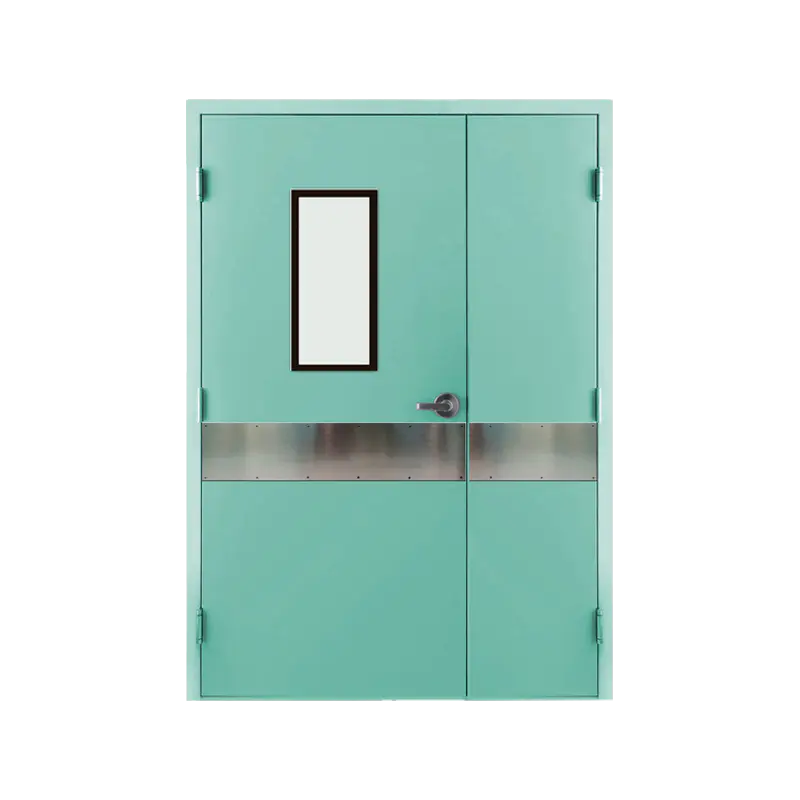
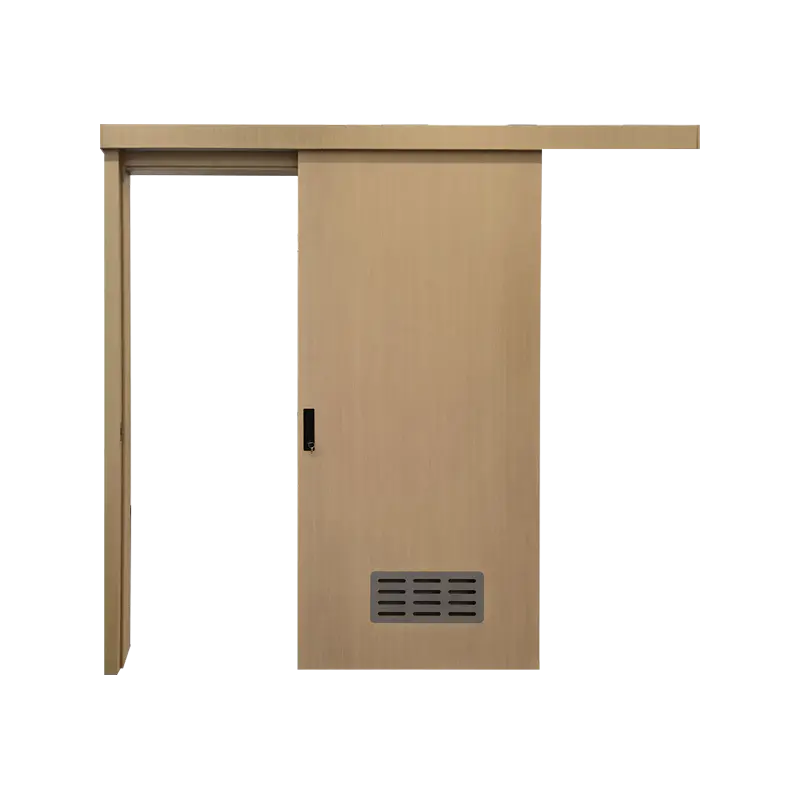
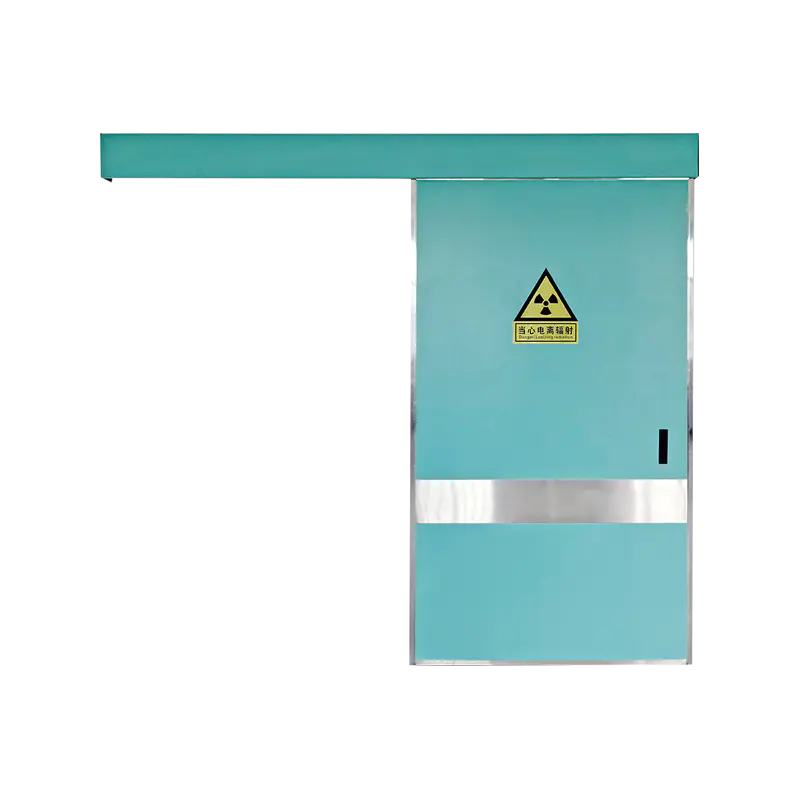
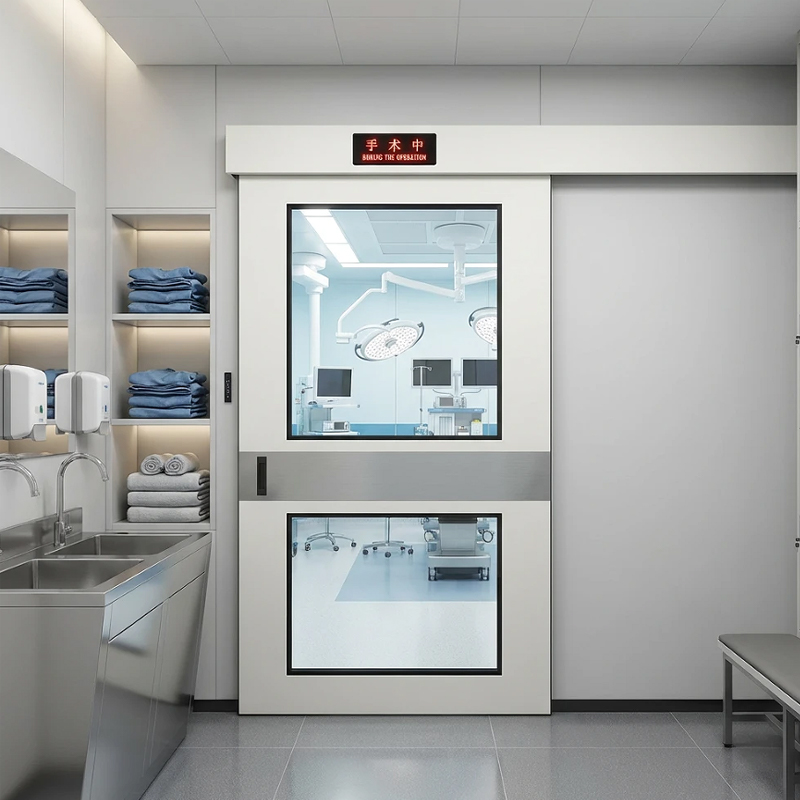
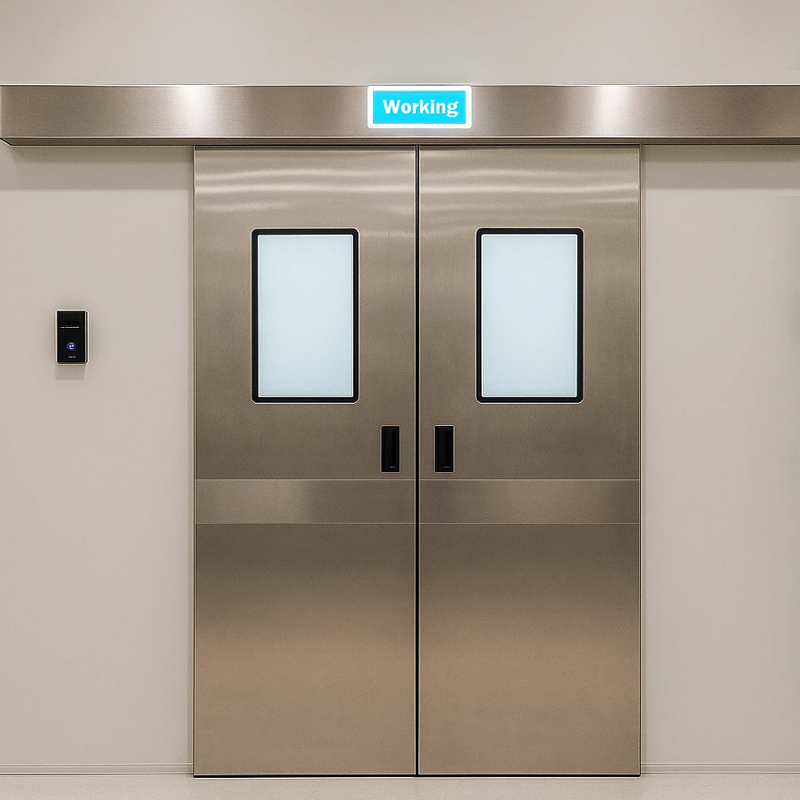
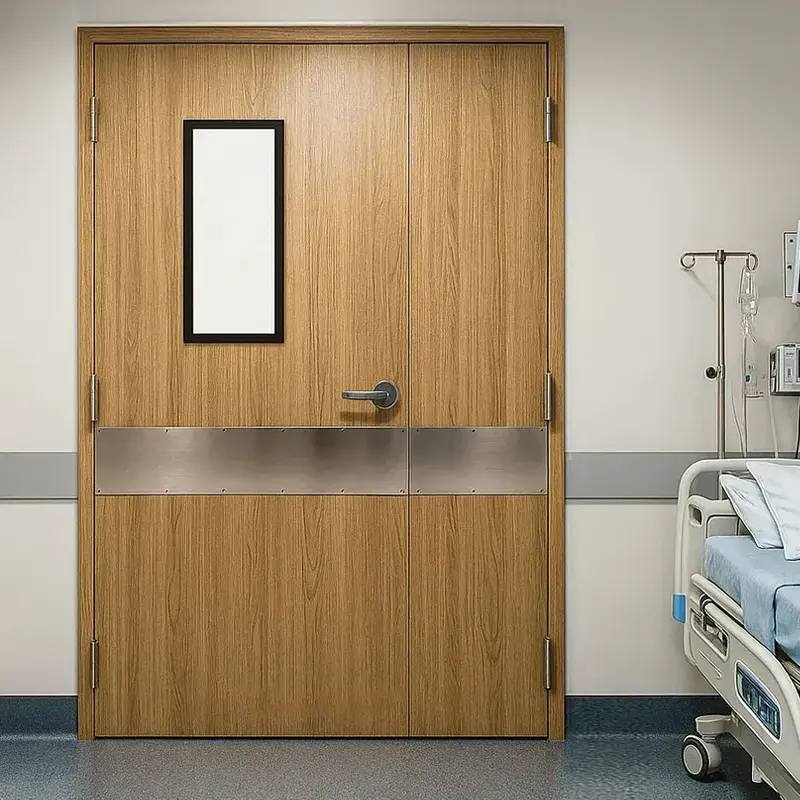
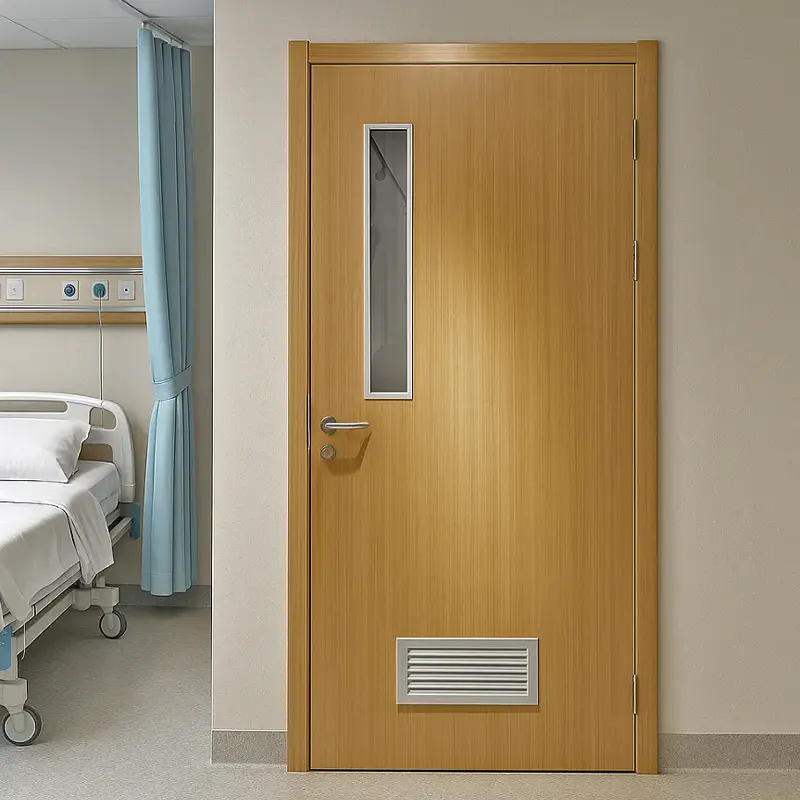
There's no single spec that covers a whole hospital. The door on a supply closet doesn't need to do much. The door sealing an operating room does — air pressure control, a surface smooth enough to wipe down without collecting grime in a seam. So manufacturers producing steel medical doors keep several panel constructions on offer: solid steel cores where rigidity matters, honeycomb or foam-filled cores where weight or sound dampening takes priority instead.
Facility planners rarely order one type. A single renovation project might call for four or five variants depending on what room each door belongs to, which is part of why suppliers work off detailed room-by-room specs rather than a fixed catalog. The variants that show up again and again include:
Hospital layouts don't repeat themselves much from project to project, so steel medical doors tend to be built to custom dimensions more often than they're pulled from a standard size chart.
Finish matters more here than in most commercial door work. A smooth, seamless surface gives dust and contaminants fewer places to settle, which counts for something in rooms that get cleaned multiple times a day. Powder coating shows up often on steel medical doors for exactly that reason — it holds up under repeated wipe-downs without flaking or dulling the way some finishes do after a few months of hospital-grade cleaning chemicals.
Seams and edges matter too, maybe more than people expect. A door with exposed fasteners or visible joints is just harder to keep clean than one with a continuous welded edge. That's why manufacturers building steel medical doors for corridors and patient care areas tend to favor seamless panels, even though it means an extra fabrication step nobody would notice just by looking at the finished product.
Some rooms ask a door to do more than open and close. Operating rooms need pressure control — gaps around a frame can throw off a room's ability to hold positive or negative pressure relative to the space next door. Certain diagnostic areas care about sound instead, which is why some steel medical doors come with acoustic cores built specifically to cut down on noise passing between adjoining rooms.
None of that works without the right hardware. Closers, hinges, seals — they all have to function as a set to hold the pressure and sound performance a room was designed around. That's usually the reason hospital procurement teams specify hardware alongside the door itself instead of treating it as a separate purchase further down the line.
Ask anyone sourcing steel medical doors for a hospital build what slows a project down, and mismatched specs come up fast. Doors arrive on site, and something doesn't line up with what the opening was built for. So procurement teams track a fairly consistent set of details across supplier bids:
Renovation projects feel this most, since new doors often need to fit openings built to older specifications that don't quite match current standard sizing. Architects, contractors, and door manufacturers tend to loop in early for exactly that reason — sorting out mismatches on paper is a lot less painful than discovering them once installation is already underway.
Your email address will not be published. Required field are marked*

Product Recommendations
Explore Our Medical Door Solutions
Contact Information
No. 87, Xingwang Road, Zaotang Industrial Zone, Xicheng Street, Yongkang, Zhejiang, China
+86-13758983507
+86-579-87321128
Mobile


 English
 Español