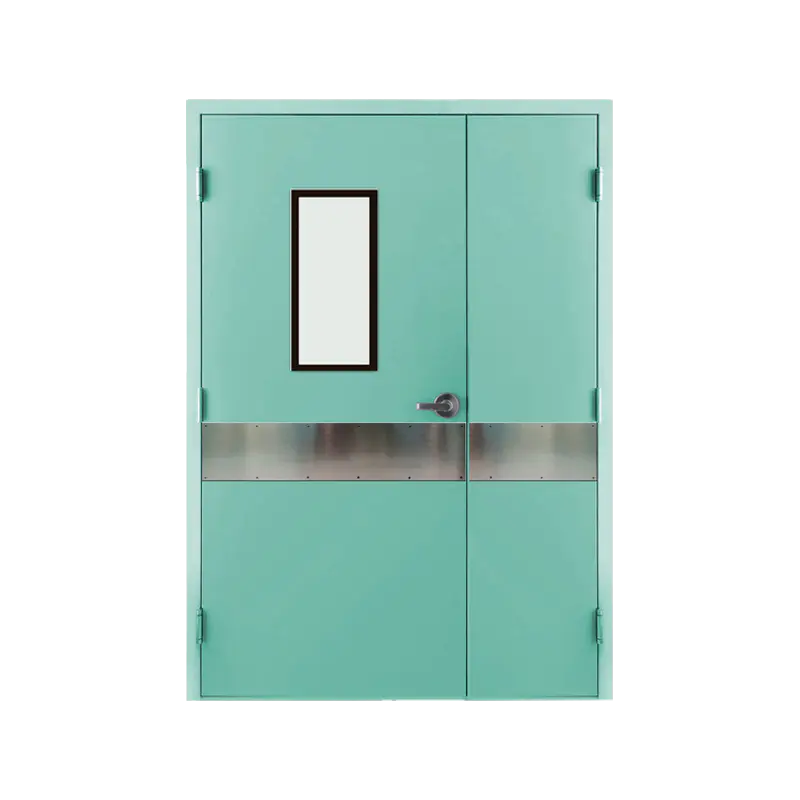
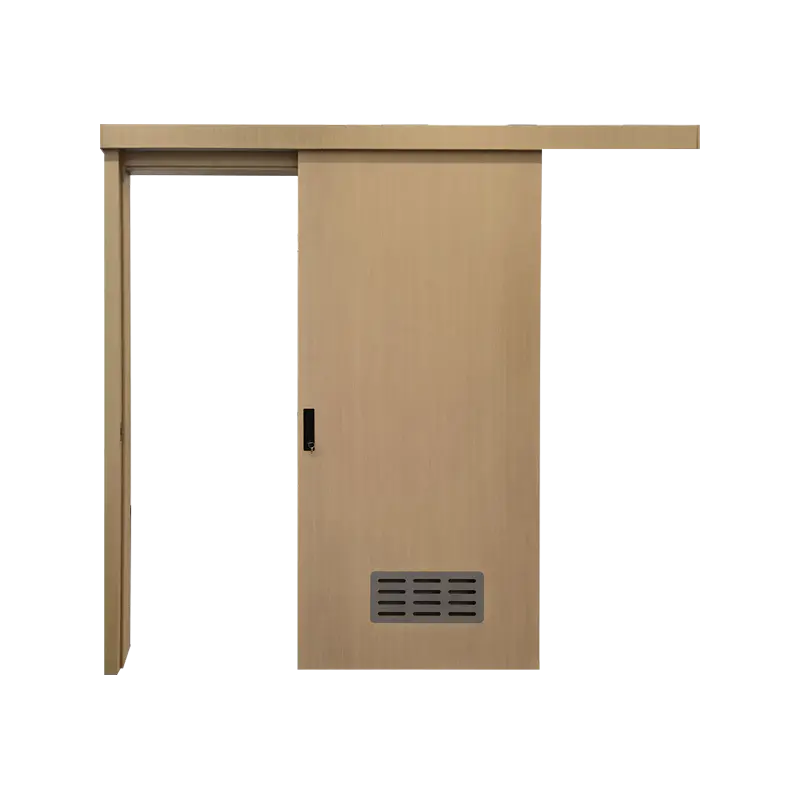
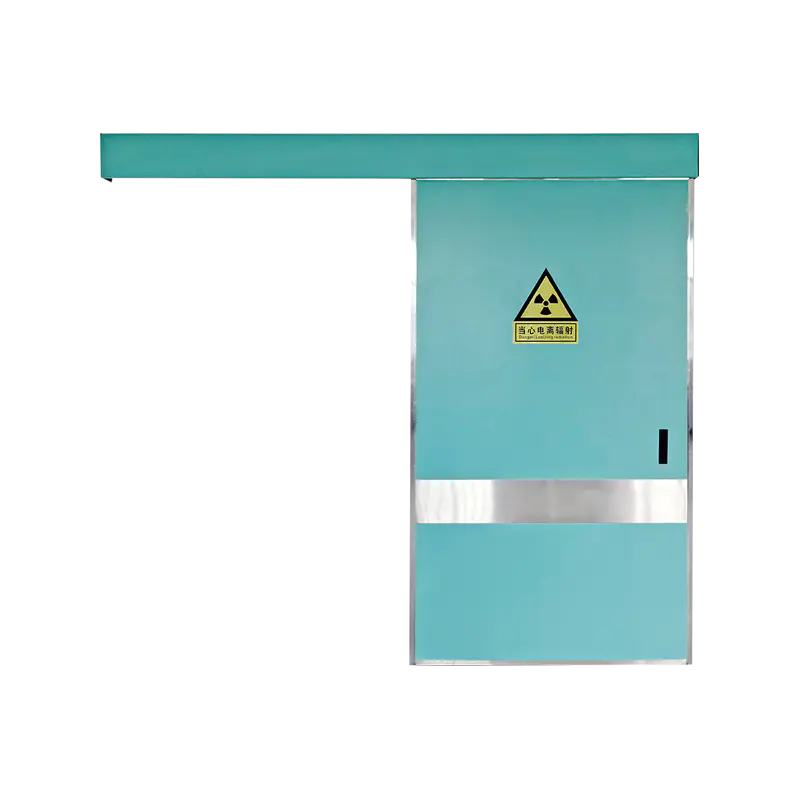
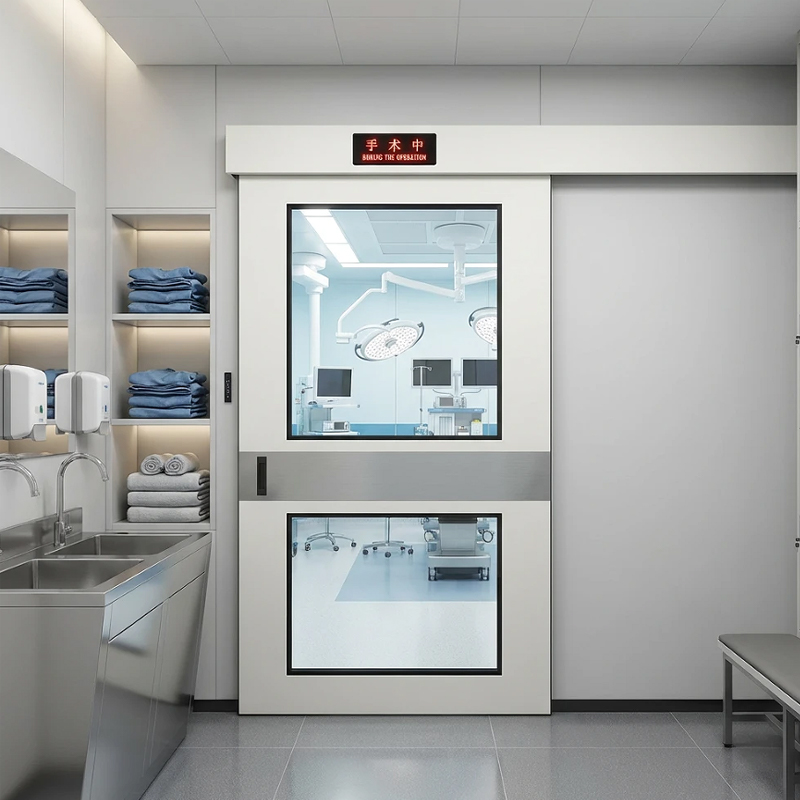
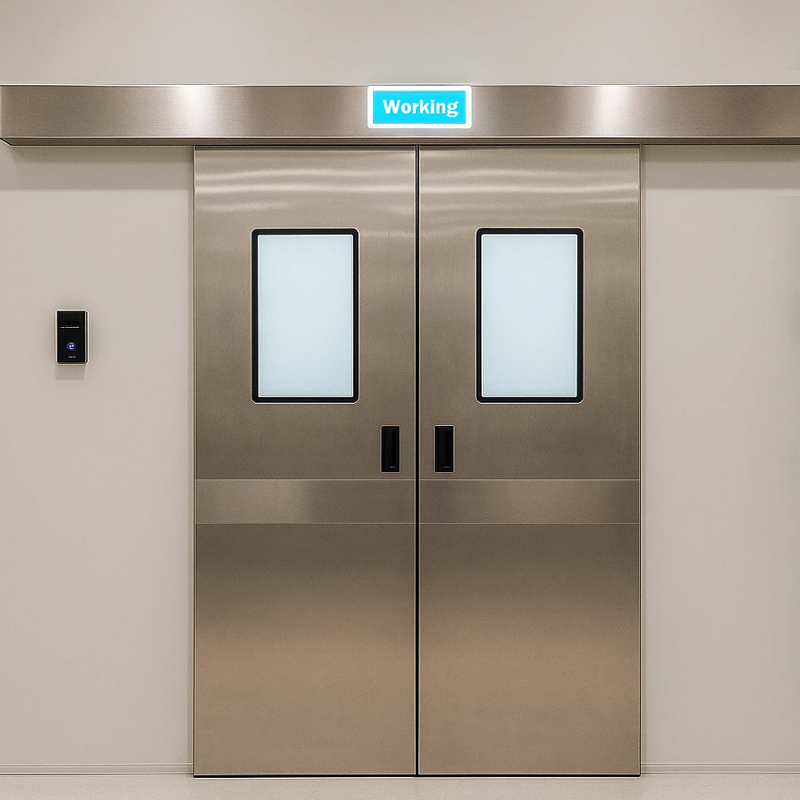
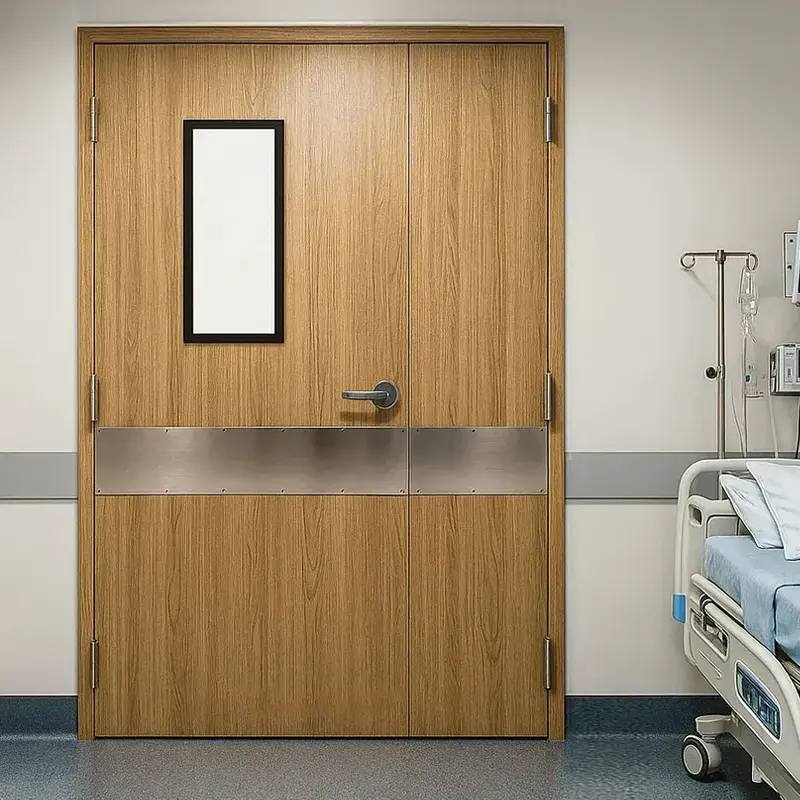
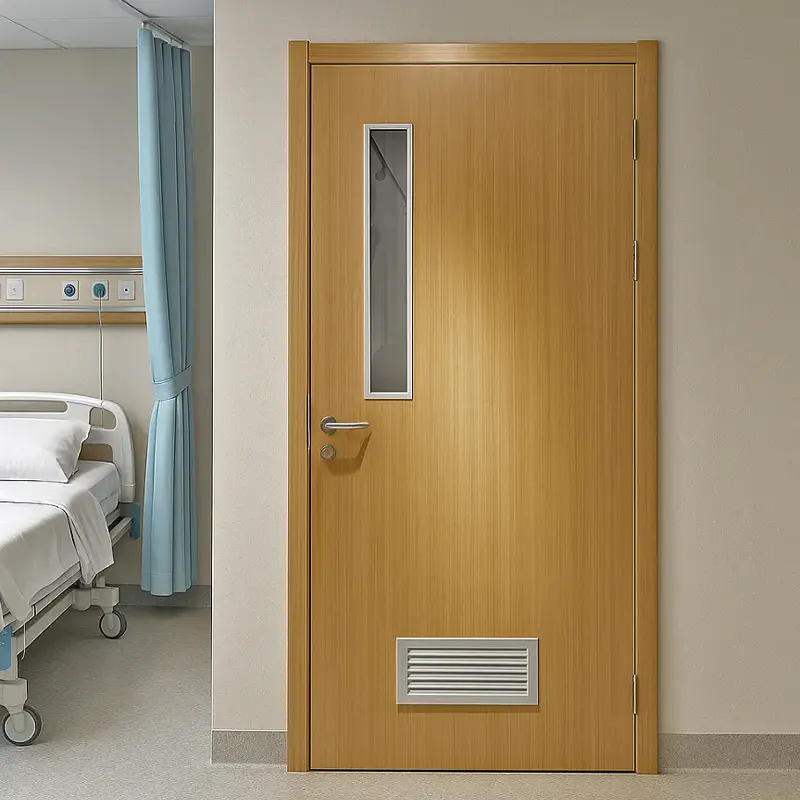
Medical Facility Doors are crucial components connecting treatment spaces, public areas, and functional zones. The door system not only serves as an entrance/exit but also relates to space separation, personnel flow management, and daily operational efficiency. Due to the diverse functions of medical facilities, door design needs to be configured according to the needs of different areas. Hospital Interior Medical Doors and Clinical Facility Doors are representative examples in practical applications.
Basic Functions of Medical Facility Doors
Medical Facility Doors are primarily used in hospitals, clinics, rehabilitation centers, and other medical institutions. Their design goal is to achieve space separation and daily access management while adapting to high-frequency usage environments.
Common functions include:
In some floor areas, Hospital Interior Medical Doors are often used to separate interior functional spaces.
Structural Design and Material Selection
The selection of materials for Medical Facility Doors typically considers durability, ease of cleaning, and structural stability. Common materials include steel structures, aluminum alloy structures, and composite material structures.
Different materials perform differently in different environments, therefore the selection must be based on the function of the space.
Structural Characteristics of Hospital Interior Medical Doors
Hospital Interior Medical Doors are commonly used in hospital interior spaces, such as wards, corridors, or entrances to functional rooms. Their characteristics include:
This type of door is quite common in medical buildings.
Application Characteristics of Clinical Facility Doors
Clinical Facility Doors are typically used in outpatient departments, examination rooms, or small treatment spaces. Their design emphasizes practicality and spatial compatibility.
Application features include:
In medical facilities, Clinical Facility Doors are commonly used for functional zone entrances.
Comparison Table of Different Types of Medical Facility Doors
The following is a basic comparison of common Medical Facility Door types:
| Type | Material Structure | Applicable Area | Features |
| Steel Medical Door | Steel plate structure | Public passageway | Good stability |
| Hospital Interior Medical Door | Interior structure | Wards and corridors | Emphasis on interior partitioning |
| Clinical Facility Door | Standard treatment structure | Outpatient clinics and examination rooms | Suitable for functional areas |
| Composite Material Door | Multi-layer structure | Specific spaces | Balances weight and performance |
The comparison shows that different door types are suitable for different medical spaces, and the choice should be based on actual needs.
Design Principles and Planning Points
When designing a Medical Facility Door, it is necessary to comprehensively consider the medical process and spatial layout. A reasonable design helps improve operational efficiency.
Design recommendations include:
When used indoors, Hospital Interior Medical Doors should be designed to match the corridor structure.
Installation Process and Precautions
Correct installation significantly impacts the performance of Medical Facility Doors. During construction, ensure the door and wall structure are compatible.
Installation Points:
For Clinical Facility Doors, ensure smooth door operation after installation.
Maintenance and Daily Management
Regular inspection and maintenance are necessary to maintain the proper functioning of Medical Facility Doors.
Routine maintenance includes:
In areas with high usage frequency, Hospital Interior Medical Doors may require more frequent inspections.
Environmental Factors Affecting Usage
Factors affecting the performance of Medical Facility Doors include:
When used in treatment areas, Clinical Facility Doors should ensure structural stability and ease of operation.
Overall Role in Medical Spaces
Medical Facility Doors serve the functions of space partitioning and access control in medical buildings. A well-planned layout helps improve overall operational efficiency.
Common application areas include:
Hospital Interior Medical Doors are primarily used for interior partitioning, while Clinical Facility Doors are commonly found in treatment areas.
Your email address will not be published. Required field are marked*

Product Recommendations
Explore Our Medical Door Solutions
Contact Information
No. 87, Xingwang Road, Zaotang Industrial Zone, Xicheng Street, Yongkang, Zhejiang, China
+86-13758983507
+86-579-87321128
Mobile


 English
 Español