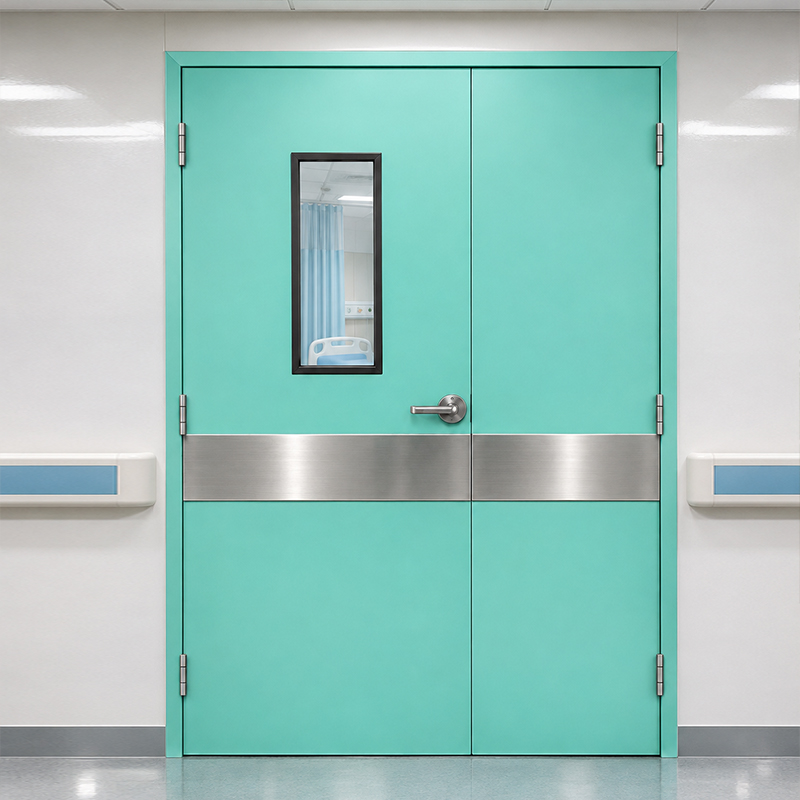
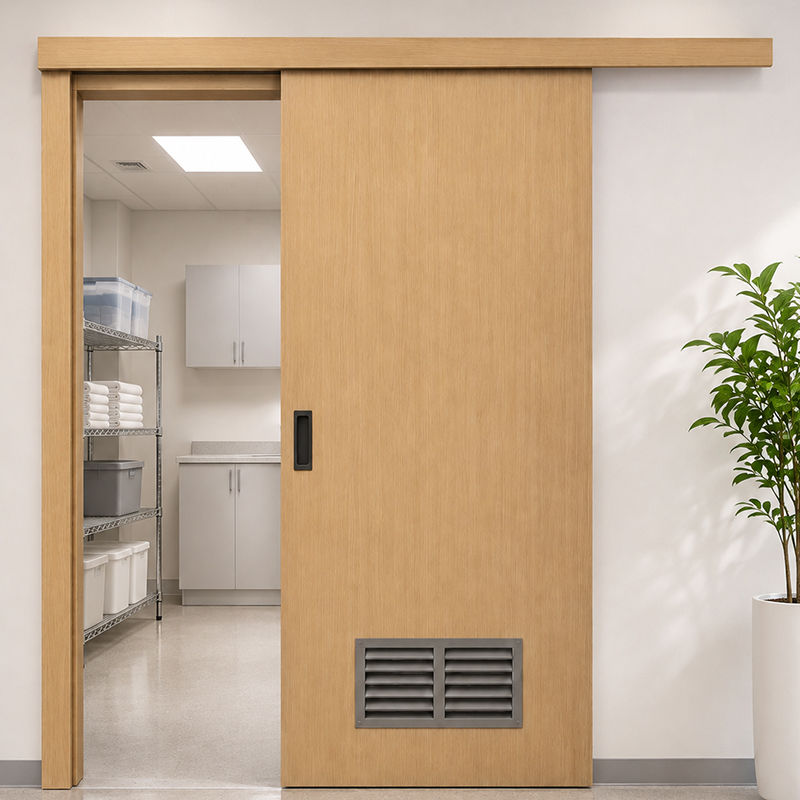
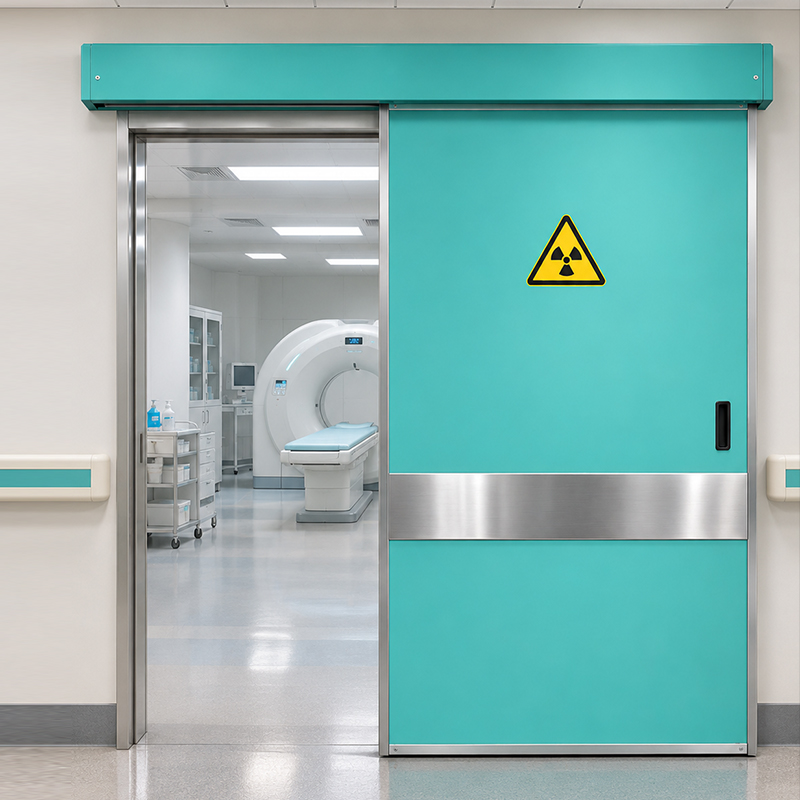
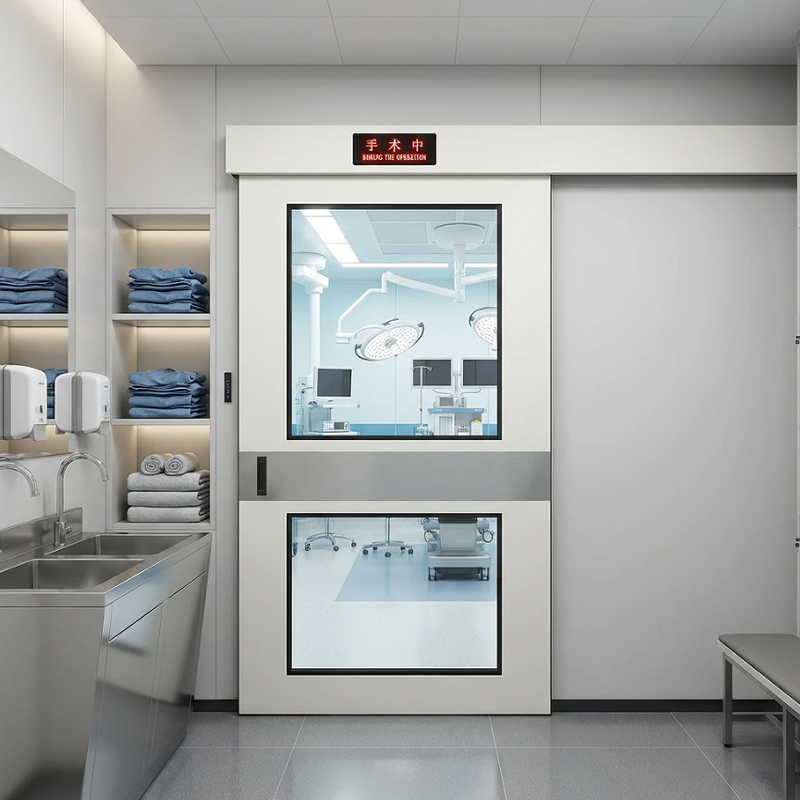
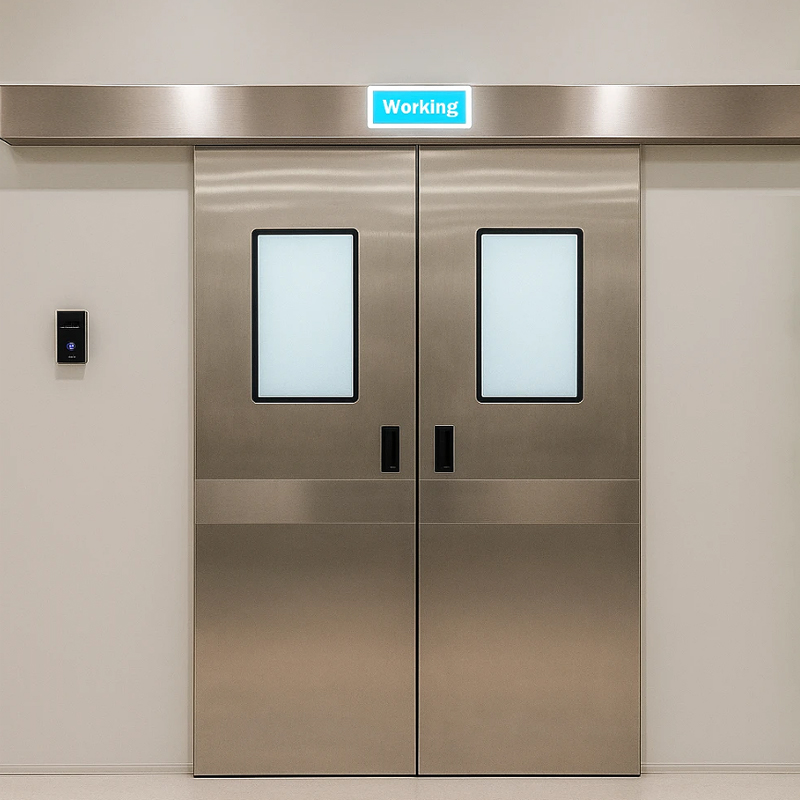
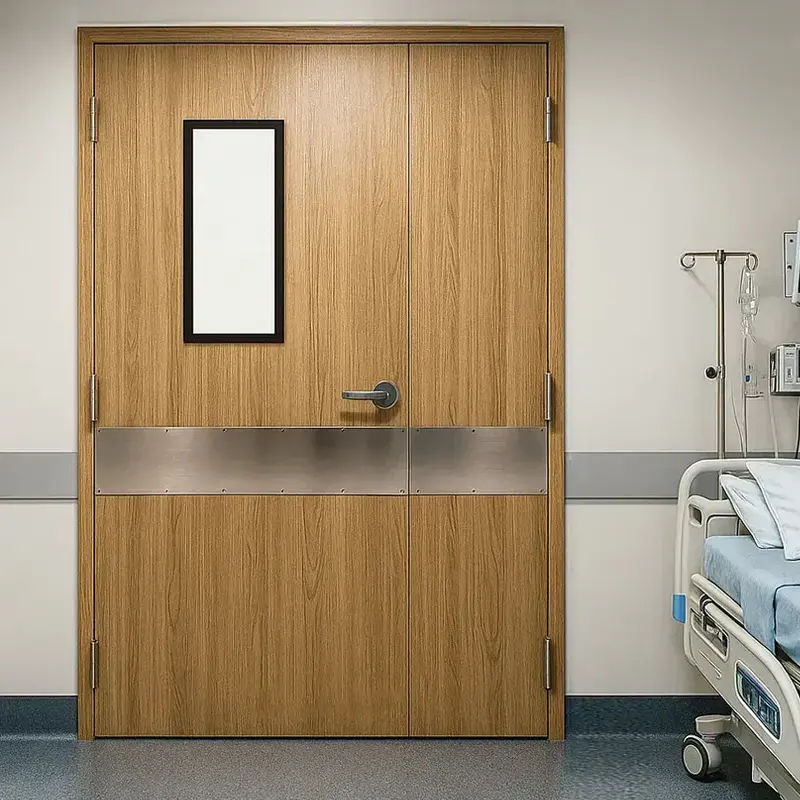
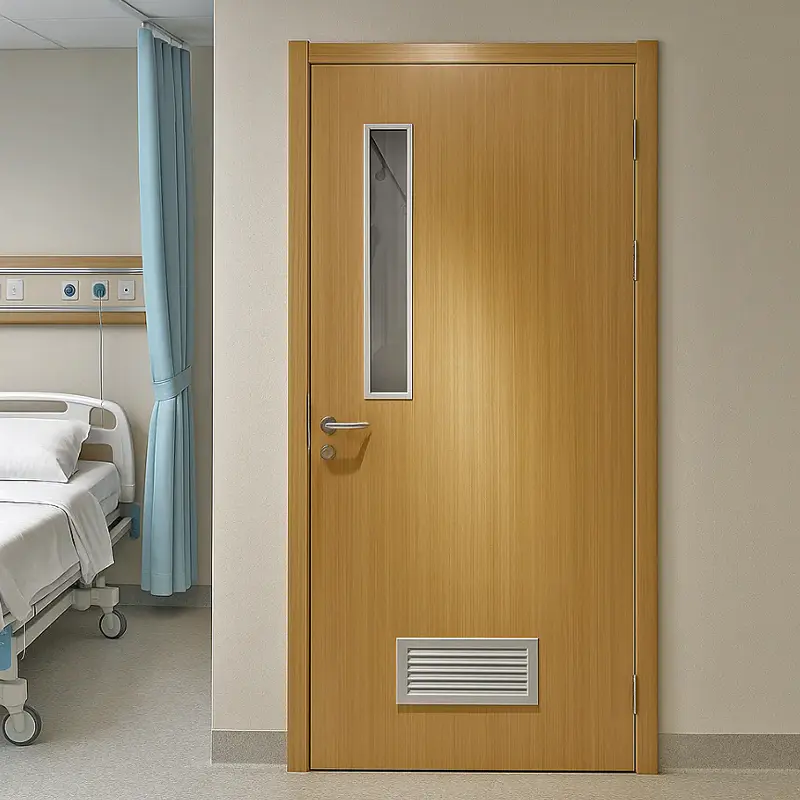
Antimicrobial commercial doors serve spaces where surface contact occurs frequently and hygiene standards remain high. These doors integrate materials and surface treatments that limit microbial growth on handles, frames, and panels. Buyers in healthcare, laboratories, and food facilities often evaluate them as part of broader facility planning rather than as standalone hardware.
Antimicrobial commercial doors commonly use solid-core constructions with specialized surface layers. Base materials include high-pressure laminates, coated steel, or aluminum alloys selected for durability under repeated use. The antimicrobial effect usually comes from additives such as silver-ion compounds or copper-based agents embedded in the surface coating or laminate.
These agents disrupt microbial cell processes on contact, reducing the ability of bacteria and certain other organisms to multiply on the door surface. Panel thickness, edge banding, and hardware finishes are coordinated so the antimicrobial property covers high-touch zones without creating gaps or weak points. Material selection also considers resistance to cleaning agents commonly used in commercial settings.
Manufacturing starts with substrate preparation and precise cutting of door blanks. Antimicrobial compounds are either mixed into the surface laminate during its production or applied as a consistent coating layer under controlled conditions. The treated surfaces are then bonded to the core under pressure to ensure uniform adhesion.
Hardware components such as levers, push plates, and kick plates may receive separate antimicrobial treatments before assembly. Final assembly includes careful sealing of edges and verification of fit so that treated surfaces remain continuous across the finished door. Process controls focus on even distribution of the active agents and consistent surface finish across production runs.
An antimicrobial commercial door is designed to keep microbial counts lower on frequently touched surfaces between cleaning cycles. The treated surfaces continue to act against residual contamination that may remain after routine wiping. Smooth finishes reduce places where moisture or organic matter can collect.
The door must also meet standard commercial requirements for strength, fire rating compatibility where needed, and smooth operation under daily traffic. The antimicrobial layer is engineered to remain effective through normal wear from hand contact and light abrasion. These combined functions support hygiene goals without changing the basic role of the door as a physical barrier and access point.
Hospitals and clinics install antimicrobial commercial doors in patient rooms, examination areas, and staff corridors where hands frequently touch handles and frames. Laboratories use them in clean zones and sample-handling areas to limit surface-mediated transfer. Food processing and commercial kitchen facilities apply them at entries to production or packaging rooms.
Pharmaceutical and research buildings also specify these doors for controlled environments where surface hygiene contributes to overall contamination control. In each setting the doors form part of a larger approach that includes cleaning protocols and airflow management. Placement focuses on doors that experience repeated opening and closing by multiple users throughout the day.
Producing antimicrobial commercial doors requires controlled environments for applying and curing surface treatments. Coating or laminate lines must maintain consistent thickness and active-agent concentration. Hardware finishing stations apply treatments that match the performance of the main door surfaces.
Assembly areas are organized to prevent contamination of treated components before the door is sealed and packaged. Factories typically maintain documentation of material batches and process parameters so that performance characteristics remain consistent from one order to the next. These capabilities allow suppliers to deliver doors that meet specified antimicrobial and mechanical requirements together.
Your email address will not be published. Required field are marked*
Product Recommendations
Explore Our Medical Door Solutions
Contact Information
No. 87, Xingwang Road, Zaotang Industrial Zone, Xicheng Street, Yongkang, Zhejiang, China
+86-13758983507
+86-13967923520
+86-579-87321128
Mobile


 English
 Español